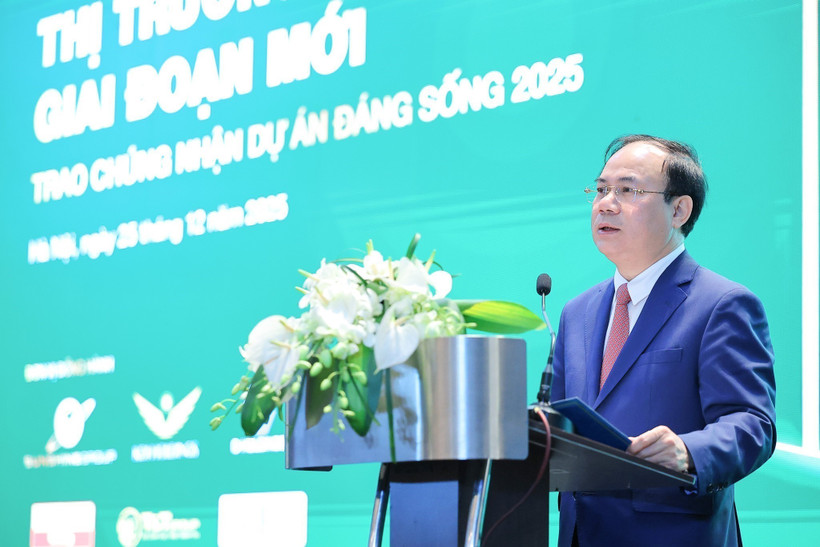
Hanoi (VNA) - Real estate projects in Vietnam that have been delayed by regulatory obstacles will gradually see their difficulties resolved, helping to increase market supply and unlock resources for development, Deputy Minister of Construction Nguyen Van Sinh has said. This process, he noted, will help realign the property market, making it more transparent, stable and sustainable.
He was speaking at a forum on real estate market held on December 25 in Hanoi by Business Forum magazine under the Vietnam Chamber of Commerce and Industry (VCCI).
Assoc. Prof. Dr Ho Sy Hung, VCCI President, said the Government has recently introduced a range of coordinated measures to accelerate project implementation. In 2025, the market saw sharp rise in supply, with more than 100,000 properties entering the market – up over 22% compared with 2024, including nearly 90,000 new units. At the same time, prices rose, albeit unevenly across different market segments.
He further stated that a series of relevant resolutions and directives have been issued to tackle bottlenecks and promote social housing. As a result, investor confidence has improved, liquidity has risen and many social housing projects have been approved, launched or completed.
However, the Ministry of Construction reported that 2,991 projects nationwide remain mired in difficulties due to legal or procedural issues. Sinh acknowledged that some projects have stalled despite major capital commitments, leading to wasted land and resources and pushing up costs and selling prices. In some localities, he said, housing schemes have not been closely followed, while insufficient attention has been paid to affordable housing for middle- and low-income groups.
, present certificates for the "Most Livable Project 2025" in the Urban Area category to participating units (Photo: VNA)")
Most new supply continues to concentrate in the mid-range and luxury segments, while affordable homes, particularly for workers of industrial parks and low-income households, remain scarce. Property prices also remain high relative to income levels, with rising input costs further inflating prices.
The Deputy Minister expressed confidence that the market would see positive moves in 2026, with increased supply expected in both social housing and affordable commercial housing. Localities will continue unblocking troubled projects and approving new developments in line with housing plans, he said.
To support these goals, the ministry has proposed further reform of the legal framework to improve transparency and devolve greater responsibility to local authorities; research into policies to promote affordable housing; expansion of social housing; the acceleration of approved housing projects; and early establishment of a State-run digital property trading centre to ensure fair and secure transactions. The national property market information system will also be upgraded to better support policymaking, he said./.