HCM City (VNA) – Vietnam’s real estate M&A market is bouncing back strongly this year after a long, quiet spell. With legal hurdles cleared, global capital flowing in, and major corporate shake-ups happening, the stage is set for a surge of big deals.
According to global property consultancy Jones Lang LaSalle (JLL), announced M&A deals reached a total value of around 2.4 billion USD in the first 11 months of 2025, signalling a clear recovery in market activity.
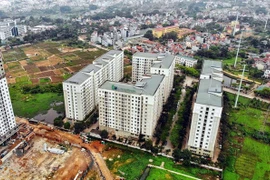
The regulatory framework has improved significantly, particularly since Resolution 171 took effect in April. The new policy permits agreements on land-use rights for non-residential land to be converted into commercial housing projects, thereby widening opportunities for land-bank transformation and enabling more projects to move into the implementation phase. Localities have also accelerated planning progress and enhanced transparency, helping to reinforce investor confidence.
JLL’s latest report highlights that real estate remains among the top three sectors attracting foreign direct investment (FDI). In the first 10 months of 2025, the market recorded 2.75 billion USD in registered capital and 1.5 billion USD in disbursed capital, mostly channelled into projects with clear legal status, transparent land reserves and well-defined construction timelines.
Residential property accounted for more than 70% of announced M&A value, followed by commercial real estate at 17.7%, hospitality at roughly 5.3% and data centres at 3.3%. Data centres are considered a high-potential segment as digitalisation accelerates and demand for data infrastructure rises in Vietnam.
Experts note that domestic developers, who experienced rapid expansion between 2020 and 2022, are now under liquidity pressure and facing restructuring requirements. M&A offers a way to ease financial strain while creating opportunities for those seeking to expand their land banks.
Lending rates have remained stable at between 7% and 9%, improving access to capital for both local enterprises and foreign investors. This stability is seen as a key driver of M&A activity, alongside restructuring needs and ongoing improvements to the legal framework.
In the industrial and logistics sector, M&A value in the first 11 months reached around 74 million USD. Recent trends show that many foreign corporations are shifting from leasing land to acquiring completed industrial parks to save time and reduce legal risks. High-demand asset types include cold storage, ready-built factories and industrial land funds, aligning with the expansion strategies of global manufacturers.
With expectations of a stronger investment environment and a continued push for transparency in real estate, the 2025-2026 period is viewed as a pivotal window for enterprises to restructure, raise capital and enhance competitiveness through high-quality M&A transactions./.

M&A in Vietnamese real estate heat up
The market is witnessing a significant number of mergers and acquisitions as large corporations and investment funds quietly acquire real estate businesses and projects in Vietnam.