Inter‑regional forum on OCOP: Advancing dinamic, distinctive agriculture

Co-organised by the Ministry of Agriculture and Environment and the UN Food and Agriculture Organisation (FAO), the forum highlights Vietnam’s growing role as a global knowledge hub in rural development and local value chains.

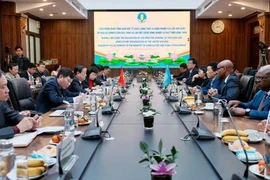
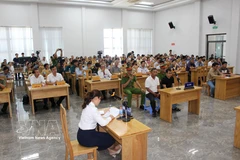
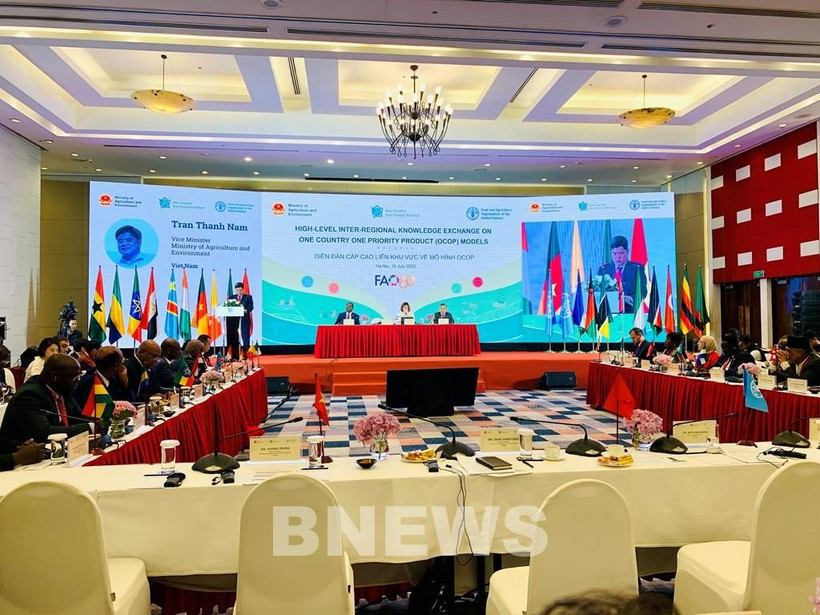
An overview of the forum (Photo: VNA)

Hanoi (VNA) – Vietnam is hosting the inter‑regional high‑level forum on the OCOP (One Commune - One Product) model from July 15–16, bringing together 14 African ministers.

Co-organised by the Ministry of Agriculture and Environment and the UN Food and Agriculture Organisation (FAO), the forum highlights Vietnam’s growing role as a global knowledge hub in rural development and local value chains.

Launched in mid-2018, OCOP is a rural economic initiative that leverages local resources —knowledge, labour, craftsmanship, and culture — to enhance income and build sustainable, community-driven value chains. It contributes to the broader National Target Programme on New-Style Rural Building of Vietnam.

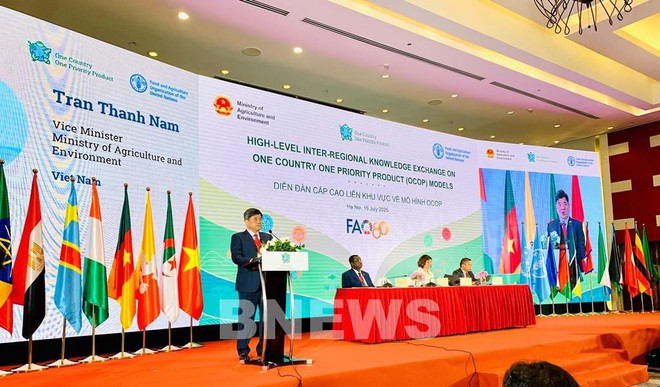
Opening the forum, Deputy Minister of Agriculture and Environment Tran Thanh Nam noted that agriculture remains a cornerstone of Vietnam’s economy, with over 60% of the population in rural areas. Since the “Doi Moi” (Renewal) cause in 1986, Vietnam has made significant progress in food security, poverty reduction, and agricultural exports. Agriculture now contributes around 12% of GDP and maintained 3.3% growth in 2024, with exports reaching 62.5 billion USD. In the first half of 2025, the sector grew by 3.84%, with exports up 15% year-on-year to 33.84 billion USD, he said.
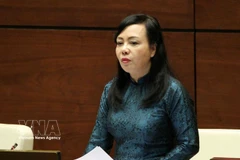
thu-truong-bo-nong-nghiep-va-moi-truong-tran-thanh-nam-phat-bieu-tai-dien-dan-anh-vna.jpg
Deputy Minister of Agriculture and Environment Tran Thanh Nam addresses the event (Photo: VNA)

Vietnam is restructuring its agriculture sector towards to enhance added value and promote sustainable development, taking into account emerging factors, such as trade liberalisation, climate change, smart agriculture and the control of food loss and waste. It aims to align with the UN Food Systems Summit goals by pursuing transparency, innovation, and inclusivity, targeting over 4% annual agricultural growth to support broader economic goals.

The OCOP model, officially launched under Decision 490/QD-TTg, focuses on turning local specialities, including traditional crafts and folklore, into marketable, high-quality products. It promotes collaboration among the state, businesses, cooperatives, and communities on quality control, branding, capacity building and market access.

According to Nguyen Do Anh Tuan, Director of the Department for International Cooperation under the Ministry of Agriculture and Environment, over 16,800 OCOP products have achieved three-star ratings or higher. More than 60% of participants reported an average 18% annual revenue increase. OCOP has generated millions of jobs and helped revitalise rural livelihoods by empowering communities to preserve cultural identity while promoting economic growth. It aligns with FAO’s “Four Betters” - better production, nutrition, environment and life.

At the forum, Deputy Minister Nam proposed strengthening South–South cooperation by sharing policy frameworks, market insights, and technical training. He stressed the importance of empowering vulnerable groups, such as women, ethnic minorities, the elderly, and persons with disabilities, and called for international support to scale up OCOP globally through innovative public–private–community partnerships.

FAO Deputy Director-General Beth Bechdol highlighted the importance of OCOP in a global food system increasingly reliant on limited crop and livestock species. She praised the model for enhancing food security, diversifying production, and building climate resilience.

FAO’s Assistant Director-General for Asia-Pacific, Alue Dohong, added that Vietnam’s OCOP inspired FAO’s global initiative, now shaping the “One Country - One Priority Product” approach. He underscored the need for a global OCOP network engaging governments, farmers, researchers, and businesses, and pledged FAO’s technical support for scaling the model worldwide.

On July 16, delegates are scheduled to visit OCOP models in Ninh Binh, a heritage-rich region, for practical exchange and to mark a renewed commitment to sustainable rural development and global cooperation./.
VNA

See more

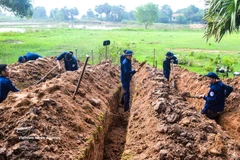
Biological samples are collected from the remains of unidentified fallen soldiers at the Pho An Martyrs' Cemetery in Tra Cau ward, Quang Ngai province. (Photo: VNA)

Tireless efforts made to restore the names of fallen soldiers

Quang Ngai currently has 127 martyrs' cemeteries containing 37,689 graves, including 26 collective ones. Of these, 16,758 have complete information, 5,134 contain partial information, while 15,771 remain unidentified. Around 6,000 martyrs from the province have yet to have their remains located.

Overseas Vietnamese delegates attend the opening ceremony of the Vietnam Summer Camp 2026. (Photo: VNA)

Vietnam Summer Camp 2026 strengthens cultural identity, deepens young OVs’ bond with homeland

Addressing the ceremony, Deputy Minister of Foreign Affairs Le Thi Thu Hang said the participants return to Vietnam at a particularly significant moment, as the country enters a new stage of development following the 14th National Party Congress. She noted that the ongoing reorganisation of administrative units has created new development space for localities and the nation, unlocking fresh potential, encouraging innovation and providing new momentum for faster and more sustainable growth.

Members of Team K51 under the Dak Lak provincial Military Command travel through remote forests and mountains in Vietnam and Cambodia in search of the remains of Vietnamese volunteer soldiers and military experts who died during wartime. (Photo published by VNA)

Dak Lak team presses on with search for fallen soldiers

During the 2025–2026 dry season, Team K51 recovered and repatriated the remains of 27 Vietnamese volunteer soldiers and experts who died in Cambodia. The achievement came after nearly seven months of searching through forests, crossing streams and following even the smallest leads.

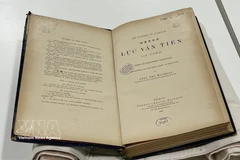
Documents containing the Prime Minister's commendation decisions awarding the “To quoc ghi cong” (The Fatherland acknowledges the merit) certificate to the families of martyrs, including Decision No. 04TtgA awarding the certificate to the family of martyr Huynh Van Quen (Photo: VNA)

Unlocking value of archives in search for fallen soldiers’ identities

Once digitisation is completed and a unified database is established, searches will become much faster and more accurate, providing an important foundation for the search for, recovery and identification of martyrs’ remains and for better implementing policies for people with meritorious service.

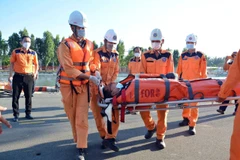
Vietnamese and Indian officials at the handover ceremony of the mortal remains of 15 Indian victims in the speedboat capsize off Phu Quoc Island in the southern province of An Giang. (Photo: Ho Chi Minh City Department of External Relations)

Mortal remains of Indian victims in Phu Quoc speedboat accident repatriated

The mortal remains of 15 Indian tourists who died in the speedboat capsize off Phu Quoc Island in the southern province of An Giang were handed over to the Indian side and transported on a flight departing at 18:00 on July 13 for their homeland, in accordance with the wishes of the victims' families.

Delegates at the Lung Cu Flag Tower, a symbol of Vietnam's northernmost point. (Photo: VNA)

"I Love My Fatherland" journey reaches Lung Cu Flag Tower

This year's journey comprises of seven stages linked to historical, cultural and revolutionary sites across the country. It began in Nghe An on May 16 to celebrate President Ho Chi Minh’s birth anniversary, before continuing through Hue city, Tuyen Quang–Lung Cu Flag Tower, Dien Bien, Khanh Hoa, Ca Mau and Ho Chi Minh City, and concluding in Hanoi in October.

Party General Secretary and State President To Lam, Head of the Central Steering Committee for Science and Technology Development, Innovation and Digital Transformation, chairs the thematic session on digital transformation in the political system on June 25, 2026. (Photo: VNA)

100-day drive launched to remove digital bottlenecks

The plan seeks to accelerate the shift to data-driven governance by reducing paperwork, streamlining administrative procedures and expanding the use of shared digital platforms and integrated data across government agencies while strengthening cybersecurity.

Wartime relics, including ammunition and a toothbrush, discovered at Da Sap Cave in Lam Tay hamlet, Ha Nha commune, Da Nang city. (Photo: VNA)

Bringing the fallen home: Da Sap Cave mission begins

Situated between protection and production forests in Ha Nha commune, the cave remains largely untouched since the war. Huge boulders blasted down by bombing still block part of the entrance, making excavation difficult and hazardous.

Participants in the ceremony celebrating the CVS's 10th founding anniversary in Ottawa on July 12 (Photo: VNA)

Canada-Vietnam Society marks decade of promoting people-to-people exchanges

Nguyen Dai Trang, a member of the CVS’s executive board, said the organisation's greatest achievement over the past 10 years lies not only in the number of programmes it has organised but also in its success in bringing together Vietnamese associations across Canada, and fostering a shared voice within the community.

The former headquarters of the Bac Lieu provincial Fatherland Front Committee and mass organisations is proposed for transfer to the provincial Land Development Centre for auction or investment attraction. (Photo: VNA)

Efficient use of surplus public assets gains urgency

According to the Ministry of Finance (MoF), more than 11,000 public land and property facilities nationwide have been recovered or transferred to local authorities but have yet to be put back into use. The portfolio includes office buildings, public service facilities and many land plots in prime urban and residential locations.