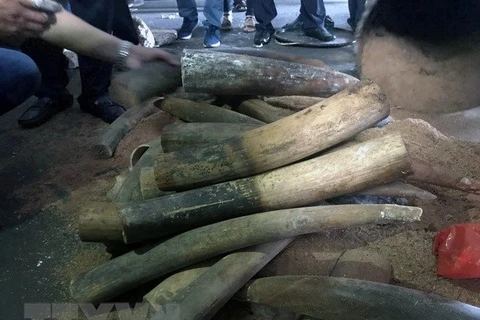
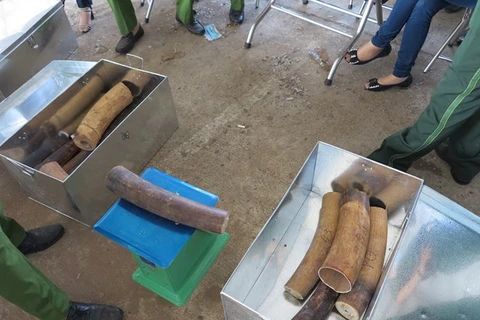
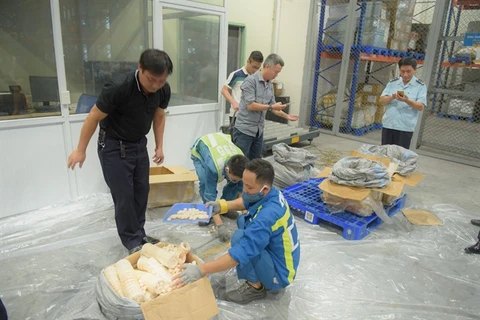
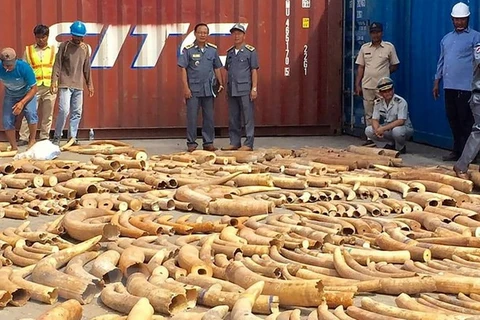
Illegal ivory in containers at Cat Lai Port in HCM City. (Photo: VNA)
HCM City, (VNS/VNA) - Illegal ivory is widely available at physical and online retail outlets throughout Vietnam, according to a new TRAFFIC report published with support from USAID.
The study, “From tusk to trinket: persistent illegal ivory markets in Vietnam,” documents surveys recently carried out at 852 retail outlets in 13 locations and 60 individual sellers on 17 online platforms.
Although selling ivory is illegal in Vietnam, researchers found more than 10,500 items for sale, demonstrating the persistence of the ivory retail market.
But the report also found that retailers are often transitory.
Although ivory was found in all 13 locations, its sale appeared to highly transitory in nature: repeat visits found that 43 percent of retail outlets observed with ivory had only just began to sell, stopped selling or simply closed over the course of the survey. The comparable figure for online retailers was 86 percent.
There are clear links between Vietnam’s physical ivory markets and online outlets, the report said.
The survey found retail outlets expanding their networks to sell ivory items online and vice versa.
In eight instances, online sellers were either linked to physical stores or physical stores were also selling their items on social media websites, e-commerce websites or online forums.
Tourists, particularly from China, are significant buyers.
Chinese nationals were reported as buyers by multiple sellers, and tourist villages emerged as particularly significant retailers of ivory.
Prices were sometimes quoted in currencies like the Chinese yuan and US dollar.
Ivory jewellery and pendants comprise the vast majority of ivory items being sold. Jewellery items accounted for over 90 per cent of all the ivory items found online and in physical outlets.
Jewellery products tend to be smaller in size, which makes them easier to store, carry, transport or deliver, likely making them popular with buyers in both physical and online markets.
“Though retailers know that selling ivory is illegal, it does not deter them from offering it openly for sale in Vietnam,” Sarah Ferguson, Director of TRAFFIC in Vietnam, said.
“Regulatory and enforcement efforts must catch up to the markets, or the Vietnamese illegal ivory market will remain one of the largest in the world.”\
Sellers consistently reported Vietnam as the origin of the ivory for sale, however, this is highly unlikely given the overwhelming majority of ivory seized in the country is from African elephants and fewer than 100 wild Asian elephants exist in Vietnam.
Around 20,000 African elephants are poached each year for their tusks, which are mostly trafficked to Asia to meet the ivory demand.
To reduce and eliminate Vietnam’s illicit ivory markets, the report offers a number of recommendations to the Vietnamese Government, conservation groups and the wider stakeholder community.
They include closing legislative loopholes, boosting enforcement capacity and increasing deterrents against criminal activity, restricting the market availability of ivory, reducing consumer demand for ivory, and continuing to monitor market trends.
In 2013, the Convention on International Trade in Endangered Species of Wild Fauna and Flora (CITES) Secretariat told Vietnam to prepare a National Ivory Action Plan as part of its international responsibility under the convention to address the illegal ivory trade and curtail the associated poaching of elephants.
The plan included activities addressing regulations, corruption and ivory stockpile management among other things.
“Until Vietnam takes decisive actions against its persistent illegal ivory markets in line with its commitments under CITES, it will continue to undermine the international response to the elephant poaching crisis,” Minh Nguyen, research and data management officer at TRAFFIC, said.-VNS/VNA
The study, “From tusk to trinket: persistent illegal ivory markets in Vietnam,” documents surveys recently carried out at 852 retail outlets in 13 locations and 60 individual sellers on 17 online platforms.
Although selling ivory is illegal in Vietnam, researchers found more than 10,500 items for sale, demonstrating the persistence of the ivory retail market.
But the report also found that retailers are often transitory.
Although ivory was found in all 13 locations, its sale appeared to highly transitory in nature: repeat visits found that 43 percent of retail outlets observed with ivory had only just began to sell, stopped selling or simply closed over the course of the survey. The comparable figure for online retailers was 86 percent.
There are clear links between Vietnam’s physical ivory markets and online outlets, the report said.
The survey found retail outlets expanding their networks to sell ivory items online and vice versa.
In eight instances, online sellers were either linked to physical stores or physical stores were also selling their items on social media websites, e-commerce websites or online forums.
Tourists, particularly from China, are significant buyers.
Chinese nationals were reported as buyers by multiple sellers, and tourist villages emerged as particularly significant retailers of ivory.
Prices were sometimes quoted in currencies like the Chinese yuan and US dollar.
Ivory jewellery and pendants comprise the vast majority of ivory items being sold. Jewellery items accounted for over 90 per cent of all the ivory items found online and in physical outlets.
Jewellery products tend to be smaller in size, which makes them easier to store, carry, transport or deliver, likely making them popular with buyers in both physical and online markets.
“Though retailers know that selling ivory is illegal, it does not deter them from offering it openly for sale in Vietnam,” Sarah Ferguson, Director of TRAFFIC in Vietnam, said.
“Regulatory and enforcement efforts must catch up to the markets, or the Vietnamese illegal ivory market will remain one of the largest in the world.”\
Sellers consistently reported Vietnam as the origin of the ivory for sale, however, this is highly unlikely given the overwhelming majority of ivory seized in the country is from African elephants and fewer than 100 wild Asian elephants exist in Vietnam.
Around 20,000 African elephants are poached each year for their tusks, which are mostly trafficked to Asia to meet the ivory demand.
To reduce and eliminate Vietnam’s illicit ivory markets, the report offers a number of recommendations to the Vietnamese Government, conservation groups and the wider stakeholder community.
They include closing legislative loopholes, boosting enforcement capacity and increasing deterrents against criminal activity, restricting the market availability of ivory, reducing consumer demand for ivory, and continuing to monitor market trends.
In 2013, the Convention on International Trade in Endangered Species of Wild Fauna and Flora (CITES) Secretariat told Vietnam to prepare a National Ivory Action Plan as part of its international responsibility under the convention to address the illegal ivory trade and curtail the associated poaching of elephants.
The plan included activities addressing regulations, corruption and ivory stockpile management among other things.
“Until Vietnam takes decisive actions against its persistent illegal ivory markets in line with its commitments under CITES, it will continue to undermine the international response to the elephant poaching crisis,” Minh Nguyen, research and data management officer at TRAFFIC, said.-VNS/VNA
VNA