Wildlife crime becomes more serious in Vietnam

As wildlife-related crimes are able to generate profits almost equal to those from the trafficking of drugs, firearms, and human beings, they are quickly becoming increasingly more of a threat to Vietnam, according to an official from the Wildlife Conservation Society (WCS) Vietnam.
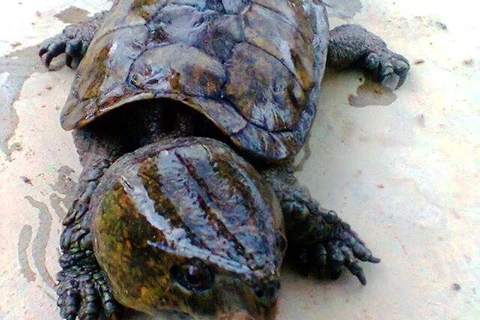
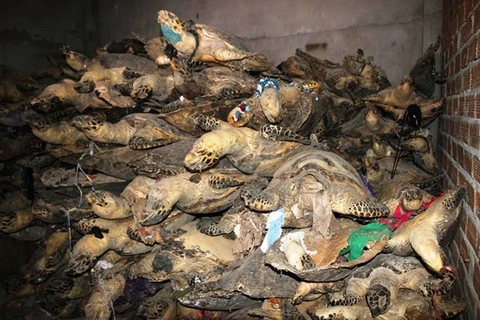
Wildlife crime becomes more serious in Vietnam ảnh 1Illustrative photo (Source: ENV)

Hanoi (VNA) – As wildlife-related crimes are able to generate profits almost equalto those from the trafficking of drugs, firearms, and human beings, they arequickly becoming increasingly more of a threat to Vietnam, according to anofficial from the Wildlife Conservation Society (WCS) Vietnam.

Vietnam has beenviewed as an important link in the chain of transnational illegal wildlifetrade, said WCS Country Programme Director Hoang Bich Thuy.

According to a reporton wildlife violations and law enforcement in Vietnam from 2013-2017 conductedby the WCS and the Department of Criminal Justice Statistics and InformationTechnology at the Supreme People’s Procuracy, Vietnam recorded more than 1,500wildlife crimes, seizing over 41,300kg of wildlife specimens and products, fromJanuary 2013 to December 2017.

Some 1,460 peoplehave reportedly violated regulations on wildlife protection, 432 of who werebrought to trial with criminal charges. The country has collected 16 billionVND (692,340 USD) in fines from these violations, according to the report.

Most recently,nearly 10 tonnes of smuggled ivoryand pangolin scales originating from Nigeria were discovered in a plastic wastecontainer at Tien Sa Port in the central city of Da Nang in October. It was oneof the country’s largest wildlife trafficking cases for some time.

Earlier this month, about 800kg of pangolin scales werefounded in three containers imported from Africa at Hai Phong Port in thenorthern city of Hai Phong. The case is under further investigation.

Although the Governmenthas taken various measures to combat wildlife trafficking, the crime remainswidespread in Vietnam as many people still believe consuming wildlife products,such as rhino horns or pangolin scales, is good for their health.

An official fromthe Department of Forest Protection said that we must develop a comprehensiveaction plan to strengthen law enforcement against illegal wildlife tradingbased on organised statistics and analysis on the crime.

It is also vitalto have a governmental body in charge of collecting data on wildlifetrafficking to provide support for related authorities, he added.

The WCS has worked in Vietnam since 2006 with a focus oncombating illegal wildlife trafficking. The organisation works to degrade,disrupt, and dismantle wildlife trafficking networks and reduce poachingpressure on wildlife populations. –VNA 
VNA
See more

At a ceremony to donate 100,000 trees to the Naval Region 4 (Photo: HANE)

Tree planting programme spreads green momentum in islands

The Ho Chi Minh City Association for Conservation of Nature and Environment (HANE) on January 11 announced 10 outstanding green programmes and activities carried out in 2025, including a programme to plant 1 million trees in Vietnam’s island areas.

Lam Dong releases hundreds of wild animals into the wild. (Photo: VNA)

Lam Dong releases hundreds of wild animals back into the wild

According to the Ta Dung National Park Management Board, the park has for years served as a trusted destination for authorities and residents to hand over and release wildlife. Such actions not only contribute to biodiversity conservation but also help reduce illegal hunting and captivity of wild animals.

According to the Hanoi Department of Agriculture and Environment, air quality index (AQI) readings have at times reached poor and very poor levels. (Photo: VNA)

Hanoi targets 20% reduction in PM2.5 levels

Hanoi has affirmed its commitment not to trade environmental protection for economic growth. The city is moving to establish low-emission zones (LEZs) as a core measure to control emissions and promote green, sustainable urban development.

A waste collection area. (Photo: VNA)

Ca Mau approves investment policy for waste-to-energy plant

The waste-to-energy plant is planned for construction in Dat Moi commune, covering a total area of about 20 hectares. It will have a waste treatment capacity of approximately 600 tonnes of household waste per day and a power generation capacity of 6MW.

Ice coats the summit of Fansipan in the northern province of Lao Cai in the early morning of December 25. (Photo: Published by VNA)

Peak Fansipan blanketed in ice on Christmas Day

With temperatures hovering between 1 and 3 degrees Celsius, frost and ice covered the summit area, creating an ideal condition for tourists eager to admire icy scenery, clouds and experience a Christmas atmosphere amid a sea of cold mist.

Illustrative image (Photo: nhandan.vn)

20 trailblazing companies in national green ESG rankings honoured

In 2025-2026, the “For a Green National Environment” programme will pivot around six tasks that merge expertise with broad social outreach, including targeted communications, "Journey to Net Zero" conferences and trainings, ESG surveys and announcements, a "National Green Ambassador" contest, a "Green Fashion" design competition, and the rollout of "National Green Station" models focused on zero-waste living.

Air pollution in Hanoi. (Photo: VNA)

Hanoi to launch 5,000 public electric bicycles

In a move to reduce air pollution and promote green mobility, Hanoi has approved a plan to deploy 5,000 public electric bicycles, alongside restrictions on petrol- and diesel-powered vehicles in the city’s central area.