Vietnam and Russia have signed an inter-governmental agreement ontransporting highly enriched uranium fuel rods used by Da Lat nuclearreactor into Russia.
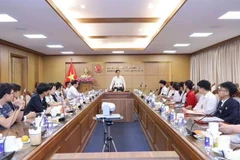
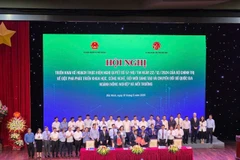
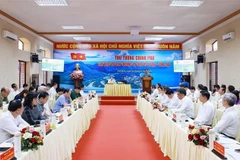
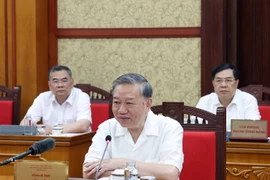
The agreement was signed in Hanoi on March16 by Deputy Minister of Science and Technology Le Dinh Tien and DeputyDirector General Nikolay Spasskiy of the Rosatom Nuclear EnergyCorporation.
Addressing the signing ceremony, Minister of Scienceand Education Nguyen Quan and Deputy Director General Nikolay Spasskiysaid this is an important event reflecting Vietnam’s commitment inimplementing the joint Statement of the first Nuclear Security Summit inWashington in 2010 and the Seoul Nuclear Security Summit this year.
Togetherwith the agreement on building the proposed Ninh Thuan 1 nuclear powerplant and the Nuclear Science and Technology Centre, this agreement hasreaffirmed the strategic cooperation between Vietnam and Russia in usingatomic energy for peaceful purposes and ensuring security and safetyand nonproliferation of nuclear weapons, they said.
Theseagreements will facilitate Russia’s assistance and cooperation withVietnam in building and developing the latter’s young nuclear energysector as well as its implementation of commitments to ensuring securityand safety and non-proliferation of nuclear weapons, the minister said.
Since2007, Vietnam has involved in the programme to change fuel used by DaLat reactor from highly enriched uranium (HEU) to lowly enriched uranium(LEU). The programme was jointly initiated by the International AtomicEnergy Agency (IAEA), the US and Russia to manage HEU fuel used inresearch reactors manufactured by the US and Russia to prevent the useof this source of fuel for non-peaceful purposes.
In Sept. 2007,Vietnam transported 35 unused HEU fuel rods of Da Lat reactor to Russiaand received 36 new LEU fuel rods made by Russia.
In Dec. 2010,Vietnam received and transported 66 LEU fuel rods to Da Lat reactor toreplace all HEU fuel rods being used. In 2011, Da Lat reactorsuccessfully started its operation with LEU fuel.
Used HEU fuel rods are expected to be transported to Russia in May, 2013.-VNA
The agreement was signed in Hanoi on March16 by Deputy Minister of Science and Technology Le Dinh Tien and DeputyDirector General Nikolay Spasskiy of the Rosatom Nuclear EnergyCorporation.
Addressing the signing ceremony, Minister of Scienceand Education Nguyen Quan and Deputy Director General Nikolay Spasskiysaid this is an important event reflecting Vietnam’s commitment inimplementing the joint Statement of the first Nuclear Security Summit inWashington in 2010 and the Seoul Nuclear Security Summit this year.
Togetherwith the agreement on building the proposed Ninh Thuan 1 nuclear powerplant and the Nuclear Science and Technology Centre, this agreement hasreaffirmed the strategic cooperation between Vietnam and Russia in usingatomic energy for peaceful purposes and ensuring security and safetyand nonproliferation of nuclear weapons, they said.
Theseagreements will facilitate Russia’s assistance and cooperation withVietnam in building and developing the latter’s young nuclear energysector as well as its implementation of commitments to ensuring securityand safety and non-proliferation of nuclear weapons, the minister said.
Since2007, Vietnam has involved in the programme to change fuel used by DaLat reactor from highly enriched uranium (HEU) to lowly enriched uranium(LEU). The programme was jointly initiated by the International AtomicEnergy Agency (IAEA), the US and Russia to manage HEU fuel used inresearch reactors manufactured by the US and Russia to prevent the useof this source of fuel for non-peaceful purposes.
In Sept. 2007,Vietnam transported 35 unused HEU fuel rods of Da Lat reactor to Russiaand received 36 new LEU fuel rods made by Russia.
In Dec. 2010,Vietnam received and transported 66 LEU fuel rods to Da Lat reactor toreplace all HEU fuel rods being used. In 2011, Da Lat reactorsuccessfully started its operation with LEU fuel.
Used HEU fuel rods are expected to be transported to Russia in May, 2013.-VNA