Water resources in Hong-Thai Binh River basin under discussion

Scientists and officials from relevant agencies scrutinized scenarios on the changes of water resources in the Hong (Red) –Thai Binh river basin and their impacts at a conference held in Hanoi on July
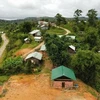
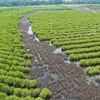
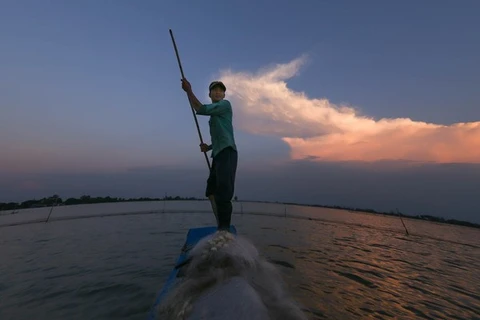
Water resources in Hong-Thai Binh River basin under discussion ảnh 1Illustrative photo (Source: VNA)

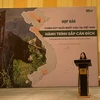
Hanoi (VNA) – Scientists and officials from relevant agencies scrutinized scenarios on the changes of water resources in the Hong (Red) –Thai Binh river basin and their impacts at a conference held in Hanoi on July 14.

The conference also took in subjects like the sustainable development of water resources, improving water use efficiency and solutions to ensure water supply in the context of climate change, economic development and related international agreements.

Discussions at the event will assist with the building of a water resource plan for the Hong-Thai Binh river basin that ensures a fair and reasonable distribution of the resource among areas and groups of water users in the region.

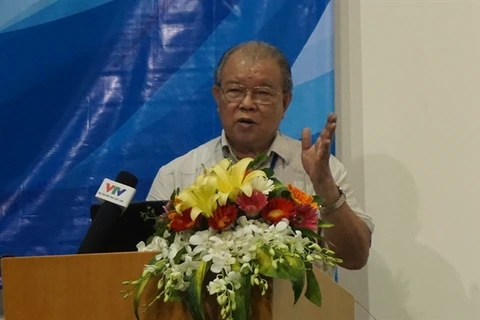
According to Dr. Tong Ngoc Thanh from the National Centre for Water Resources Planning and Investigation, the water resources planning in Hong-Thai Binh River basin should include the protection of ecosystems depending on water resources.

Echoing Thanh’s viewpoint, Dr. To Van Truong said the environmental planning should be done in correlation with the water resources planning.

The Hong and Thai Binh are the two major rivers in the north of Vietnam. The rivers and their tributaries form the Red River Delta.-VNA
VNA

See more

UNESCO Representative to Vietnam Jonathan Wallace Baker and Japanese Ambassador Ito Naoki at the signing ceremony (Photo: baoquocte.vn)

UNESCO, Japan sign deal to bolster Vietnam’s disaster early warning

Climate change adaptation remains a top priority in Vietnam’s development strategy and national security outlook through 2050. Vietnam will maintain close cooperation with Japan, UNESCO and other partners to guarantee the project’s effectiveness and advance common goals.

The German Agency for International Cooperation (GIZ)'s Managing Director Thorsten Schäfer-Gümbel speaks at the working session with the Vietnamese-German University. (Photo: VNA)

Vietnam, Germany step up collaboration on energy transition, green hydrogen

Schäfer-Gümbel praised the strong commitment of Vietnamese partners to sustainable energy goals. He noted that the long-standing development cooperation between Germany and Vietnam is evolving, with energy transition emerging as a strategic area of collaboration in addressing global challenges.

Cat Ba langur is an extremely rare primate species found exclusively in the humid tropical forests of Cat Ba island (Photo: VNA)

Belgian TV spotlight: Vietnam's wild nature reborn

Through the lens of “Le Jardin Extraordinaire”, Vietnam was portrayed not simply as a travel destination but as a still-emerging realm of discovery: a nation whose nature, though heavily wounded in the past, demonstrates extraordinary powers of recovery, quietly upholding its pristine essence against the pressures of time.

The macaque, scientifically known as Macaca arctoides. (Photo: VNA)

Quang Tri receives endangered stump-tailed macaque

The Cam Lo-Dong Ha forest protection unit in the central province of Quang Tri has received a rare stump-tailed macaque, a species listed as endangered, precious and rare in the Vietnam Red Data Book.

At a ceremony to donate 100,000 trees to the Naval Region 4 (Photo: HANE)

Tree planting programme spreads green momentum in islands

The Ho Chi Minh City Association for Conservation of Nature and Environment (HANE) on January 11 announced 10 outstanding green programmes and activities carried out in 2025, including a programme to plant 1 million trees in Vietnam’s island areas.

Lam Dong releases hundreds of wild animals into the wild. (Photo: VNA)

Lam Dong releases hundreds of wild animals back into the wild

According to the Ta Dung National Park Management Board, the park has for years served as a trusted destination for authorities and residents to hand over and release wildlife. Such actions not only contribute to biodiversity conservation but also help reduce illegal hunting and captivity of wild animals.

According to the Hanoi Department of Agriculture and Environment, air quality index (AQI) readings have at times reached poor and very poor levels. (Photo: VNA)

Hanoi targets 20% reduction in PM2.5 levels

Hanoi has affirmed its commitment not to trade environmental protection for economic growth. The city is moving to establish low-emission zones (LEZs) as a core measure to control emissions and promote green, sustainable urban development.