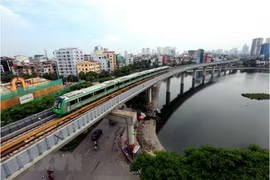
Hanoi (VNA) – The railway sector will focus on improving the service quality and facilities so as to attract passengers back and to return to its key position in transportation forms.
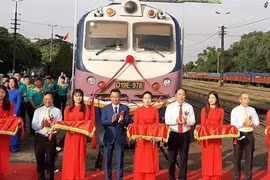
 The five-star train commissioned by the Vietnam Railways Corporation has won praises by passengers (Photo: VietnamPlus)
Speaking to VietnamPlus, President of the Member Council of the Vietnam Railways Corporation (VNR) Vu Anh Minh held that it is natural for the railway sector to become outdated as its infrastructures were built over a century ago, getting small investment and confronting harsh competition in terms of passenger market share from the automobile and budget airline sectors.
A report by the VNR said that in the first six months of this year, the corporation failed to achieve all the targets set in production and revenue: production was only nearly 4 trillion VND and revenue nearly 3.8 trillion VND.
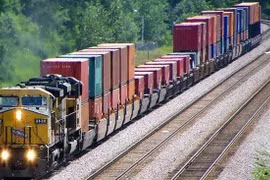
July saw a small growth in the number of passengers and the VNR focused on the exploitation of the specialised freight lines to offset part of the decreases like the express container trains for the last months of the year. It is expecting and striving to achieve a production and revenue increase of 7 percent for this year over 2018.
One of the causes of the low performance is that the railway sector remains inferior in the competition in the field of passenger transportation against the automobile and budget airline sectors. In terms of freight transportation, it is hard for the VNR to compete against the marine, automobile and waterway sectors in prices and logistics.
It is noteworthy that investment measures aimed at untangling the knots in infrastructures, storing services and facilitation have not been implemented well due to mechanisms and legal provisions from the State management offices.
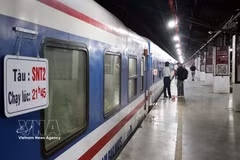
Elaborating on the fall of revenue of the railway sector, Minh said that over the past two years, the sector has focused on the reform and improvement of the service quality, building two-layer bed cars rather than three-layer, 50-seater cars instead of 60-seater or 80-seater. The service quality has been improved, each train is now serving only 400 passengers rather than 600 like before. This reduces the number of passengers but the VNR has to improve the service quality to attract passengers back to the railway sector.
“If the old trains are kept without any reform or improvement in the service quality, in a not too far future, all of the passengers will turn their back to the railway services as the need and requirement for the quality in the life will be higher and higher, while the railway sector fails to catch up with these,” the official said.
In Minh’s opinion, it is the railway sector’s policy to focus on the improvement of the service and vehicle quality. Besides, the Government and the National Assembly have also paid attention to the sector to gradually raise the quality of the comprehensive infrastructures so as attract passengers back. That is why there must be a period of time for the VNR to adjust its business plan.
Affirming that it is hard to answer the question when the railway sector can regain its market share and compete with the aviation and automobile sector, the official also admitted that it is natural for the railway sector to become outdated as its infrastructures were built over 100 years ago while investment capital for it is only 2 percent while that for the automobile one amounts to over 90 percent.
Minh also asked units in the sector to push up the implementation of solutions and strive to achieve the growth target set for the whole of 2019, with special attention to solutions on transportation, further facilitation for passengers and safety measures, while completing projects on the upgrade and repair works as scheduled./.