Workshop promotes cooperation in ensuring just energy transition

An international workshop to promote cooperation in ensuring fairness in Vietnam’s energy shift towards more eco-friendly power was held by the Vietnam Union of Science and Technology Associations (VUSTA), the Friedrich-Ebert-Stiftung (FES) Vietnam Office, and the Green Innovation and Development Centre (GreenID) in Hanoi on September 18.
Workshop promotes cooperation in ensuring just energy transition ảnh 1At the workshop (Source:VNA)

Hanoi (VNA) – An international workshop to promote cooperation inensuring fairness in Vietnam’s energy transition  towards more eco-friendly power washeld by the Vietnam Union of Science andTechnology Associations (VUSTA), theFriedrich-Ebert-Stiftung (FES) Vietnam Office, and the Green Innovation and Development Centre (GreenID) in Hanoi on September 18.

Over100 experts, researchers, and representatives from State agencies, researchinstitutes, and domestic and international sci-technology organisationsdiscussed and shared experience in researching and building strategies toimplement fairness in Vietnam’s energy shift.

Theconcept of a “just energy transition” is nothing alien to Europe and North America,however it is still relatively new in Asia and Vietnam in particular. The just transition not only refers to the environmental impact, but must also include socio-economicchanges to promote global energy mobility and effectively implement targets setin the Paris Agreement on Climate Change.

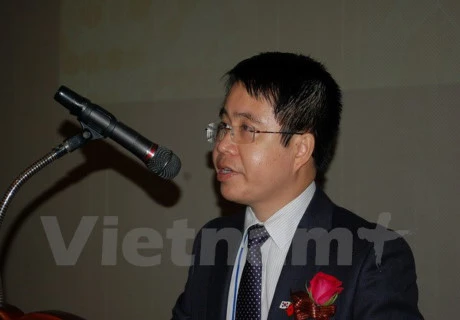
Speakingat the event, Le Duy Tien from VUSTA said that developing clean energy sources andreducing plants using fossil fuels that pollute the environment is anirreversible trend in the world, including Vietnam.

Hestressed, however, that due attention has not been paid to ensuring fairness inthe sector shifting fossil fuels to renewable energy sources, as well as in ensuringjobs for labourers and relevant communities.

Theworkshop offered a chance for policymakers and researchers of Vietnam to meetand discuss with experts from Germany, China, India, Indonesia, and Thailand,as well as getting an overview of what is going on internationally andregionally towards outlining appropriate policies to make the energy transition processin Vietnam fairer.

At the event, GreenID’s research group announced a study on the quantity andquality of jobs as the energy transition takes place and how to achieve a fair shiftin the energy sector in Vietnam.

According to NguyenHoang Nguyen, from the Ministry of Labour, Invalids, and Social Affairs andalso a member of GreenID, to build a 600MW coal-fired power plant, it takes anaverage of 2,000 labourers and three and a half years.

Nguyen said in the short and medium term (up to 2025), the number of jobs from theconstruction and maintenance of a coal project is higher than that from moreenvironmentally-friendly projects. However, she noted that the number of jobswill increase significantly after this period.

The employment structure will shift sharply towards increasing the proportionof the renewable energy sector. However, the current wage of workers in wind andsolar power plants is not higher than that of those working at thermal powerplants. Therefore, it is harder to attract more highly-skilled labourers.

Nguyen said that workers are not fully qualified with the necessary skills towork in the renewable energy sector, and that there are not many specific trainingestablishments in Vietnam, adding that the Government needs to provide vocationalskills training programmes for labourers in order to facilitate the transitionprocess.

It is also necessary to ensure the involvement of workers and local communitiesin making policies on energy development and shifts, she added.

According to Yvonne Blos, Director of the climate and energy project for FESVietnam,  FES aims to build more comprehensive ideas on fairness in the energy shift, thusforming a more sustainable and humane economy.

FES Vietnam and GreenID are working together to researchways to achieve fairness in Vietnam’s energy shift.

Under the revisedPower Plan VII, approved by the Government on March 18, 2016, coal-fired power willdecrease to 55,300 MW by 2030, accounting for 42.6 percent of the national powerstructure.

The study “Power DevelopmentScenarios in Vietnam” by GreenID indicates that, if considering theperipheral costs and prioritising the economical and efficient use of energy,Vietnam will have an opportunity to reduce its proportion of coal-fired powerto around 24.4 percent, increase the proportion of renewable energy to about 30percent, with electricity also playing a larger role, accounting for 22.8percent.

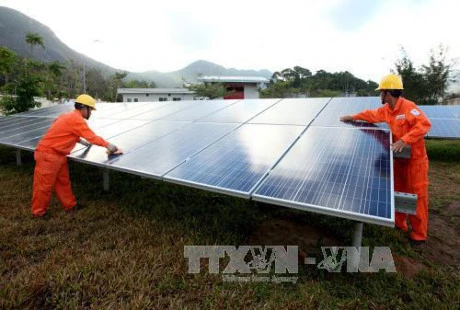
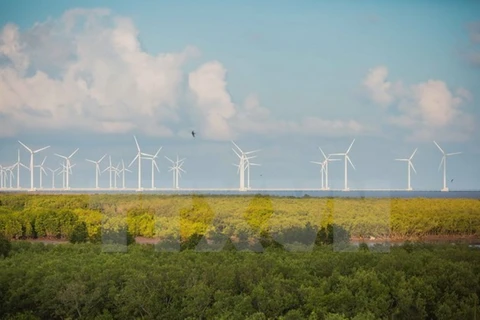
Experts underlined the necessity for Vietnam to develop a new long-term energyvision to improve access to energy and reduce greenhouse emissions; as well asto increase investment in energy efficiency and renewable energy, especially inwind and solar power.

The country alsoneeds to devise fiscal policies and regulations to promote and improve the capacityof renewable energy and energy efficiency, giving priority to remotecommunities in order to increase benefits for low-paid labourers and those in labour-intensiveindustries, they noted. –VNA


VNA

See more

Participants in the ASEAN Plus Photonics Symposium in Gia Lai province on April 8 (Photo: baogialai.com.vn/)

Gia Lai province hosts ASEAN Plus Photonics Symposium

Participants presented and discussed a wide range of advanced topics shaping the future of photonics, including nanophotonics and metasurfaces; topological and non-Hermitian photonics; photonic crystals and optical lattices; light–matter interactions and polariton systems.

Vietnamese Ambassador to Brazil Bui Van Nghi (right) and Professor and quantum physicist Olival Freire Juniorin, President of Brazil's National Council for Scientific and Technological Development, at their meeting on April 7. (Photo: Vietnamese Embassy in Brazil)

Vietnam, Brazil to strengthen cooperation in science, technology

Ambassador Bui Van Nghi expressed Vietnam’s interest in strengthening cooperation with Brazil in areas such as renewable energy and environmental technologies, as well as high-tech sectors including artificial intelligence (AI), quantum technology, and the semiconductor industry.

Teachers guide students in experiencing the application of science (Photo: VNA)

Results become benchmark for science-technology governance

The transition to facilitative governance marks not only an operational reform but also a shift in development thinking. With expanded autonomy and controlled risk acceptance, science, technology, innovation and digital transformation are expected to become key drivers of rapid and sustainable growth in the years ahead.

Students experience robotic products (Photo: VNA)

AI powers sweeping overhaul of Vietnam’s education system

Nguyen Son Hai, Deputy Director General of the Department of Information and Communication Technology under the Ministry of Education and Training (MoET), said the sector has made rapid strides in digital transformation, from online classes during the COVID-19 pandemic to nationwide platforms covering the national education database, registration for high school graduation exam, and online university admissions.

Voters can access essential information about candidates on the VNeID app, enabling them to proactively learn and enhance their awareness when participating in elections. (Photo: VNA)

Digital transformation gathers pace nationwide

Adopted by the Politburo in late 2024, Resolution 57 positions science – technology development, innovation, and digital transformation as a top important breakthrough and strategic pillar for Vietnam’s development in the new era. Early implementation shows a clear shift toward data-driven governance and technology-enabled public services.

Can Tho city pledges to allocate at least 1% of total budget spending to science, technology and innovation (Illustrative image. Source: VNA)

Plan issued to implement Vietnam–France agreement on science-technology cooperation

Under the plan, the Ministry of Science and Technology will take the lead, in coordination with relevant ministries and agencies, in directing, guiding, monitoring and inspecting the implementation of the agreement. The ministry will also prepare reports on the signing and implementation progress for submission to the Ministry of Foreign Affairs for consolidation and reporting to competent authorities as required.

An overview of the provincial steering committee of Tay Ninh on implementing Resolution 57 on April 2 (Photo: VNA)

Tay Ninh moves to accelerate digital transformation

In science, technology and innovation, Tay Ninh has identified six major priorities: development of the digital economy, a carbon credit market, a Halal ecosystem, renewable energy, enterprise innovation support, and applications of artificial intelligence and big data.

Vietnam successfully held its first auction of national “.vn” domain names from March 18 to 20. (Photo: VNA)

Sci-tech revenue up 17% in March

The sci-tech sector contributed 133.5 trillion VND to the country’s gross domestic product (GDP) in March, a 28% increase from the same period last year.

By 2030, Vietnam targets ranking among the world’s top 15 countries in the Global Cybersecurity Index (Source: baochinhphu.vn)

Project aims to enhance capacity of national cybersecurity protection force

The project aims to strengthen overall capabilities and develop an elite and modern cybersecurity force able to proactively prevent and effectively respond to all cyber risks and threats, safeguarding national security, social order and safety, and the rights and lawful interests of organisations and individuals in cyberspace.