17th international conference on East Sea wraps up

The event also featured two special sessions — an ambassadors’ lounge and a session on youth power — offering diverse perspectives on regional developments and exploring innovative ideas to safeguard peace and maintain a rules-based order in the East Sea.

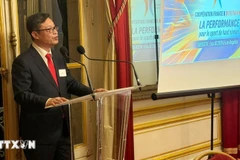
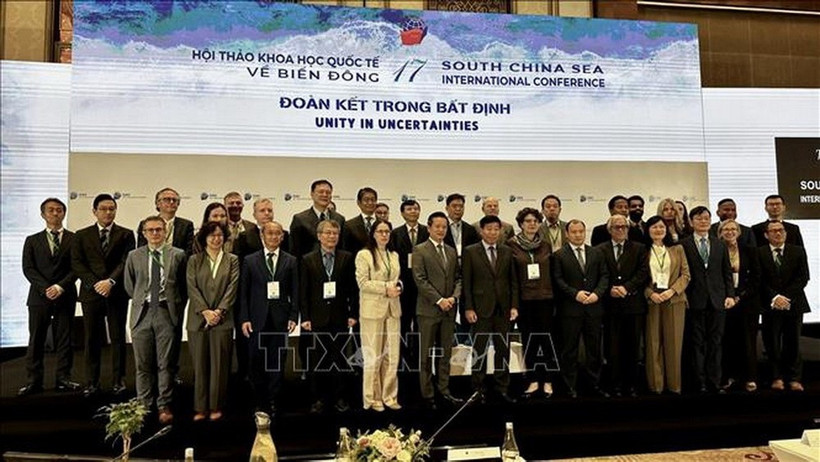
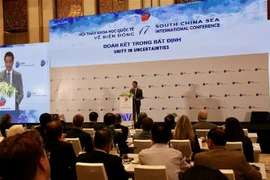
Delegates at the conference (Photo: VNA)

Da Nang (VNA) - The 17th international conference on the East Sea concluded on November 4 in the central city of Da Nang after two days of discussions focusing on ASEAN’s role and the significance of the 1982 United Nations Convention on the Law of the Sea (UNCLOS).

The event also featured two special sessions — an ambassadors’ lounge and a session on youth power — offering diverse perspectives on regional developments and exploring innovative ideas to safeguard peace and maintain a rules-based order in the East Sea.

In his keynote remarks, Australian Assistant Minister for Immigration and Assistant Minister for Foreign Affairs and Trade Trade Matt Thistlethwaite underlined the crucial role of UNCLOS in maintaining peace, stability and the peaceful settlement of international disputes. He stressed that adherence to international maritime law is essential for economic security and shared prosperity, reaffirming Australia’s commitment to upholding global rules and institutions amid an increasingly complex world order.

During the ambassadors’ lounge, representatives from the European Union, Canada, Germany, Japan and Vietnam emphasised the East Sea’s strategic importance and agreed that maintaining peace and stability in the area is a shared responsibility of the international community.

They underscored that international law, particularly UNCLOS, provides the foundation and the only viable pathway for resolving maritime issues. Non-regional partners were urged to fulfil their commitments through concrete actions, including ensuring freedom of navigation, enhancing multilateral diplomacy, and fostering international cooperation on sustainable blue economy initiatives.

Participants acknowledged ASEAN’s central role in shaping regional discussions on the East Sea but noted that the bloc faces growing challenges amid major-power competition. Internal differences and external pressure have at times hindered ASEAN consensus on key security matters, they said.

Some delegates observed that dispute settlement mechanisms under the Treaty of Amity and Cooperation (TAC) remain largely symbolic, while the 2002 Declaration on the Conduct of Parties in the East Sea (DOC) lacks effective enforcement and oversight. Negotiations on a Code of Conduct in the East Sea (COC) have proven difficult due to divergent views among parties on its legal nature and scope of application.

On UNCLOS, most experts reaffirmed its status as the “Constitution of the Oceans”, forming a comprehensive legal framework for all maritime activities and providing a foundation to address emerging challenges such as climate change and rising sea levels.

However, they warned that certain actors have sought to misinterpret or misuse UNCLOS provisions to advance unilateral claims, while rapid technological advances and shifting natural conditions are creating new legal complexities.

Scholars proposed various measures to reinforce peace and maritime order, calling on ASEAN to strengthen internal unity, enhance collective capacity, and expand cooperation with external partners and multilateral mechanisms.

They also recommended improving transparency, dialogue and information-sharing to build trust and establish early-warning systems to prevent conflicts.

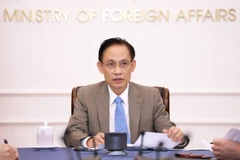
At the closing session, Dr Nguyen Hung Son, Director of the Diplomatic Academy of Vietnam, noted that the exchanges helped clarify the regional landscape, the roles of key stakeholders, and the implications of emerging technologies such as marine automation and artificial intelligence for maritime security.

Son emphasised that in an increasingly uncertain global and regional environment, countries must continue dialogue, information exchange and capacity building to reinforce unity and solidarity.

The conference, he said, generated valuable ideas to strengthen ASEAN’s centrality and ensure the effective implementation of UNCLOS — a cornerstone for peace, stability and sustainable development in the region. ./

VNA
See more

Party General Secretary To Lam (R) and Slovak Deputy Prime Minister and Minister of Defence Robert Kaliňák (Photo: VNA)

Party chief welcomes Slovak Deputy PM

The Slovak Government and people always wish to further enhance the effectiveness of multifaceted cooperation, particularly in national defence and other areas of mutual interest.

Vietnamese Prime Minister Pham Minh Chinh delivers a policy speech at the Kuwait Diplomatic Institute on November 18. (Photo: VNA)

PM outlines Vietnam’s development vision, strategic ties with Kuwait in policy address

Vietnamese Prime Minister Pham Minh Chinh delivered a policy speech at the Kuwait Diplomatic Institute on November 18 as part of his official visit to Kuwait, stressing that Vietnam–Kuwait relations are entering a period of dynamic transformation and hold the potential to become a model partnership between Southeast Asia and the Gulf, as well as a solid friendship bridge connecting Asia and the Middle East.

Party General Secretary To Lam receives Vincent Clerc, Chief Executive Officer of Denmark’s A.P. Moller – Maersk on November 18 in Hanoi. (Photo: VNA)

Party chief receives CEO of Denmark's A.P. Moller – Maersk

Denmark’s A.P. Moller – Maersk is seeking investment opportunities to develop large, modern and green container ports, along with strategic logistics projects in Vietnam, thereby helping the country expand import–export turnover, promote sustainable economic growth, transition toward a low-carbon economy, adapt to climate change and achieve net-zero emissions at the earliest possible time.

Vietnamese, Chinese border guards disseminate laws in Lang Son's Tan Thanh market (Photo: VNA)

Vietnam, China border forces maintain effective cooperation mechanism

Vietnamese and Chinese border guard forces have consented to strengthen information exchange on issues related to border gate management, entry-exit control, and combating organised criminal activities, including illegal immigration networks, illegal transport of cash and precious metals through border gates, smuggling and trade fraud.

The award is granted to former Vietnamese Vice President Nguyen Thi Binh (Photo: VNA)

Vietnamese contributors to peace, int’l solidarity honoured

Nguyen Thi Binh, former member of the Party Central Committee, former Vice State President of Vietnam, and Honorary President of the Vietnam Peace and Development Council (VPDC), has been conferred with Romesh Chandra Peace Award by the World Peace Council (WPC) and the All India Peace and Solidarity Organisations (AIPSO) for her outstanding contributions to peace and international solidarity.

☕ Afternoon briefing on November 18

☕ Afternoon briefing on November 18

State President Luong Cuong's participation in the Great National Unity Festival in Da Nang city, the Czech Senate President's start of an official visit to Vietnam, and losses triggered by floods in the central region are among news highlights on November 18.

President of the Senate of the Parliament of the Czech Republic Milos Vystrcil (Photo published by VNA)

Czech Senate President begins official visit to Vietnam

The visit by the Czech Senate President demonstrates that parliamentary cooperation is an important pillar of bilateral relations and underscores the commitment of both countries to strengthening linkages, promoting cooperation, and elevating Vietnam – Czech relations to a new height.

Minister of National Defence General Phan Van Giang (L) and Deputy Prime Minister and Minister of Defence of Slovakia Robert Kaliňák review the Guard of Honour of the Vietnam People's Army on November 18. (Photo: VNA)

Vietnam, Slovakia step up defence cooperation

The two sides will seek cooperation opportunities in cybersecurity, bomb and mine clearance, war-consequence remediation, and responses to non-traditional security challenges, while supporting each other within the framework of Vietnam–EU cooperation.

Vietnam mainly exports coffee, cashew nuts, peppercorns, seafood, chemicals, footwear, garments, and steel to Algeria. (Photo: VNA)

Vietnam – Algeria: New drivers for bilateral trade relations

More than six decades after diplomatic ties were established (1962–2025), Vietnam and Algeria have achieved significant progress in economic and trade cooperation. In recent years, bilateral trade has grown strongly, with export structure expanded, and oil and gas collaboration seen as a success symbol of their partnership.

The meeting of the organising subcommittee for the 14th National Party Congress on November 18 reviews preparations for the coming event. (Photo: VNA)

Subcommittee reviews preparations for 14th National Party Congress

Politburo member and Permanent Member of the Party Central Committee's Secretariat Tran Cam Tu urged relevant agencies and units to make greater effort to fulfil the approved plan, closely follow the Politburo’s conclusions, ensure the highest level of quality and professionalism, and effectively carry out the seven key task groups as there are only about two months left before the congress.

Vietnamese Ambassador to Brazil Bui Van Nghi and representatives from the Youth Climate Action Network of Vietnam participate in an event on the COP30 sidelines. (Photo: VNA)

Vietnam participates in parliamentary meeting at COP30

The Vietnamese Ambassador to Brazil attended the Parliamentary Meeting, co-organised by the Inter-Parliamentary Union (IPU) and the National Congress of Brazil on the sidelines of COP30, where delegates examined how to translate global climate commitments into transparent and just national actions.

Goumiri, a leading Algerian political and economic expert, in an interview granted to the Vietnam News Agency (Photo: VNA)

PM’s official visit to Algeria seen as key boost for bilateral relations

Vietnam and Algeria share a special foundation in their bilateral ties— one that not all country pairs possess—rooted in solidarity during their revolutionary struggles and strengthened over decades by political affinity, similar international perception, and mutual support at key moments in history.