52 provincial-level administrative units to be reorganised: draft resolution

Administrative units with isolated locations and limited transport connectivity with adjacent administrative units, as well as those holding special importance to national defence and security, will not be compulsorily subject to re-organisation, according to the draft resolution.

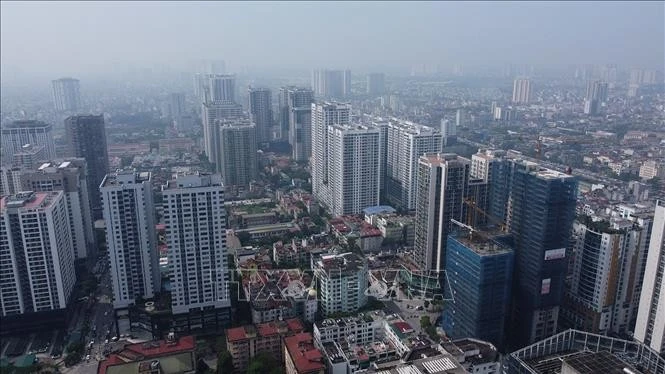
Fifty-two provincial-level administrative units are set to be re-organised (Illustrative image. Source: VNA)

Hanoi (VNA) – The Ministry of Home Affairs has completed a National Assembly Standing Committee draft resolution on the re-organisation of administrative units to submit to the Ministry of Justice for verification.

According to the draft resolution, the criteria for restructuring provincial- and communal-level administrative units are aligned with the six key criteria previously considered and agreed upon by the Politburo.

These criteria cover the natural area; population scale; historical, cultural, religious, and ethnic factors; geo-economic characteristics (including geographical location, and the scale and level of economic development); geopolitical factors; and national defence and security considerations.

The draft also stipulates that administrative units with isolated locations and limited transport connectivity with adjacent administrative units, as well as those holding special importance to national defence and security, will not be compulsorily subject to re-organisation.

Based on these criteria, 52 provincial-level administrative units are set to be re-organised, comprising four cities – Hai Phong, Ho Chi Minh City, Da Nang, and Can Tho, and 48 provinces – Ha Nam, Hung Yen, Vinh Phuc, Bac Ninh, Thai Binh, Hai Duong, Nam Dinh, Ninh Binh, Bac Kan, Thai Nguyen, Phu Tho, Bac Giang, Hoa Binh, Tuyen Quang, Lao Cai, Yen Bai, Ha Giang, Ninh Thuan, Quang Tri, Phu Yen, Quang Binh, Quang Ngai, Khanh Hoa, Dak Nong, Tay Ninh, Binh Duong, Binh Thuan, Binh Phuoc, Ba Ria - Vung Tau, Ben Tre, Bac Lieu, Vinh Long, Hau Giang, Tra Vinh, Tien Giang, Soc Trang, Dong Thap, An Giang, Long An, Ca Mau, Quang Nam, Binh Dinh, Dak Lak, Dong Nai, Gia Lai, Kon Tum, Lam Dong, and Kien Giang.
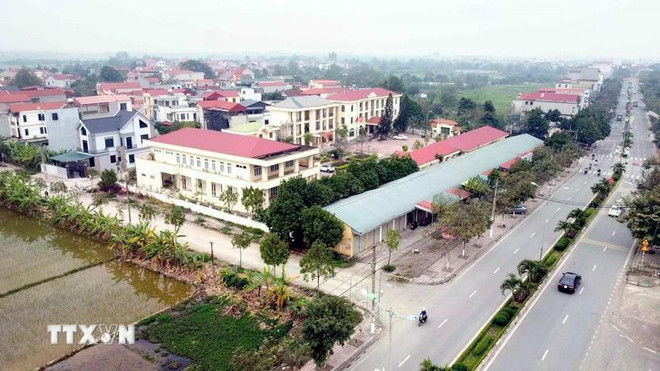
vinh-phuc-sap-nhap-sap-xep-28-don-vi-hanh-chinh-cap-xa-resize.jpg
A view of Nguyet Duc commune, Yen Lac district of Vinh Phuc province (Photo: VNA)

Meanwhile, 11 provinces and centrally-run cities are excluded from restructuring. They comprise Hanoi, Hue, Lai Chau, Dien Bien, Son La, Lang Son, Cao Bang, Quang Ninh, Thanh Hoa, Nghe An, and Ha Tinh.

At the communal level, 9,996 out of the 10,035 administrative units nationwide will undergo restructuring. The draft resolution mandates that following the restructuring, the number of communes and wards in each province and city will decrease by at least 70%, and by no more than 75%, compared to the current total number of communal-level administrative units in that province/city.

The draft also outlines the principle that administrative unit re-organisation must be connected with the reform and streamlining of the political system's apparatus to ensure effective and efficient operations. The move needs to capitalise on the potential and advantages of localities, expand development space, promote decentralisation, and strengthen the autonomy and accountability of local governments. Additionally, the re-organisation must be carried out in tandem with the restructuring of the administrative workforce, with a focus on improving the quality of officials, civil servants, and public employees across all levels./.

VNA

See more

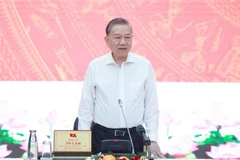
General Secretary of the 14th Central Committee of the Communist Party of Vietnam To Lam (Photo: VNA)

Foreign leaders extend congratulations to Party General Secretary To Lam

First Secretary of the Communist Party of Cuba Central Committee and President of Cuba Miguel Diaz-Canel Bermudez expressed his belief that under the General Secretary’s clear-sighted leadership, the Party and people of Vietnam will continue advancing firmly on the path towards socialism and usher in a new phase of more prosperous, inclusive, and sustainable development.

Prof. George Toloraya, Director of the Centre for Russian Strategy in Asia at the Institute of Economics of the Russian Academy of Sciences. (Photo published by VNA)

Vietnam enters new development era: Russian scholar

Prof. George Toloraya noted that the 14th Party Congress represents a pivotal shift from Vietnam’s role as a “factory of the world” toward its ambition to become a high-tech powerhouse, with development quality reaching a higher level.

Participants pose for a group photo at the ceremony to mark the 76th founding anniversary of the diplomatic relations between Vietnam and China in Chongqing. (Photo: VNA)

Chongqing ceremony marks 76th anniversary of Vietnam – China ties

Consul General Bui Nguyen Long noted that the fruitful bilateral ties over the past 76 years have clearly demonstrated that the unceasing enhancement and development of Vietnam – China relations is fully consistent with the shared aspirations and long-term fundamental interests of the two peoples.

Delegates at the 14th National Party Congress vote on the list of candidates to the 14th Party Central Committee. (Photo: VNA)

14th National Party Congress: Enduring strength of people-centred path

Kyril Whittaker, a UK-based Vietnam specialist, that Vietnam’s 40-year Renewal (Doi Moi) process has succeeded thanks to three closely intertwined factors - a scientific and practical approach to reform, the Communist Party of Vietnam’s leadership role, and the principle of placing the people at the heart of all policies.

Party General Secretary To Lam speaks at an international press conference announcing the results of the 14th National Party Congress on the afternoon of January 23. (Photo: VNA)

Renewing mindset, setting development vision through 2045: Party General Secretary To Lam

The political report integrates three previously separate documents - the political report, the socio-economic report and the review of Party building - into a single, unified and comprehensive one, with clearer priorities. Designed to be concise, easy to understand, remember and implement, this integration stands out as a key hallmark of the Congress.

Communist Party of Vietnam General Secretary To Lam (right) and General Secretary of the Central Committee of the Lao People’s Revolutionary Party and President of Laos Thongloun Sisoulith during his visit to Vietnam on September 10, 2024 (Photo: VNA)

Top Lao leader to pay state visit to Vietnam

General Secretary of the Central Committee of the Lao People’s Revolutionary Party and President of Laos Thongloun Sisoulith and his spouse will pay a state visit to Vietnam from January 26 to 27.

The article titled “The 14th National Congress of the Communist Party of Vietnam and the Advance toward a New Era,” published on aladaainternacional.com, the website of the Latin American Center for Studies on Asia and Africa. (Photo: VNA)

14th National Party Congress: Vietnam’s strategic shift in new era

Vietnam now stands at the threshold of a new development era, driven by strong aspirations and substantial potential. The 14th Party Congress is, therefore, of decisive importance for the country’s future transformations, particularly amid an international environment marked by uncertainty and volatility. While this phase may be among the most complex of the renewal process, it also presents a critical opportunity for Vietnam to break through and evolve from an “Asian tiger” into a regional “dragon.”