📝 OP-ED: Streamlined apparatus aims to ensure legitimate rights, interests of people

Many experts believe that to effectively implement this policy, a suitable roadmap and concerted solutions are necessary to ensure the rationality of the organisational structure, avoid overburdening local administrations, and guarantee the maximum legitimate rights and interests of the people.

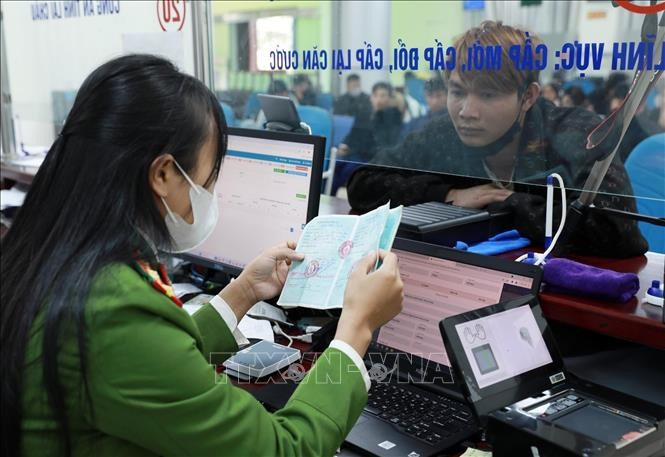
A police officer in Lai Chau province guides citizens to complete administrative procedures at the provincial Public Administrative Service Centre. (Photo: VNA)

Hanoi (VNA) - To enhance the effectiveness and efficiency of state management, the Politburo has issued a conclusion regarding the research and proposals to continue reorganising the structure of the political system, including the merger of some provincial-level administrative units, the elimination of district-level ones, and the further merger of commune-level units.

The issuance of Conclusion 127-KL/TW of the Politburo and the Secretariat on February 28, 2025 is seen as an important step in the administrative reform process, contributing to streamlining the apparatus, improving service quality for the people, and optimising resources.

Many experts believe that to effectively implement this policy, a suitable roadmap and concerted solutions are necessary to ensure the rationality of the organisational structure, avoid overburdening local administrations, and guarantee the maximum legitimate rights and interests of the people.

Policy should be piloted on small scale

According to Professor Dr. Dang Huy Huynh, Chairman of the Vietnam Heritage Tree Association, reorganising the administrative apparatus towards a leaner structure is a necessary step, in line with the trend of administrative reform in many countries worldwide, such as Denmark that cut the number of administrative units to save budget, optimise resources, and improve management efficiency; and France where administrative regions are also reduced.

Affirming his support for the policy, Huynh also pointed out some challenges that Vietnam needs to be aware of. One of them is that when district-level administrative units are eliminated, local administrations at the commune level may have to take on more responsibilities, leading to the risk of overload. This requires reasonable adjustments in organisation and staffing, as well as promoting the use of technology to reduce manual workloads.

In addition, to ensure the effective implementation of this policy, the professor proposed piloting it in small localities to assess impact and draw lessons before rolling it out nationwide. Furthermore, there needs to be stronger decentralisation to local authorities, enhancing the empowerment of commune-level administrations to ensure uninterrupted management work.

Regarding the promotion of digital transformation, he stressed that investing in an e-government system aims to support citizens in carrying out administrative procedures online, thereby easing the pressure on local administrative bodies. At the same time, it is essential to strengthen training and capacity-building for officials and civil servants, helping them adapt to such changes and improve their public management skills.
streamlined-apparatus-2.jpg
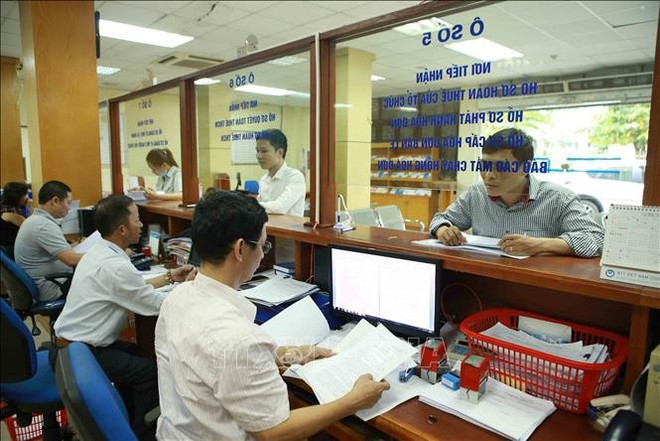
People conduct procedures at the Hanoi Taxation Department. (Photo: VNA)

Ensuring financial resources and infrastructure is also a crucial factor in enabling commune-level governments to effectively carry out new tasks transferred from the district level. Streamlining the administrative apparatus is not only about merging administrative units but also requires revamping management methods, applying technology, and enhancing the capacity of the staff. If the work stays on the right track, it will be a breakthrough in administrative reform, contributing to improving state management efficiency and better serving the people.

Maximum convenience for the people

Not only has the policy received support from experts and scientists, but it has also been endorsed by many citizens. However, alongside this support, there are concerns regarding the accessibility of public administrative services once the district level is eliminated.

According to Nguyen Tien Vinh, Deputy Secretary of the Party Cell of Residential Area No. 3, Lac Trung street, Vinh Tuy ward, Hanoi’s Hai Ba Trung district, the elimination of the district level may require citizens to travel longer distances to complete administrative procedures. Currently, many people are used to going to district headquarters to handle paperwork such as birth registration, land use rights certification, and business registration.

If these procedures are moved to the provincial level or down to the commune level, a reasonable mechanism needs to be in place to ensure convenience for the people, Vinh proposed, mentioning the capacity of commune-level administrative units to handle additional tasks from the district level. Commune officials are already very busy, and adding more responsibilities could affect the speed of work processing. Therefore, there needs to be a specific plan to ensure no pressure on the system and service quality.

In light of this reality, Vinh suggested expanding online public administrative services, allowing citizens to complete procedures from home without needing to travel long distances.

Additionally, inter-regional administrative centres should be established to allow citizens to complete procedures quickly without travelling to the provincial level. Furthermore, there is a need to strengthen communication and guidance to help people understand the implementation roadmap and the new operational methods, so they can proactively adapt to the changes.

If the government has a clear plan and invests in technology, the elimination of the district level will make sense, helping to reduce administrative procedures and make things more convenient for the people./.
VNA

See more

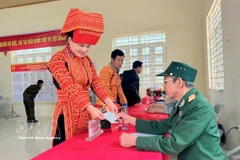
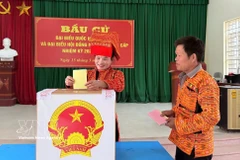
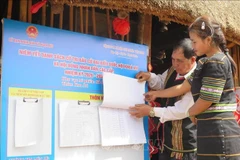
Dao ethnic minority people cast their votes. (Photo: VNA)

📝OP-ED: Responsibility, trust demonstrated in general election

The success of the election of deputies to the 16th National Assembly and People’s Councils at all levels for the 2026–2031 term goes beyond the scope of a routine political event. It is an occasion for people nationwide to exercise their right to mastery and place their trust in the representatives chosen for the country’s new stage of development.

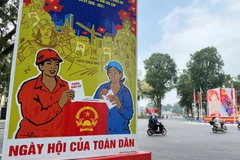
Muong Sai commune in Son La province is decorated to celebrate the election day. (Photo: VNA)

📝OP-ED: Facts shatter distorted allegations about general election

In reality, the capacity and effectiveness of Vietnam’s legislative body have been clearly demonstrated through major policy decisions that have contributed to maintaining political stability, promoting economic growth and enhancing the country’s standing in the international arena.

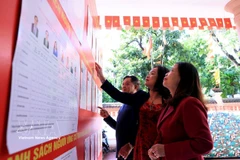
Residents visit polling stations in their wards to review the list of candidates for deputies to the 16th National Assembly and members of People’s Councils at all levels for the 2026–2031 term. (Photo: VNA)

📝OP-ED: Resolutely removing discordant voices ahead of national election day

When March 15 arrives, one will see elderly voters approaching a hundred years old making their way to the polls, young voters casting their ballots with enthusiasm, and multi-generational families going together to fulfil their civic duty. Together, these moments will create a vibrant atmosphere, resembling a national celebration.

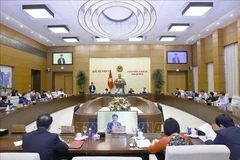
The 55th session of the National Assembly Standing Committee on March 2, 2026. (Photo: VNA)

📝OP-ED: Streamlining state apparatus: A foundation for rapid, sustainable development

The election is unfolding as Vietnam presses ahead with sweeping administrative reforms, including efforts to streamline the state apparatus and implement a two-tier local government model from the central level to grassroots authorities. Amendments to key laws are also aimed at strengthening decentralisation, improving the management of public assets and accelerating digital transformation, enabling citizens to access information more easily while fostering a leaner, more transparent governance system that better upholds people’s rights.

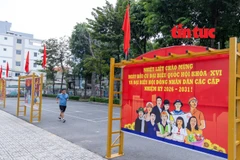
A billboard on the election of deputies to the 16th National Assembly and People's Councils at all levels for the 2026–2031 tenure (Photo: VNA)

📝OP-ED: Vietnam stays vigilant to indirect incitement

The surge of baseless rumors and fake news ahead of March 15 reflects deliberate attempts by hostile actors to sow confusion, erode public interest in citizens’ electoral rights and obligations, and cast Election Day in a negative light.

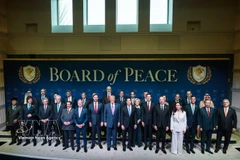
General Secretary of the Communist Party of Vietnam (CPV) Central Committee To Lam and heads of delegations attend the inaugural meeting of the Gaza Board of Peace in Washington, D.C. (Photo: VNA)

📝OP-ED: Party chief’s Washington visit strengthens Vietnam’s int’l standing, deepens ties with US

The trip represented an important diplomatic step, not only enhancing the country’s international standing but also clearly demonstrating its foreign policy of independence, self-reliance, peace, friendship, cooperation, multilateralism and diversification of relations, and proactive engagement in addressing global issues, in line with the spirit of the 14th National Party Congress.

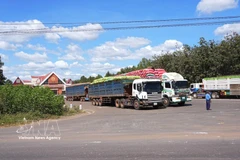
At Xa Mat international border gate (Photo: VNA)

📝OP-ED: Decree 46 - Not proof of distorted “systemic failure”

Temporary suspensions, adjustments, or revisions of newly enacted policies are never ideal and should be minimised. Yet such course corrections occur worldwide, irrespective of a country's development stage or market-economy maturity. What counts is rapid remediation to contain losses, extraction of lessons to prevent recurrence, and firm resistance to the dissemination of misleading or hostile allegations, which will help both enforcers and those subject to compliance maintain clarity and composure.

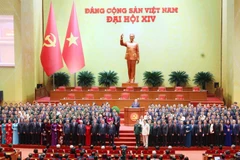
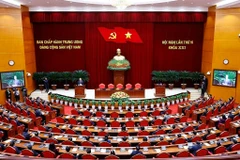
Closing ceremony of the 14th National Party Congress. (Photo: VNA)

📝OP-ED: Resolution in action: Tangible results recorded

These recent practical outcomes, together with the Resolution of the 14th National Party Congress - the Party’s and the entire political system’s handbook for action, a “guiding torch” illuminating the new development path - combined with the highest level of political determination, the greatest efforts, and the most resolute actions of the entire Party, the armed forces, and the people, as emphasised by the Party chief, will certainly lead the Vietnamese nation to success.

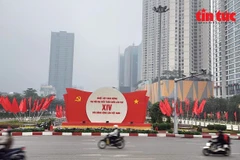
The intersection of Ring Road 3 and Tran Duy Hung Street (Hanoi) has taken on a new look in celebration of the 14th National Party Congress. (Photo: VNA)

📝OP-ED: 14th National Party Congress – That of long-term vision, substantive breakthroughs

The Congress is an occasion to assess the country’s development situation during each term, review leadership outcomes, and draw valuable lessons of both theoretical and practical significance. It is also where the Party gives full play to collective intellect, the spirit of solidarity, renewal, and creativity in order to set out policies and orientations for national development in the subsequent period.