A teacher who ended illiteracy in a commune

Two days of travel in a truck on a very bumpy road that rattled every bone in the body.
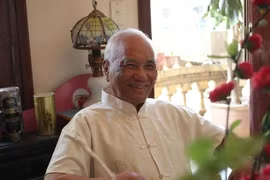
A teacher who ended illiteracy in a commune ảnh 1Nguyen Van Bon (second from right) and his students (Source: nhandan.vn)

Lai Chau (VNS/VNA) - Two daysof travel in a truck on a very bumpy road rattled every bone in the body.

This was followed by six days of walking onrough terrain to get to the remote commune where residents were very poor,unexposed to the world outside, and spoke no Vietnamese.

Living and teaching here would not be easy,but the young man, just 22, was not fazed. He had known it would be verydifficult and was determined to do the best he can.

A personal meeting with Uncle Ho before heset off had motivated him further.

Welcoming the batch of volunteer teachers,the late President Ho Chi Minh, lauded their spirit, but also said: “Anyone, ifyou are in poor health, have rheumatism or heart problems, should not go.”

But the warnings about difficulties,particularly poverty, diseases and poor infrastructure, did not deter theyoung, idealistic teachers.

“I was not afraid of the difficulties. Theymade me understand more about life in the mountainous remote areas andsympathise with the locals, and motivated me to do something to help them,” NguyenVan Bon told the Nhan dan (People) newspaper.

In his eighties now, Bon said the older hegets, the clearer his memories are of Mu Ca, the remote commune in northern mountainousLai Chau province that he first set foot on almost 60 years ago.

Bon was 20 when he graduated from theCentral Teacher Training School and found work in the northern province of ThaiBinh in 1957.

Two years later, when the State called forvolunteers to teach in remote, disadvantaged areas in northwestern provinces, Bonapplied to work in Lai Chau.

He was among more than 500 teachers fromlowland northern provinces who went to the mountainous northeastern provincesto fight illiteracy.

“18 young teachers and I were assigned to MuongTe district (where Mu Ca is locted),” he said, adding that each of them wasgiven a blanket, a jacket and a few quinine tablets against malaria.

It took two days to travel from Son Laprovince to Lai Chau Town (now known as Muong Lay Town) by truck. The road wasso bad that they felt there were being thrown up all the time. From Lai Chau Town,they walked three days to reach Muong Te district. From downtown Muong Te, theywalked another three days to arrive at Mu Ca commune.

The commune was home then to about 500people of the Ha Nhi ethic group. None of them could speak any Vietnamese.

A person from Thai ethnic group who couldspeak both Ha Nhi and Vietnamese was hired to work as an interpreter for Bon.

Bon himself learnt Ha Nhi language for ayear.

From scratch

When Bon discussed with local authoritiesand people about teaching local children to read and write in Vietnamese, theyagreed that the school children would bring rice and clothes to stay at the school.

For days, Bon collected timber and bambooto build a small shack with desks and chairs for about 40 children aged sevento 12.

Local people called it Bon’s school – thefirst public work in the commune at that time.

On September, 10, 1959, Bon opened thefirst class in which he taught children how to address their teacher, how tointroduce themselves and a poem about doing physical exercises to get rid offatigue.

“Keep sitting –back fatigue

Keep writing – hand fatigue

Do exercises like this…

No fatigue.”

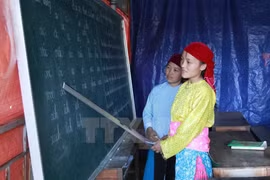
Following these lessons, with a box ofchalks and a board, Bon taught alphabets. The children repeated what theteacher said. The sounds from the class rang out over the mountainous village.

Bon recalled that his students did not haveany pencil. They were given chalks and practiced writing on their wrists toshow the teacher. Later banana leaves were used as “notebooks” or “boards” andwooden sticks as “pens”.

After school, Bon showed the students howto play football with a grapefruit. They also collected mushrooms, bambooshoots and went fishing.  

After a semester, almost all school-agedchildren in Mu Ca commune were still at attending classes, while just four orfive children attended other similar schools in Muong Te district.

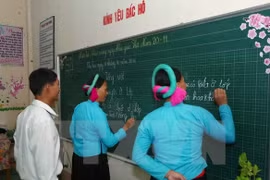
Besides classes for children, Bon alsoopened classes for local adults. There was an early morning class for peoplewho would go to their terrace fields later and another class in the evening forelderly women and housewives.

Bon said that he wrote letters and words onthe back of buffaloes so that learners could review lessons while they wereworking in their fields.

In 1963, Mu Ca was the first commune in thenorthern mountainous region to eradicate illiteracy. A year later, Bon left MuCa, returned to his native Hai Phong city and kept teaching until retirement.

He continues to live there with his son.

50 years later

In 2009, local authorities in the provincesof Dien Bien, Lai Chau and Son La looked for the pioneer volunteer teachers andinvited them back to their schools.

Bon found that the place had changed beyondrecognition in the 50 years that he’d been away, but his formers students,grandparents now, still had fresh memories of the first teachers and firstclasses held in the commune.

It was an emotional reunion where theformer students expressed their gratitude and respect in tears, recallingthings that they’d learnt from their first ever teacher who’s teaching went farbeyond normal subjects. (Bon returned to Mu Ca in 2013 to meet his formerstudents.)

Po Phi Nhu, 69 remembered that teacher Bonhad taught local residents to grow cassava, cultivate rice, and also helped diga canal to take water from the hills to the school.

Nh, who used to be the deputy head of MuongTe district’s Education Department, said few residents at that time believedthis could be done.

Since then, locals have called the canal“Teacher Spring” and the hill nearby the school “Mr Bon Mountain” in honour oftheir teacher.

She also recalled that local residents –all belonging to the Ha Nhi ethnic group – were amazed when, for the firsttime, they heard a human voice from a thing that Bon called a radio.

Bon remembered that the radio was boughtwith money they earned after selling their rice and cassava.

‘Writing on air’

Another former student, Go Su, also 69,said that Bon had made pillars for them to do morning exercises.

She said that when they did not havepencils, they “wrote on air” and then, banana leaves or the dirt floor.

In the five years he spent in Mu Ca commune,Bon brought many big changes to the area.

Several of his former students have becomeGovernment officials and one even became a National Assembly Deputy.

He won many medals from the Government forhis work, and was the first teacher on whom Uncle Ho conferred the “LabourHero” title in 1962. -VNA
VNA
See more

Representatives of the Association of Vietnamese Scientists and Experts (AVSE Global), the Vietnamese Embassy and several organisations and associations in France attend a press conference announcing the Vietnam Global Leaders Forum 2026. (Photo: VNA)

Forum to explore strategic pathways towards 2045

The Vietnam Global Leaders Forum, to open in Paris on December 11, aims to identify the values to preserve, capabilities to build and opportunities to seize as Vietnam proactively enters a new stage of development.

A teacher at the Dien Bien support centre for the development of inclusive education guides a student with disabilities in writing practice. (Photo: VNA)

Project supports children with disabilities in accessing essential services

By 2030, at least 80% of children aged from birth to six years old are expected to receive screening for early detection for congenital disabilities and developmental disorders, as well as early intervention services, according to a newly approved project to support children with disabilities in accessing protection, care and education services during the 2026-2030 period.

Norwegian Ambassador to Vietnam Stein Iversen (front, first from left) and others look at a miniature model of Nha Trang University, Khanh Hoa province, during the visit on November 11, 2026. (Photo: VNA)

Norway, Nha Trang University explore marine cooperation

Norwegian Ambassador to Vietnam Stein Iversen noted that nearly three decades of cooperation with NTU reflected the evolution of Norway–Vietnam ties in Khanh Hoa, from development and educational assistance to a broader partnership encompassing knowledge, technology, sustainable aquaculture and business cooperation.

Prime Minister Le Minh Hung presents the First-Class Labour Order to the NEU (Photo: VNA)

NEU urged to rank among world’s top 150 universities by 2030

The Government leader stressed that the country’s new stage of development placed increasingly high and comprehensive demands on reforming its development model and growth drivers, improving labour productivity and national competitiveness. Against the backdrop of rapid and complex global changes, intensifying strategic competition and emerging technologies constantly reshaping production, business and governance, the economy needed to enhance its adaptability, resilience and autonomy while generating greater added value.

Weekend train journeys feature new travel between Hanoi, Thai Nguyen

Weekend train journeys feature new travel between Hanoi, Thai Nguyen

The train consists of five soft-seat passenger carriages and one community carriage. In the latter, passengers can take part in artistic activities, enjoy tea and sample local culinary specialities made with green tea, a distinctive feature of Thai Nguyen’s tea culture.

An overview of the training course (Photo: VNA)

An Giang steps up personnel training for APEC 2027

The training courses aim to equip participants with essential knowledge of APEC and international integration, enhance their understanding of Vietnam's and An Giang's positions in the global integration process, and introduce the history, culture and traditions of An Giang and Phu Quoc, alongside the cultures, customs and communication practices of APEC member economies,

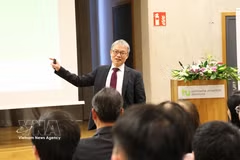
Prof. Dr. Nguyen Xuan Thinh, a TU Dortmund lecturer, speaks at the event (Photo: VNA)

Forum taps overseas Vietnamese brainpower in Germany

More than 100 scientists, experts, doctoral researchers, students and representatives of Vietnamese and German bodies and enterprises gathered at TU Dortmund University on November 8 for the 2026 Vietnam intellectuals’ forum.

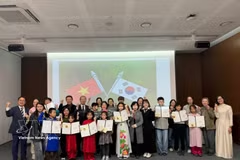
Winners of the Vietnamese-Korean bilingual speaking contest, representatives of organisations and officials pose for a group photo. (Photo: VNA)

Young generation helps strengthen Vietnam–RoK friendship

Through the seminar and bilingual contest, VESAMO aimed to provide a platform for young people to share knowledge, pursue their aspirations and contribute to closer friendship and comprehensive cooperation between the two nations.

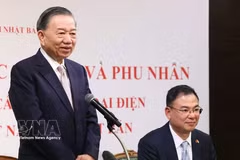
General Secretary of the Communist Party of Vietnam (CPV) Central Committee and President To Lam speaks at the meeting with staff of Vietnamese representative agencies and members of the Vietnamese community in Japan on November 8. (Photo: VNA)

Vietnamese community in Japan urged to futher contribute to national development

Welcoming the Vietnamese community's efforts and contributions, the General Secretary and President affirmed that the Party and State will continue improving institutions and policies to create favourable conditions for overseas Vietnamese to engage more deeply in the country's socio-economic development and play a proactive role as partners and co-creators in nation-building.

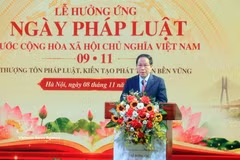
Deputy Prime Minister Le Tien Chau speaks at the event (Photo: VNA)

2026 Vietnam Law Day marks 80 years of constitutional tradition: Deputy PM

Deputy Prime Minister Le Tien Chau, who is also Chairman of the council, said this year’s event holds special political and legal significance as it marks 80 years of constitutional tradition, a reaffirmation of the people’s right to mastery and a pledge to build and perfect Vietnam’s socialist rule-of-law State.

Security forces and police are deployed outside the private residence of a shooting suspect in the city of Krakow, Poland, on November 7. (Photo: PAP)

No Vietnamese casualties reported in Poland shooting: Embassy

The embassy told Vietnam News Agency correspondents in Central and Eastern Europe that it advised the Vietnamese community in Poland to avoid the area where the shooting occurred and strictly comply with safety instructions issued by local authorities.

Passengers board an electric bus on Cau Giay street, Hanoi (Photo: VNA)

Hanoi to put 31 more electric buses into operation

As of the end of October 2026, the Hanoi Transport Corporation had put 375 electric buses into operation across 24 routes. Of these, 281 were deployed on 17 routes in the first six months of the year, while another 94 were introduced on seven routes in October.

VNA General Director Vu Viet Trang (fourth from right) attends the launch ceremony of the Global Media Initiative for the Joint Development of AI Application Standards. Photo: VNA

VNA proposes four consensus points, five joint actions for responsible AI use in journalism

As Vietnam’s national news agency, the Vietnam News Agency (VNA) is committed to providing the public with accurate, timely and reliable information. To fulfil this mission in today’s rapidly evolving digital media landscape, it has pursued digital transformation across three key areas: technological infrastructure, news production, and human resource development.