ADB helps boost Vietnam’s private sector development

The Asian Development Bank (ADB) has approved a 4.6 million USD technical assistance to help the Vietnamese Government to strengthen public-private partnership (PPP), private sector development, and state-owned enterprise (SOE) reform.
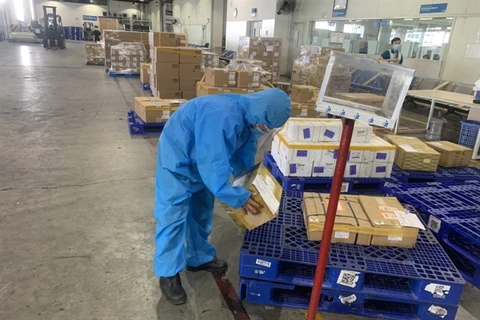
ADB helps boost Vietnam’s private sector development ảnh 1Illustrative image (Photo: X-Five Photography)
Hanoi (VNA) - The Asian Development Bank (ADB) hasapproved a 4.6 million USD technical assistance to help the VietnameseGovernment to strengthen public-private partnership (PPP), private sectordevelopment, and state-owned enterprise (SOE) reform.

The technical assistance will provide policy advice, assistin infrastructure project preparation, and strengthen institutional capacity toenhance sustainable economic growth.

The financing includes a 2.7 million USD grant from theGovernment of Canada and a 1.9 million USD grant from the Government ofAustralia, both to be administered by the ADB.

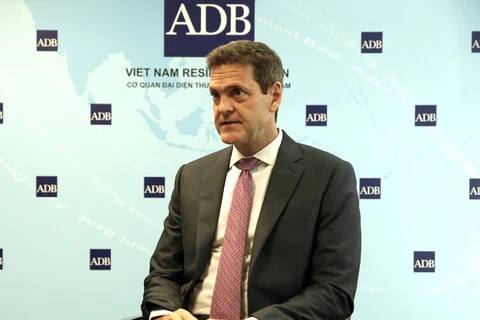
“Vietnam has achieved impressive socio-economic developmentover the past three decades by maintaining high economic growth gained from itsstructural reforms,” said ADB Principal Private Sector Development SpecialistDonald Lambert. “To meet the targets of its upcoming Socio-Economic DevelopmentStrategy 2021-2030, maintain growth rate of 6-7 percent, and achieve theSustainable Development Goals, Vietnam will need to further accelerate economicreforms, expanding the role of the private sector in driving the country’sdevelopment.”

Between 2011 and 2020, Vietnam invested an estimated 117 billionUSD in infrastructure. However, the country’s infrastructure remainsunderdeveloped compared to its regional peers. The country will need tomobilise an estimated 237 billion USD between 2021 and 2030 to close theinfrastructure deficit, which is 49 billion USD more than the historicalspending trajectory.

Recognising the potential of the private sector to helpclose the infrastructure deficit, Vietnam’s Socio-Economic Development Strategy2021-2030 prioritises removing barriers to open competition and developing asupportive environment to increase the private sector’s contribution to theeconomy, including a larger role in infrastructure development.

ADB’s new technical assistance will help by deliveringpolicy advice on PPP and private sector development, piloting projects thatembed the G20 Quality Infrastructure Investment principles, and strengtheningPPP and private sector development institutional capacities.

Recently, ADB Country Director Andrew Jeffries said that Vietnam has sufficient conditions to achieve the twin targets of curbing the COVID-19 pandemic and securing economic growth in 2021.

Talking to the Vietnam News Agency about the recovery capability of the country’s economy amid the fourth wave of COVID-19 infections, he expressed his optimism about the country’s economic outlook, given the positive economic statistics recorded in April and May.

In the first five months of 2021, the Vietnamese economy continued to post encouraging signs in export, foreign investment attraction, FDI disbursement, and retail sales.

However, Jeffries also pointed out that risks have appeared when the pandemic resurged in April while the implementation of the COVID-19 vaccination plan has been delayed.

He noted that the ongoing fourth wave of infections has affected not only big cities like Hanoi and Ho Chi Minh City but also industrial parks in Bac Giang and Bac Ninh provinces, which are the locations of manufacturing activities by many important links in the electronics supply chain.

To realise the target of becoming an upper-middle-income country by 2030, Vietnam needs to sustain an annual economic growth rate of over 7 percent, the ADB official remarked.

The first and foremost condition to obtain such growth is that the private sector in the industry and services sectors must operate dynamically, he said, calling for conditions to be created for them to access financial, land, and technological sources and enhance corporate governance skills.

It is also necessary to rationalise business procedures for private firms and prioritise digital transformation, according to him.

Jeffries noted that Vietnam’s economic growth and development outlook is closely associated with the capability to curb the spread of the coronavirus.

The successful containment of the pandemic is the decisive factor in the 2021 growth, he went on, expressing his belief that the Vietnamese Government and people will be able to control the pandemic thanks to the important experiences gained from the previous outbreaks.

However, he also warned that unexpected outbreaks could continue to happen and impact part of the workforce, especially in industrial parks.

The only way to help push back the pandemic, ensure long-term safety for people, and create conditions for economic development is to step up COVID-19 vaccination, he added./.
VNA
See more

Head of the Vietnam Trade Office in Australia Tran Thi Thanh My (Photo: VNA)

Vietnam, Australia eye 20 bln USD trade target

The head of the Vietnam Trade Office in Australia hoped that the visit by Party General Secretary and State President To Lam will mark a new milestone, opening the door for firms on both sides to forge stronger links and launch concrete cooperation agendas, helping hit that 20 billion USD trade goal sooner rather than later.

Phu Quoc pepper products, granted three stars under the OCOP programme in An Giang province, are displayed at an exhibition of outstanding OCOP products from the Mekong Delta. (Photo: VNA)

Phu Quoc leverages OCOP programme to take local specialities global

Better known as one of Vietnam’s premier island destinations, Phu Quoc is leveraging its “One Commune, One Product” (OCOP) programme to transform traditional specialities into internationally recognised products, integrating local agriculture, food processing and tourism to promote sustainable economic growth.

Production at an FDI enterprise in Tay Ninh province. (Photo: VNA)

FTA Index 2025 to be unveiled later this month

The index is designed to provide valuable information not only for State management agencies but also as an important reference for businesses, foreign investors, and industry associations in planning investment and business activities in Vietnam.

Air Premia, a carrier of the Republic of Korea, will resume flights between Incheon and Ho Chi Minh City from November 5. (Photo: The Courtesy of Air Premia)

Air Premia to resume Incheon–Ho Chi Minh City route from November

Flights will depart Incheon International Airport at 6:40 pm (RoK time) and arrive at Tan Son Nhat International Airport in Ho Chi Minh City at 11 pm (Vietnam time). Return flights will leave Ho Chi Minh City at 12:30 am on Mondays, Tuesdays, Thursdays, Fridays and Sundays, landing in Incheon at 7:40 am.

Production at Viet Hai High-Tech Structure Production Company Limited in Vung Ang Economic Zone. Ha Tinh province aims to develop Vung Ang Economic Zone into a regional centre for industry, energy, seaports and logistics (Photo: VNA)

Revised master plan of Vung Ang EZ approved

The adjustment aims to create a more rational development framework to maximise the zone’s potential and advantages while providing a legal foundation for construction management and ensuring sustainable development.

Illustrative image (Photo: VNA)

Vietnam looks to domestic market to sustain wood industry growth

Vietnam’s wood sector has long been a top foreign-currency earner. Exports of wood and wooden products neared 17.3 billion USD in 2025, reaching more than 160 countries and territories and clearing the high bars set by the US, the European Union and Japan.

Delegates at the event (Photo: VNA)

Vietnam remains key market for Polish food producers

The campaign promotes selected European Union agricultural and food products, including fresh, chilled and frozen beef and pork, fresh apples, apple juice and dried apples, targeting consumers, importers, distributors, retailers and the hospitality sector.

Wei Xiaoli, a representative of Shandong Jindafeng Machinery Co., Ltd., in an interview granted to the Vietnam News Agency. (Photo: VNA)

Chinese firms see strong potential for agricultural mechanisation cooperation with Vietnam

Business representatives said mechanisation not only helps reduce reliance on manual labour but also improves production efficiency, shortens planting and harvesting times, reduces post-harvest losses and enhances the quality of agricultural products. For rice-producing countries like Vietnam, they noted, accelerating mechanisation is an inevitable trend to strengthen the competitiveness of the agricultural sector.

Community-led fisheries groups have become frontline defenders of coastal fisheries. (Photo: VNA)

Community-led fisheries groups strengthen IUU fight in Ha Tinh

With a long coastline and abundant inshore fishing grounds, Ha Tinh has long identified the marine economy as a key growth driver. However, growing fishing pressure and destructive practices have posed major management challenges. Community-led self-management initiatives are now providing an effective solution.

At the VIFC-HCMC (Photo: VNA)

700 bln USD for net zero: Vietnam bets on VIFC

Assoc. Prof. Dr. Nguyen Huu Huan, Vice Chairman of the Executive Board of VIFC-HCMC, said the VIFC will focus on building market infrastructure needed to bridge the gap between big investment pledges and bankable projects.

A view of the launch ceremony for the expanded Vietnam–China cross-border QR payment service. (Photo: NAPAS)

Over 1 billion Weixin Pay users can make QR code payments in Vietnam

NAPAS, Weixin Pay, and BIDV will study the rollout of the reverse payment service, enabling users of Vietnamese banking applications and e-wallets to make QR code payments in China, with the aim of completing a comprehensive cross-border payment ecosystem between the two countries.