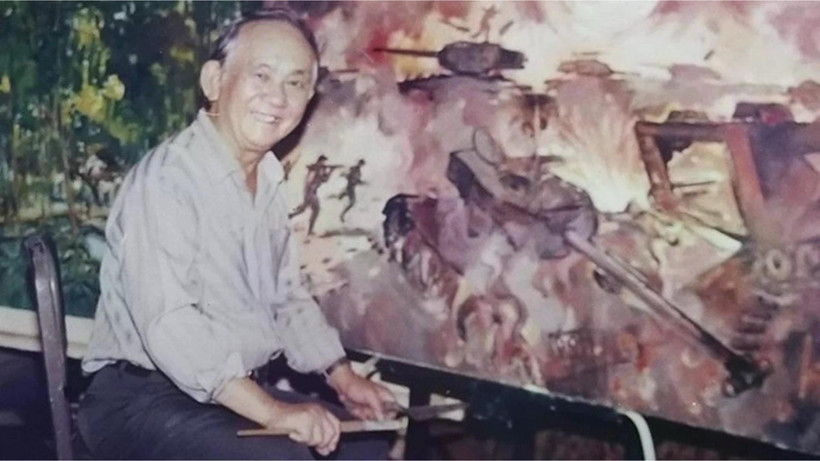
Hanoi (VNA) – Huynh Phuong Dong, whose powerful works captured the resilience and spirit of Vietnam during its wars of resistance, was one of the most celebrated artists of Vietnam, an owner of the State Award for Literature and Arts.
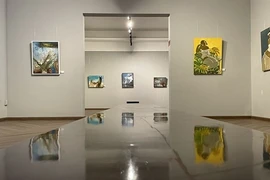
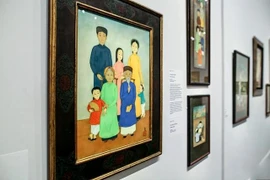
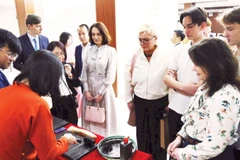
His art is now being displayed in Hanoi and Ho Chi Minh City to commemorate the 50th anniversary of the Great 1975 Spring Victory.
Art as bridge to peace
Huynh Phuong Dong, born Huynh Cong Nhan in 1925 in Gia Dinh (now Ho Chi Minh City), passed away in 2015. He actively served in both the anti-French and anti-American wars, with a particular focus on the latter. From 1963 until the liberation of the South in 1975, he spent 12 years sketching and painting across battlefields in the Southeast and the Mekong Delta.
His works depict grand battle scenes, portraits of soldiers, and rear-line activities, ranging from quick sketches to fully realised compositions – each filled with vitality and authenticity.
Former Deputy Minister of Culture, Sports and Tourism Vuong Duy Bien praised his expressive power, saying that whether working in pencil, ink, watercolour, or other media, Huynh Phuong Dong’s works were always infused with deep emotion, blending talent with lived wartime experiences.
Huynh Phuong Dong's artistic legacy extended beyond Vietnam. In 1987, David Thomas, a former American soldier, returned to Vietnam with the aim of healing the wounds of war through art. Introduced to Huynh Phuong Dong – then Deputy Head in charge of the South at the Department of Fine Arts under the then Ministry of Culture and Information, Thomas was deeply moved by his paintings and joined him on visits to former battlefields.
Since 1990, David Thomas has become a familiar name in the Vietnamese art circle. He founded the Indochina Arts Partnership (IAP), supporting artist exchanges and residencies between the two countries and organising numerous exhibitions, including several showcasing Huynh Phuong Dong’s works. In 2007, a triptych by Dong helped earn him the State Award for Literature and Arts. That same year, Thomas published a bilingual, nearly 200-page art book featuring hundreds of the artist’s most prominent works.
At the book launch, Thomas remarked that Dong’s works carry the heat of someone who lived through war, refracted through the romantic eye of a master artist. “I had great affection for him, even saw him as a father figure,” said Thomas.
Huynh Phuong Dong’s art has been exhibited in many countries like China, the Soviet Union, Cuba, and France.
In 2009, he recreated a particularly meaningful scene in oil on a large canvas. It portrayed a moment from the late 1960s when liberation artists’ works, including his own, were sent to Hanoi for exhibition. President Ho Chi Minh visited the exhibition, pointed to one of Dong’s sketches, and praised it. This moment was captured by photographer Dinh Dang Dinh, and the story of it inspired the artist to commemorate it in paint. He was especially proud to learn that President Ho Chi Minh directed for these artworks to be exhibited abroad to showcase Vietnamese resilience.
Portraits that capture lives
Huynh Phuong Dong’s exhibitions typically include two sections – completed paintings and battlefield sketches, often done in graphite and without colour. Both leave a deep impression, allowing viewers to linger and reflect on the soul and spirit behind each piece.
Nguyen Thi Dieu An, a journalist and author of the memoir “Huynh Phuong Dong - Nhung mang mau thoi chien” (Huynh Phuong Dong – fragments of a wartime palette), had the chance to meet many of the people featured in his portraits. In 2018, while preparing her book, she joined his family in visiting former battlefield figures, including Bay Mo, a famed female guerrilla from Cu Chi who once spared four American soldiers in 1968. Her courage later inspired the character Ba Huong in the newly released film “Tunnels” (April 2025).
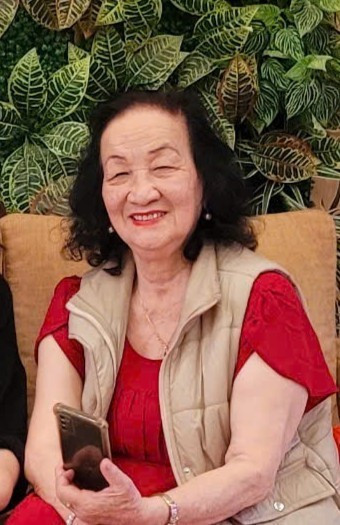
During their visit, Bay Mo, then about 70 years old and on a respirator, was visibly uplifted by the reunion. She recalled meeting Dong in 1965, when he was travelling with a team of artists and filmmakers. At the time, she was only 17. Upon seeing her prepare to receive the guests, Dong asked her to stay in that pose while he sketched her. When he showed her the portrait, everyone admired the striking resemblance. That drawing, she said, later became widely reproduced. According to her, Dong even created a large version of the portrait and gifted it to Vo Van Kiet, who was then Secretary of the Ho Chi Minh City Party Committee.
Grateful for the recognition, she noted the portrait helped convince her parents to let her officially join the guerrillas—until then, she had only participated secretly. The drawing became a cherished memento of her youth. “I’m so thankful to Uncle Ba,” she said. “Thanks to him, I have a picture from when I was 17. I used to be quite the beauty, you know—though now I’m on oxygen. He was brave to go into those harsh areas. He saw everything first-hand, which is why his art was so vivid.”
Because of the chaos of war, many families of fallen soldiers had no photos to remember their loved ones. Therefore, battlefield portraits became invaluable.
Dieu An recounted the story of Nguyen Van Cuong (Ba Cuong) from Tien Giang, who died in the 1968 Tet Campaign at age 24, leaving behind a wife and child. Of five siblings who died in the war, he was the only one whose altar had a photo – actually a portrait sketched by Dong in 1964 during a visit to Thoi Son Islet. The portrait was rediscovered and returned to the family years later after being spotted at a post-war exhibition.
Late journalist and researcher Tran Bach Dang once wrote that Dong approached his subjects with urgency but never with superficiality: “It was as if he feared missing a story, a figure, a village, or a field—afraid to fail those who gave so much.”
Over a 70-year career, Huynh Phuong Dong received numerous honours, including the State Award for Literature and Arts in 2007, two Resistance Orders, five medals for contributions to fine arts, and three top prizes at national exhibitions./.