Auto prices not to fall despite zero ASEAN tariff

There is anticipation that automobile prices in Vietnam will decrease by 10-15 percent in the case of older models and 5-10 percent in the case of new models as automobile import tariffs are cut.
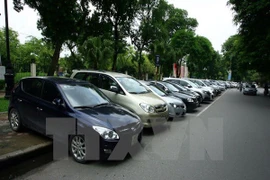
Auto prices not to fall despite zero ASEAN tariff ảnh 1A visitor looks at a BMW model at an auto show in HCM City (Photo: VNA)

Hanoi (VNA) - There isgreat anticipation that automobile prices in Vietnam will decrease by 10-15 percentin the case of older models and 5-10 percent in the case of new models asautomobile import tariffs are cut to zero under the ASEAN Trade in GoodsAgreement which takes effect in January 2018.

But some market analysts dismiss thelikelihood, saying in fact imported car prices are likely to rise significantlysince their supply would dry up while even the prices of domestically assembledvehicles would not come down.

Recent changes in the Investment Lawclassify certain automobile businesses as “conditional”. The Governmentrecently issued Decree No 116/2017/NĐ-CP to spell out the regulatory andlicensing conditions for automobile manufacturing, assembly, import,maintenance and warranty.

Importers are required to obtain anautomobile importing business licence from the Ministry of Industry and Trade.

To qualify for the licence, importersmust set up appropriate warranty and maintenance facilities and be authorisedby the manufacturers in exporting countries to conduct recalls in Vietnam ifneeded.

Importantly, quality inspectionprovisions with respect to imported vehicles are much stricter than currentregulations.

For example, importers are required toprovide a type of approval certificate from a competent foreign agency for theautomobiles they sell.

The certificate is a producer’sdeclaration that production samples of a design will meet specifiedperformance standards.

The document will contain informationlike the type of approval number, technical specifications and otherdata.

Besides, quality inspection will bedone on every imported vehicle unlike now when they check only a few atrandom.  

Satisfying quality inspection willcost importers hundreds of millions of dong, many times higher thannow.

This is expected to reduce auto importssubstantially, causing a widening gap between supply and the relentlesslyrising demand.

Besides, with respect to domesticmanufacturers, the decree stipulates certain requirements pertaining tofacilities, human resources, labour safety and hygiene, fire safety, as well asenvironmental protection.

They include the need to have testtracks that are at least 800 metres long to do more reliable safety tests. Mostmanufacturers do have tracks but of much shorterlength.    

This new requirement would also raiseautomobile manufacturers’ production costs to an extent.

The cost of making cars in Vietnam isalready 20 percent higher than in neighbouring countries since 60-80 percent ofcomponents and materials has to be imported in the absence of a developed automanufacturing eco-system. This entails packaging and logistics costs.

So noone should hold their breathexpecting local car prices to become cheaper in 2018.-VNA
VNA

See more

Vietnam, RoK expand supply chain, manufacturing cooperation

Vietnam, RoK expand supply chain, manufacturing cooperation

Beyond sourcing products, RoK companies aim to build long-term partnerships with Vietnamese firms through product showcases, business-to-business (B2B) matchmaking, investment opportunities and sustainable supply chain development.

Ho Chi Minh City, GTEL partner on technology transfer for metro network

Ho Chi Minh City, GTEL partner on technology transfer for metro network

The two sides will study and localise key technologies covering signalling, communications, power supply, electromechanical systems (E&M), SCADA, operations control centres (OCC), automatic fare collection (AFC) and platform screen doors (PSD), while advancing technology transfer, workforce development and the capabilities of domestic enterprises.

Vietnamese Ambassador to Laos Nguyen Minh Tam and Lao Deputy Minister of Industry and Commerce Phouthavanh Nanthavong visit a Vietnamese booth at VIETLAO EXPO 2026. (Photo: VNA)

Vietnam-Laos trade targets 10 billion USD

Held on the sidelines of VIETLAO EXPO 2026, the seminar aimed to help businesses explore trade and investment opportunities and foster cross-border production and supply chains.

Standing Deputy Prime Minister Pham Gia Tuc chairs a meeting with representatives of US business associations and companies operating in Vietnam on July 17, 2026. (Photo: baochinhphu.vn)

Standing Deputy PM meets with US business community

Chairing a meeting with representatives of US business associations and companies operating in Vietnam, Tuc praised the US business community for its substantive contributions to Vietnam's socio-economic development as well as the two countries’ relations.

Workers assembles electronic components on the production line at the Bao Sen Co., Ltd. in Bac Ninh province. (Photo: VNA)

Vietnam's economy needs to shift from quantity to quality: ADB experts

Shantanu Chakraborty, ADB Country Director for Vietnam, noted that while achieving strong growth in a single year is encouraging, maintaining both the pace and quality of growth over many years will be essential if Vietnam is to achieve its goal of becoming a high-income country by 2045.

The Long Son Petrochemical Complex, an investment project of Thailand's SCG Group, is located in Long Son commune, Ho Chi Minh City. (Photo: VNA)

Vietnam reshapes FDI strategy with focus on technology, innovation

Politburo Resolution No. 10-NQ/TW, issued on June 8, 2026, recognises the foreign-invested sector as an important component of the national economy, signalling a major shift in the country's investment attraction strategy. Rather than prioritising labour-intensive projects, Vietnam is now seeking high-quality investments capable of driving technological progress, innovation, sustainable development and stronger participation in global value chains.

International tourists love shopping for souvenirs at Hanoi's Old Quarter night market (Photo: VNA)

Hanoi aims to raise tourists' night-time spending to 30%

Hanoi will establish and operate flagship night-time economy zones supported by preferential policies, including heritage and cultural districts in Hoan Kiem, Cua Nam, Ba Dinh, Son Tay and Soc Son; modern entertainment hubs in Tay Ho-West Lake West, My Dinh and Dong Anh; creative economy zones linked to cultural industries such as theatres, cinemas and museums; and cultural tourism and resort destinations in suburban craft villages including Bat Trang, Ba Vi and Huong Son.

Vietnamese Ambassador to Laos Nguyen Minh Tam and Lao Deputy Minister of Industry and Commerce Phouthavanh Nanthavong visit the Vietnamese pavilion at VIETLAO EXPO 2026 (Photo: VNA)

VIETLAO EXPO 2026 helps boost Vietnam-Laos strategic cohesion

The Vietnam-Laos Trade Fair 2026 (VIETLAO EXPO 2026) opened on July 16 in Vientiane, serving as a key platform for businesses from both countries to showcase products, seek partnerships, transfer technologies and expand investment cooperation.

The Vietnam-EFTA FTA is one of the longest-negotiated trade agreements in Vietnam's history. (Illustrative Photo: VNA)

Vietnam-EFTA deal set to further boost bilateral trade growth

The Vietnam-EFTA FTA is one of the longest-negotiated trade agreements in Vietnam's history, reflecting its broad scope of commitments covering trade in goods and services, investment, intellectual property, government procurement, environmental protection, sustainable development, small and medium-sized enterprises (SMEs), and other areas of cooperation.

Passengers and visitors check in at Terminal 1 of Noi Bai International Airport. (Photo: VNA)

Hanoi-Ho Chi Minh City route among world’s busiest

According to IATA’s ranking of global air passenger markets, the US remained the world’s largest market in 2025, with 890.1 million passengers, up 1.6% from 2024. China, the world’s second-largest market, recorded stronger growth of 4.8%, reaching 776.1 million passengers. China is widely forecast to overtake the US and become the world’s largest air passenger market in the 2030s.