Bac Giang develops 479 areas for key agricultural products

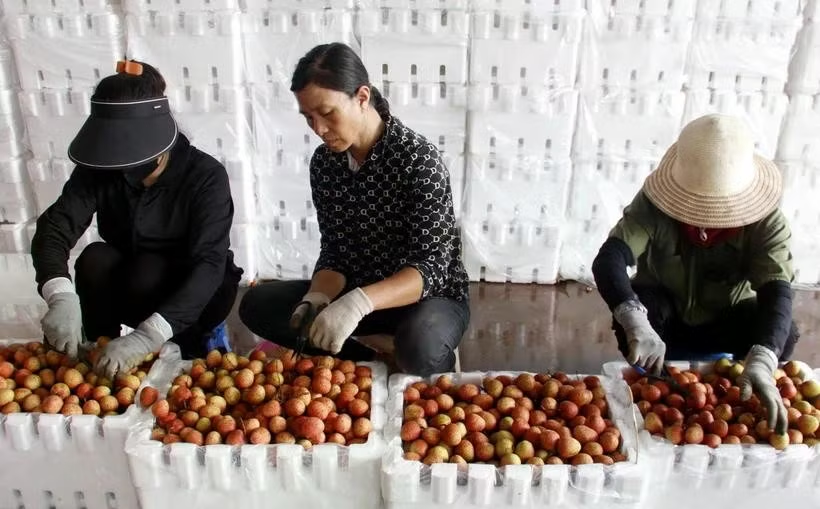
To date, Bac Giang has developed 479 specialised production zones. These include over 15,000 hectares dedicated to lychee production meeting VietGAP and GlobalGAP standards in Luc Ngan, Tan Yen, and Luc Nam.

Processing lychee for export in Bac Giang (Photo: VNA)

Bac Giang (VNA) – The northern province of Bac Giang is focusing on the development of its distinctive agricultural products by establishing concentrated and specialised production zones, some 479 so far, according to Phan The Tuan, Vice Chairman of the provincial People's Committee.

Tuan said that the province has successfully implemented a "digital map of concentrated and specialised production areas for key agricultural products and high-tech agriculture" in line with its planning for the 2021-2030 period with a vision to 2050, aiming to turn itself a national agricultural hub, leading the northern region by 2030.

For rice, by 2030, the province aims to develop around 48,748 hectares, with 36,555 hectares under strict protection. Annual production is expected to reach 582,800 tonnes. The province also plans to dedicate 55,000 hectares to high quality rice cultivation, with a yield of nearly 357,500 tonnes, to meet both local and export demands.

For fruit areas, by 2030, the province plans to expand its fruit production to 55,000 hectares, focusing on lychees, citrus fruits (oranges, grapefruits), longan, custard apples, pineapples, and guavas. These products will meet VietGAP and GlobalGAP standards, with production centres located in Luc Ngan, Luc Nam, Tan Yen, Yen The, Son Dong, and Hiep Hoa districts.

Besides, the province plans to expand its vegetable farming to approximately 28,000 hectares, producing 554,400 tonnes annually. Bac Giang aims to produce 14,000 hectares of safe vegetables using VietGAP standards, generating around 300,000 tonnes, with 3,100 hectares dedicated to vegetables for export processing.

It intends to maintain a stable pig population of approximately 900,000 animals, primarily in the districts of Viet Yen, Hiep Hoa, Tan Yen, Lang Giang, Luc Nam, Luc Ngan, and Yen The. The province expects annual pork production to reach 180,000 tonnes, with more than 80% of the pigs being raised on large-scale, industrial or semi-industrial farms that meet food safety standards.

The poultry sector is also set for growth, with the chicken population expected to reach 18-19 million by 2030, mainly in the districts of Yen The, Tan Yen, Lang Giang, Hiep Hoa, Luc Nam, Luc Ngan, and Son Dong. Meat production is projected to exceed 95,000 tonnes annually, with egg production reaching 300 million.

Aquaculture in Bac Giang will be maintained at a stable 11,600 hectares, including 6,500 hectares of specialised farming. The total aquatic product output will reach 60,000 tonnes, with 57,000 tonnes coming from farming and 3,000 tonnes from fishing. Bac Giang is also focusing on high-tech, intensive agricultural zones, maintaining 34 concentrated fish farming areas with VietGAP certification, covering 1,975 hectares across the districts of Lang Giang, Tan Yen, Yen Dung, Hiep Hoa, Luc Nam, Viet Yen, and Bac Giang City.

For the One Commune-One Product (OCOP) programme, the locality aims to develop at least 25-30 certified products annually, with at least a 3-star rating. By 2030, the province expects to have over 350 OCOP products, ranking among the top five in the country.

To date, Bac Giang has developed 479 specialised production zones. These include over 15,000 hectares dedicated to lychee production meeting VietGAP and GlobalGAP standards in Luc Ngan, Tan Yen, and Luc Nam. More than 45,000 hectares of high-quality rice production is to be developed in Yen Dung, Lang Giang, Viet Yen, and Tan Yen, and over 15,000 hectares of safe and processed vegetable production across Tan Yen, Lang Giang, Luc Nam, and Son Dong districts. The province has also developed 180 hectares of VietGAP-certified water spinach in Hoang Luong commune, Hiep Hoa district, and 80 hectares of high-tech vegetable production by the Yen Dung Clean Vegetable Cooperative.

Additional production areas include over 30 hectares for flowers and ornamental plants in Bac Giang city, 80,000 hectares of timber production, and over 4 million chickens in Yen The’s hillside farms. Currently, Bac Giang boasts 290 OCOP products, including one 5-star product.

Many of Bac Giang’s key agricultural products, such as lychee, longan, oranges, pomelo, apples, custard apples, vegetables, mushrooms, Yen The hill chickens, and processed timber have established stable markets both domestically and internationally, including in demanding markets like Japan, the US, Australia, the European Union, and the Republic of Korea./.


VNA

See more

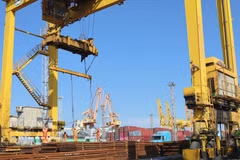
Loading and unloading steel products at Hoang Dieu–Chua Ve Port, Hai Phong city (Photo: VNA)

Hai Phong city seeks to boost inland waterway transport

According to the Hai Phong Maritime Administration, inland waterways carry coal, agricultural products, ores, stone, cement and other bulk cargoes, helping ease pressure on roads, particularly those connecting seaports and industrial parks.

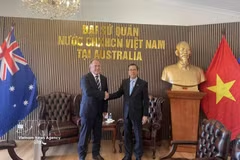
Speakers at the conference (from left): AVPI Advisory Board Chair Dr Le Thu Huong, Australian Ambassador to Vietnam Gillian Bird, and Vietnamese Consul General in Sydney Nguyen Thanh Tung. (Photo: VNA)

Vietnam, Australia turn momentum into practical cooperation

Vietnam and Australia should focus on promoting two-way investment, expanding cooperation linked to APEC 2027 and making better use of people-to-people connections. Vietnam needs capital, skills, technology, infrastructure, and energy transition expertise - areas where Australia could offer valuable support.

The interface of the National E-Procurement System. (Photo: muasamcong.mpi.gov.vn)

Vietnam to move PPP bidding online from 2027

From January 1, 2027, PPP project proposals must be submitted through the National E-Procurement System. From September 1, 2027, investor selection for PPP projects tendered through open bidding will move fully online.

An automated robot-based production line at CAYI Technology Vietnam Co., Ltd. in Yen Phong II-C Industrial Park, Bac Ninh city (Photo: VNA)

EuroCham: Business Confidence Index in Vietnam remains high at 78.3 in Q3

The survey found that 64% of respondents described their current business conditions as good or very good, while 28% maintained a neutral or cautious outlook, reflecting a wait-and-see attitude as international demand remains flat and businesses look for policy momentum to translate into faster procedures and more predictable outcomes.

Workers manufacture handheld power tools at the Keystone Electrical Vietnam factory in Lien Ha Thai Industrial Park, Thai Thuy commune, Hung Yen province (Photo: VNA)

Vietnam seeks to turn FDI inflows into domestic value added

Vietnam is shifting its FDI attraction strategy from expanding investment volumes to prioritising capital inflows that brings technology, knowledge, modern management practices and stronger links with domestic businesses, particularly in semiconductors, artificial intelligence (AI), chips and renewable energy.

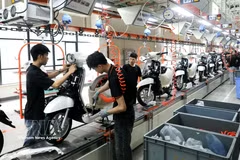
At Yadea Vietnam’s smart manufacturing plant in Tan Hung Industrial Park, Bac Ninh province (Photo: VNA)

Vietnam ties FDI incentives to local supplier commitments

Incentives will increasingly hinge on investors’ performance and commitments, not just on landing projects. Key commitments include transferring technology to Vietnamese firms, training workers, providing technical support and opening FDI supply chains to domestic companies.

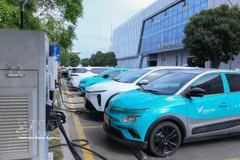
Green SM has launched all-electric taxi service in the US. (Illustrative photo: VNA)

Green SM launches all-electric taxi service in US

The move brings Green SM into one of the world’s most dynamic and demanding markets. It also marks another step in the international expansion of the Vietnamese mobility brand, following its rapid growth across markets in Asia and Europe.

An overview of the meeting between IMF Managing Director Kristalina Georgieva and ASEAN Finance Ministers and Central Bank Governors (Photo: VNA)

Vietnam strengthens financial cooperation at IMF-World Bank annual meetings

The Vietnamese Governor underscored the complementary roles of global and regional financial cooperation mechanisms, including the Chiang Mai Initiative Multilateralisation (CMIM) and the ASEAN+3 Macroeconomic Research Office (AMRO). He also highlighted the importance of technical assistance in fintech, digital transformation, cybersecurity and risk management.

Representatives of the organising committee at the opening ceremony of the fair (Photo: VNA)

Vietnam-Cambodia trade expo promotes bilateral economic cooperation

The Vietnam-Cambodia Business Networking and Product Promotion Exposition has become a key trade promotion event, creating business and investment opportunities while strengthening mutual understanding and trust between the two countries’ armies, people and enterprises.