Bac Ninh (VNA) - The recent recognition of the Yen Tu – Vinh Nghiem – Con Son, Kiep Bac complex as a UNESCO World Cultural Heritage Site has brought pride to Vietnam, particularly to the provinces and cities where the heritage is located, namely Quang Ninh, Bac Ninh and Hai Phong.
For Bac Ninh, the inscription represents a significant opportunity to elevate its tourism sector, enhance promotional efforts and unlock the cultural and historical value of local heritage sites to attract more domestic and international visitors.
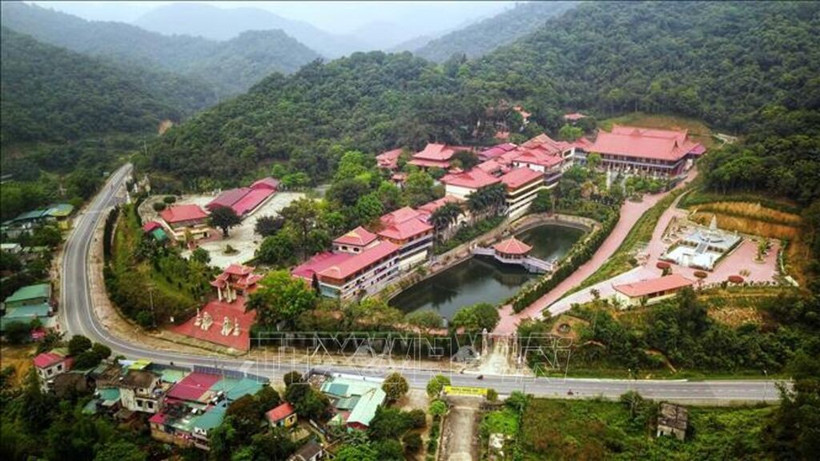
According to the Vice Chairman of the provincial People’s Committee Mai Son, the Yen Tu – Vinh Nghiem – Con Son, Kiep Bac complex is the ninth World Heritage Site in Vietnam. The heritage covers 12 relics and scenic locations across the three localities, interconnected to form a unified spiritual and cultural landscape.
Beyond its architectural value, the complex stands as a testament to the formation and flourishing of the Truc Lam Zen Buddhist sect founded by King-Monk Tran Nhan Tong in the 13th century, an indigenous Buddhist tradition unique to Vietnam.
Within Bac Ninh, Vinh Nghiem pagoda in Tan An ward and Bo Da pagoda in Van Ha ward are recognised as important centres of Truc Lam Buddhism and play a key role in preserving and promoting this spiritual heritage.
This positioning underscores Bac Ninh’s strong cultural foundation and provides momentum for the province to expand heritage-based tourism.To fully harness the advantages brought by the UNESCO recognition, Bac Ninh will work closely with Quang Ninh and Hai Phong to strengthen management, preservation and value enhancement of the heritage complex.
The province plans to allocate resources for restoration and conservation efforts, ensuring compliance with international standards while developing regulations tailored to local conditions to safeguard the integrity of the heritage.
Director of the provincial Department of Culture, Sports and Tourism Bui Thi Thu Thuy said Bac Ninh aims to welcome 7.1 million tourists in 2026, including 420,000 international visitors.
Tourism revenue is expected to reach 6.6 trillion VND (251 million USD), up 14% from 2025. To achieve this target, the culture, sports, and tourism sectors will review and revise tourism strategies following the recent provincial merger.
It will also integrate updates to the master tourism development plan through 2030 with a vision to 2050, alongside preparing the tourism development project for 2026–2030 with orientation to 2045.
Bac Ninh will build a new provincial tourism brand identity, including a unified name, logo and slogan suitable for the post-merger province.
The province also plans to redesign tourism maps, websites and promotional publications, as well as souvenirs to strengthen brand visibility.In 2026, the province will organise Bac Ninh Tourism and Culture Week, showcasing its signature cultural assets such as Quan ho folk singing, Ca tru, Cheo, ancient villages, traditional festivals and Kinh Bac cuisine. The event will also celebrate the UNESCO recognition of the Yen Tu – Vinh Nghiem – Con Son, Kiep Bac complex and the inclusion of Lim Festival, Cheo art, Soong co folk singing and the Tho Ha rice paper craft into the national list of intangible cultural heritage.
To diversify tourism products, Bac Ninh will develop inter-provincial and thematic tour routes, including “Kinh Bac – Yen The journey,” “From Quan ho to Ca tru,” “Craft villages – festivals – scenic landscapes,” and a spiritual pilgrimage tracing the legacy of Tran Nhan Tong through Yen Tu, Vinh Nghiem and Con Son – Kiep Bac.
These tours are expected to create stronger linkages between destinations and attract a wider range of visitors.The province also plans to select 10–15 key destinations representing the newly merged region for focused investment, including improvements to tourism infrastructure, signage and transportation connections.
It will prepare a tourism promotion programme featuring flagship products aimed at enhancing the province’s competitiveness in the regional tourism market.Formed from the merger of the former Bac Ninh and Bac Giang provinces, the new Bac Ninh province spans 4,718.6 sqk with over 3.6 million residents and 99 commune-level administrative units.
Long considered the cultural heartland of the Kinh Bac region, the area is rich in historical, cultural and revolutionary relics. The province currently has one national tourist area and 34 recognised tourist destinations, with cultural tourism, craft-village tourism and community-based tourism as its main strengths.
According to the provincial tourism authority, Bac Ninh expects to welcome 5.6 million visitors in 2025. In the first half of the year, the province recorded 4.58 million tourist arrivals, achieving 81% of the annual target, with revenue reaching 3.87 trillion VND.
Since early 2025, Bac Ninh has successfully held several major events, including the Tay Yen Tu Spring Festival, the 2025 Food and Tourism Festival, the “essence of Bac Ninh culture – colours of Dong Ho” programme in Hanoi, Quan ho boat performances, and the “ceramics and traditional craft villages” cultural week with 100 exhibition booths./.