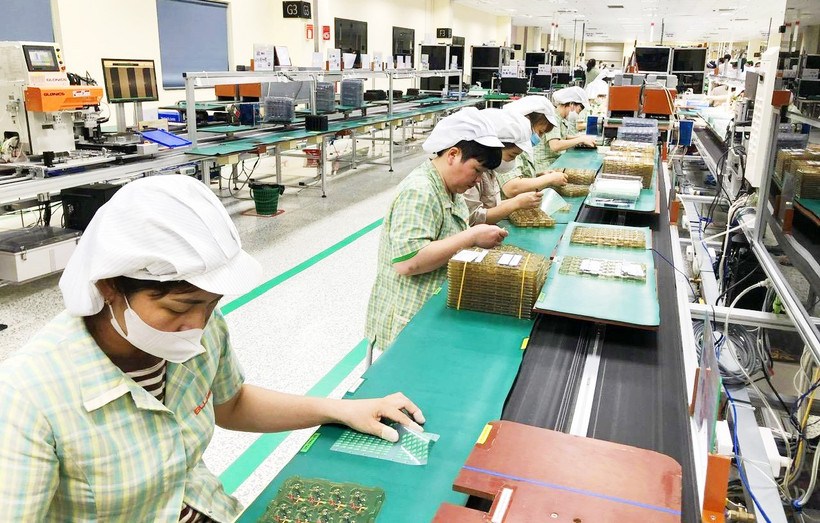
Bac Ninh (VNA) – Bac Ninh province, a manufacturing powerhouse northeast of Hanoi, will focus on diversified and sustainable trade-and-services growth through 2030, with digital transformation at the core, the provincial Department of Industry and Trade said.
Global and regional trends in the coming years are expected to revolve around the digital economy, cross-border e-commerce, modern logistics, green trade, AI-and big data-driven services, and the expansion of night-time economy.
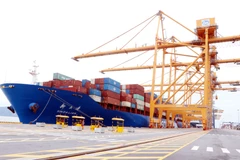
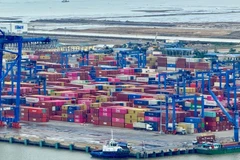
In response, Bac Ninh plans heavy investment to upgrade commercial and service infrastructure, with an emphasis on international trade centres, agricultural wholesale markets, logistics hubs, and inland container depots linked directly to Belt Road 4, the Bac Giang-Lang Son expressway, the Hanoi-Quang Ninh expressway, and the under-construction Gia Binh International Airport.
The province aims to sharply accelerate logistics and cross-border e-commerce while luring strategic investors and global giants to build distribution centres. The goal is to form global and regional-scale transshipment hubs.
Over the coming years, Bac Ninh will upgrade workforce quality through deeper partnerships with universities and major corporations, offering advanced training in business management, e-commerce, logistics, and digital financial services.
It will also strengthen global and regional ties and help local companies maximise benefits from Vietnam’s signed free trade agreements, enabling firms to diversify export markets, product portfolios, and supply chains for sustained export growth.
Separately, the province is turning attention to high-value-added services tied to industrial and urban development, including finance, banking, insurance, culture, and entertainment, while integrating e-commerce, digital economy, and night-time economy with tourism, culture and modern services.
Strategically located as Hanoi’s northeastern gateway and a critical node in the Hanoi-Hai Phong-Quang Ninh economic triangle, Bac Ninh has seen its trade-and-services sector expand at an average annual rate of 16.5% in recent years.
The province now operates 234 traditional markets, nine shopping centres, 31 supermarkets, more than 350 convenience stores, and thousands of wholesale-retail outlets, with specialised commercial streets and pedestrian zones already established in Kinh Bac and Vo Cuong wards. Modern chains like Masan, Central Retail, Dabaco, FPT, and Dien May Xanh continue aggressive network expansion.
Warehouse and logistics infrastructure has grown rapidly, attracting investments from Mapletree, NYK Logistics, CNCTec, Tan Cang Saigon, and Bac Ky, creating a professional ecosystem supporting trade activities.
Bac Ninh consistently ranks among the top 10 localities nationwide in the e-commerce index. Local companies are shifting from traditional models to digital platforms, adopting technology for sales management, electronic invoicing, and online channels such as websites, email, and social media.
Cashless payments via e-wallets, QR codes, and POS systems are now popular among supermarkets, shopping centres, convenience stores, and most fixed market stalls and service outlets.
Total retail sales of goods and services in 2025 are estimated to top 761 trillion VND (29.26 million USD), representing average annual growth of 16.5% during 2021–2025. Since 2021, the province has welcomed nearly 18 million visitors, earning an estimated 14 trillion VND in tourism revenue.
Total trade turnover for 2021-2025 reached nearly 660 billion USD, with Bac Ninh targeting 1.09 trillion USD in combined exports and imports for the 2026-2030 period./.