Timely removal of obstacles for businesses in logistics, import-export activities needed

Based on feedback from the business community, Board IV recommended that the Prime Minister direct relevant ministries to continue reviewing and reforming administrative procedures, especially in areas of high priority such as attracting investment, industrial park development, logistics, and enhancing export-import facilitation.

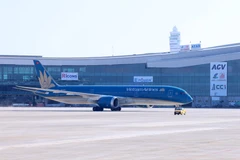
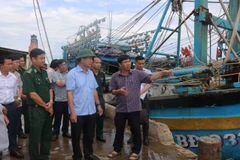
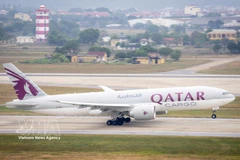
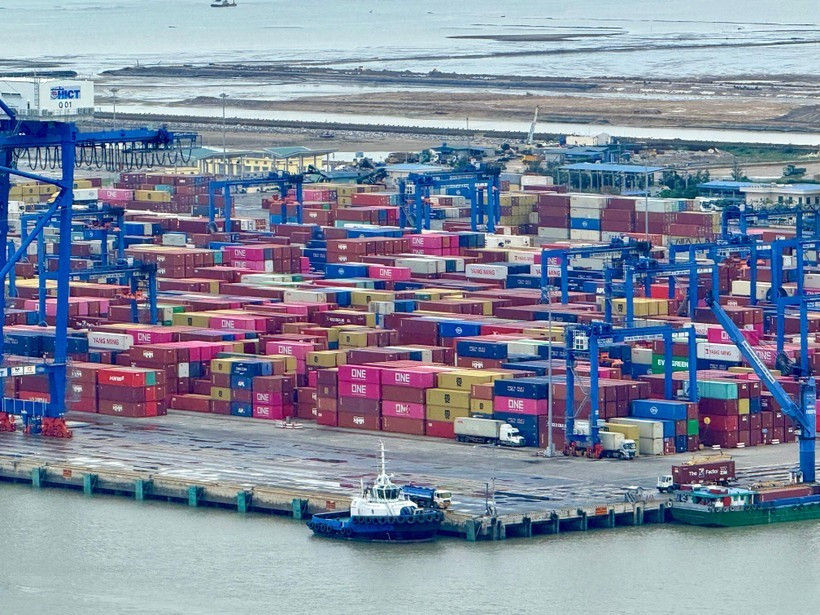
Illustrative image (Photo: VNA)

Hanoi (VNA) - Vietnam’s logistics sector has not yet reached its full potential, affecting the country’s transportation capacity and competitiveness of local goods in the international market. This is a key finding in a recent report by the Private Economic Development Research Board (Board IV) under the Prime Minister’s Administrative Reform Advisory Council submitted to the PM.

In an update to the media on December 10, Board IV highlighted that Vietnam is still in a "logistics trade deficit" position, with its ports primarily focused on cargo handling, which covers only about 20% of the functions of an international maritime hub by global standards. Most value-added services such as shipbuilding, repairs, finance, maritime insurance, and digital technology services are outside the port area and rely heavily on foreign businesses.

Despite these challenges, Vietnam has several advantages, such as its strategic geographical location on the international maritime route, accounting for 65% of global trade; its position among the top 17 largest trading nations; 17 signed Free Trade Agreements (FTAs) covering over 60 markets and 90% of global GDP; and the presence of the Cai Mep - Thi Vai port complex, capable of handling some of the world’s largest vessels (24,000-25,000 TEU). These factors present an opportunity for Vietnam to become a new maritime-logistics and production hub in Asia.

The report also points out that inland waterway transport has not been developed in proportion to its potential, leading to inefficiencies in the transportation of goods. Vietnam has one of the world’s densest river networks, with 2,360 rivers and channels spanning over 42,000 km, of which about 17,000 km (41%) are navigable. This system covers key economic regions, especially the Red River Delta, Mekong Delta, and Southeast region, forming a natural, low-cost, high-capacity, low-emission, and energy-efficient transport network.

The country has nearly 6,500 inland waterway ports, about 1,800 companies operating in the inland waterway transport sector, with more than 270,000 vessels, ensuring the transportation of about 20% of the total goods of Vietnam - far higher than the 5-7% average in the region. Around 70% of inland waterway cargo is concentrated in the southern region, where the river and canal networks are closely linked with industrial centres and deep-water ports such as Cai Mep - Thi Vai, Ho Chi Minh City, and Dong Nai.

However, public investment in this sector only accounted for about 2% of total investment in the transportation sector from 2001-2020, with a slight increase since 2021 but still far below the actual contribution of inland waterway transport to goods circulation, regional connectivity, and emission reduction. Meanwhile, 82% of investment in this sector comes from private sources, indicating significant potential for private sector involvement if supported by appropriate policies.

Based on feedback from the business community, Board IV recommended that the Prime Minister direct relevant ministries to continue reviewing and reforming administrative procedures, especially in areas of high priority such as attracting investment, industrial park development, logistics, and enhancing export-import facilitation.

It proposed the PM direct the development of new approaches based on strong public-private collaboration to build strategic and "practical" programmes aimed at increasing the competitiveness of Vietnam's maritime and logistics sectors.

On December 9, the Government Office issued Document No. 12131/VPCP-DMDN, instructing ministries and local authorities to consider and act on these proposals. These actions aim to optimise Vietnam's logistics and export capabilities, ensuring a more competitive business environment./.
VNA

See more

Deputy Prime Minister Bui Thanh Son receives Kounlaphanh Vongnathy, Vice President of Phongsupthavy Group, in Hanoi on December 12, 2025. (Photo: VNA)

Lao group urged to deepen energy ties with Vietnam

Deputy Prime Minister Bui Thanh Son has commended Phongsupthavy Group as one of Laos’ leading investors supplying electricity to Vietnam, noting its pledge to ramp up power exports and actively contribute to the implementation of energy cooperation agreements endorsed by senior leaders of the two Parties and States.

An Giang OCOP product booth at the fair (Photo: VNA)

Vietnam–Cambodia OCOP fair expected to boost cross-border trade

The fair offers an opportunity for Vietnamese and Cambodian enterprises to meet and promote their brands and speciality products to both domestic and international visitors, he added, noting that it also serves as a platform for trade connections, helping businesses seek partners, expand distribution networks and access the promising border market.

Vietnamese Ambassador to Argentina and Paraguay Ngo Minh Nguyet (third from left), Paraguayan Minister of the Secretariat of Linguistic Policies Javier Viveros (second from left), and Vietnam's Honorary Consul in Paraguay María Del Carmen Pérez (C) pose for a photo with delegates. (Photo: VNA)

Ample room remains for Vietnam-Paraguay economic ties: Ambassador

Addressing a ceremony marking the 30th anniversary of the establishment of the bilateral diplomatic ties on December 11, Vietnamese Ambassador to Argentina and Paraguay Ngo Minh Nguyet affirmed that Vietnam, one of the fastest-growing economies in Asia, can become a strategic partner to help Paraguay expand its presence in the regional market.

Workers process frozen shrimp for export at the Coastal Fisheries Development Company (COFIDEC), Ho Chi Minh City. (Photo: nhandan.vn)

Vietnamese aquatic products reach new markets

By exploring new markets, diversifying products and prioritising sustainability standards, Vietnamese aquatic products have laid the groundwork for long-term expansion including early steps to build investment partnerships in emerging markets such as Algeria and Cuba.

Export revenue from wood and wooden products is forecast to exceed 18 billion USD in 2025. (Photo: VNA)

Wood, forestry sector targets 25 billion USD in exports

For the 2025–2030 term, Viforest aims to reinforce its role as a hub for innovation, build long-term development plans and expand cooperation with ministries and international partners to support the sector’s green transition.

Hanoi targets around 1,200 supporting-industry enterprises. (Photo: thoibaonganhang.vn)

Hanoi shapes supporting-industry ecosystem for its 2035 vision

By 2030, Hanoi targets around 1,200 supporting-industry enterprises, with more than 40% meeting international standards and capable of joining global production networks. By 2035, this is projected to rise to around 1,400, with approximately 45% meeting international standards.

Illustrative image (Photo: VNA)

Resolution 57: Telecom providers accelerate 2G shutdown, Viettel hits early 5G milestone

The Viettel Military Industry and Telecoms Group (Viettel) is introducing targeted support packages to facilitate customer migration, ensuring seamless service continuity and straightforward upgrades to 4G/5G devices with Voice over LTE (VoLTE) capability. VoLTE technology offers superior HD voice quality and cuts call drop rates by more than 59% versus 2G.

Across the CPTPP bloc, Vietnam’s tra fish exports soared 36% year-on-year to 305 million USD during January-October, representing 17% of its global tra fish sales. (Illustrative photo: VNA)

CPTPP drives Vietnam’s agro-fisheries exports

The 12-member CPTPP covering Australia, Brunei, Canada, Chile, Japan, Malaysia, Mexico, New Zealand, Peru, Singapore, the UK and Vietnam saw two-way trade with Vietnam reach 102.8 billion in the first 10 months of 2025, up 20.6% from a year earlier.

A credit officer from the Vietnam Bank for Social Policies (VBSP) in Phu Tho province guides residents on utilising borrowed capital for intended purposes and effective investment. (Photo: VietnamPlus)

Policy credit drives strong transformation in the Ancestral Land

The sharp decline in the poverty rate and the gradual improvement in the livelihoods of ethnic communities reflect decisive leadership, management, and the strong involvement of the entire political system, particularly the synergy created by various organisations, businesses, and social policy credit.