Vietnam targets stable, high-quality supply chain for future rice exports

Sustainable rice export strategies were the focus of a conference held in Ho Chi Minh City on December 10, where the Import–Export Department under the Ministry of Industry and Trade assessed both the challenges and opportunities facing Vietnam’s rice exports in 2026.

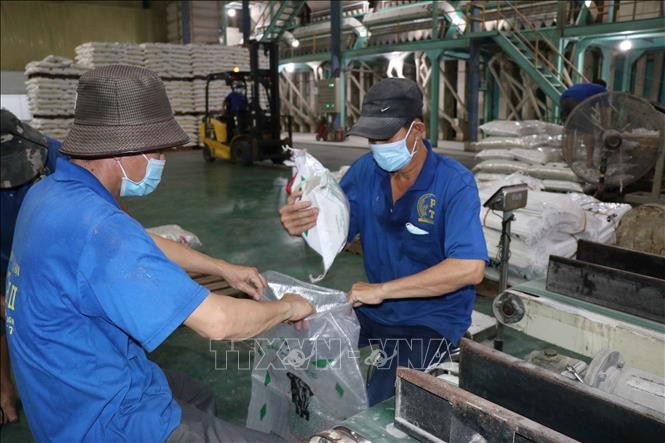
Workers of Phuoc Thanh II Co., Ltd. package rice for export. Photo: VNA)

HCM City (VNA) – Sustainable rice export strategies were the focus of a conference held in Ho Chi Minh City on December 10, where the Import–Export Department under the Ministry of Industry and Trade assessed both the challenges and opportunities facing Vietnam’s rice exports in 2026.

Nguyen Anh Son, Director General of the Import–Export Department, noted that the sector is confronting a series of difficulties, including escalating geopolitical instability in several regions, persistently high inflation, and slow global trade and investment recovery. Tight monetary policies in major economies continue to exert pressure on financial and currency markets in developing countries.

Meanwhile, global consumer demand and economic activity remain subdued.

He added that protectionist measures are re-emerging in various forms, while developed economies are increasingly prioritising consumer safety, sustainability and climate action, resulting in new standards and regulations for imported goods.

According to data from the Department of Customs, Vietnam exported more than 7.53 million tonnes of rice worth over 3.85 billion USD in the first 11 months of 2025. The average export price stood at more than 511 USD per tonne, down 10.9% in volume and 27.4% in value year-on-year. Significant declines were recorded in several markets, including Indonesia (down over 96%) and Malaysia (down 32.5%).

Conversely, exports reported strong growth in other markets: Ghana up 52.64%, China up more than 165%, Senegal up roughly 73 times, and Bangladesh up a remarkable 238 times. These increases helped offset sharp falls in Indonesia, Cuba and Malaysia. Vietnam’s rice exports currently consist mainly of high-quality white rice and fragrant varieties, which account for 69% of total shipments.

The Philippines, Vietnam’s largest rice market in recent years, is expected to reopen imports from January 2026, albeit with adjustments to tariff levels. Demand from traditional markets such as China, Bangladesh and African countries is also rising. Vietnam has additionally secured new rice trade agreements, creating opportunities to penetrate emerging markets. Domestically, the quality of Vietnamese rice continues to improve, strengthening its competitiveness globally.

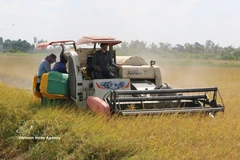
Representative from the Plant Protection and Crop Production Department under the Ministry of Agriculture and Environment forecast that rice cultivation areas will fall by around 0.2 million ha in 2026 due to seasonal adjustments, with output estimated at about 43 million tonnes. They urged localities to focus on restoring production after natural disasters and ensuring stable cultivation areas, seed structures and schedules for the 2025–2026 Winter–Spring crop.

The Mekong Delta will continue rolling out the project to develop one million ha of sustainable, high-quality, low-emission rice linked to green growth by 2030, while fostering consumption and export of this product line.

Le Thanh Tung, Standing Vice Chairman and General Secretary of the Vietnam Rice Industry Association, proposed that rice be considered a special commodity requiring close monitoring to ensure domestic consumption and food security alongside effective export performance. He called for strengthening linkages to establish stable material zones that meet food safety, traceability and quality standards, and to build strong branding for Vietnamese rice. Businesses and farmers, he stressed, must produce in line with import market requirements to balance supply and demand and maintain price stability.

Ngo Chung Khanh, Deputy Director General of the Multilateral Trade Policy Department, recommended developing plans and strategies to maximise the benefits of free trade agreements (FTAs) for the rice sector. This includes clear task allocation among agencies and enterprises, accelerating brand-building efforts, and enhancing coordination between state bodies and industry associations.

Commercial counsellors from Vietnam’s trade offices in Australia, Nigeria, Singapore, Malaysia, the Philippines, Egypt, Algeria, China and other markets provided updates on rice import policies in their host countries. They urged Vietnamese exporters to pay close attention to quality standards, quarantine procedures, packaging and labelling, while carefully assessing foreign partners’ profiles and payment practices to ensure safe and effective exports./.
VNA

See more

An Giang OCOP product booth at the fair (Photo: VNA)

Vietnam–Cambodia OCOP fair expected to boost cross-border trade

The fair offers an opportunity for Vietnamese and Cambodian enterprises to meet and promote their brands and speciality products to both domestic and international visitors, he added, noting that it also serves as a platform for trade connections, helping businesses seek partners, expand distribution networks and access the promising border market.

Vietnamese Ambassador to Argentina and Paraguay Ngo Minh Nguyet (third from left), Paraguayan Minister of the Secretariat of Linguistic Policies Javier Viveros (second from left), and Vietnam's Honorary Consul in Paraguay María Del Carmen Pérez (C) pose for a photo with delegates. (Photo: VNA)

Ample room remains for Vietnam-Paraguay economic ties: Ambassador

Addressing a ceremony marking the 30th anniversary of the establishment of the bilateral diplomatic ties on December 11, Vietnamese Ambassador to Argentina and Paraguay Ngo Minh Nguyet affirmed that Vietnam, one of the fastest-growing economies in Asia, can become a strategic partner to help Paraguay expand its presence in the regional market.

Workers process frozen shrimp for export at the Coastal Fisheries Development Company (COFIDEC), Ho Chi Minh City. (Photo: nhandan.vn)

Vietnamese aquatic products reach new markets

By exploring new markets, diversifying products and prioritising sustainability standards, Vietnamese aquatic products have laid the groundwork for long-term expansion including early steps to build investment partnerships in emerging markets such as Algeria and Cuba.

Export revenue from wood and wooden products is forecast to exceed 18 billion USD in 2025. (Photo: VNA)

Wood, forestry sector targets 25 billion USD in exports

For the 2025–2030 term, Viforest aims to reinforce its role as a hub for innovation, build long-term development plans and expand cooperation with ministries and international partners to support the sector’s green transition.

Hanoi targets around 1,200 supporting-industry enterprises. (Photo: thoibaonganhang.vn)

Hanoi shapes supporting-industry ecosystem for its 2035 vision

By 2030, Hanoi targets around 1,200 supporting-industry enterprises, with more than 40% meeting international standards and capable of joining global production networks. By 2035, this is projected to rise to around 1,400, with approximately 45% meeting international standards.

Across the CPTPP bloc, Vietnam’s tra fish exports soared 36% year-on-year to 305 million USD during January-October, representing 17% of its global tra fish sales. (Illustrative photo: VNA)

CPTPP drives Vietnam’s agro-fisheries exports

The 12-member CPTPP covering Australia, Brunei, Canada, Chile, Japan, Malaysia, Mexico, New Zealand, Peru, Singapore, the UK and Vietnam saw two-way trade with Vietnam reach 102.8 billion in the first 10 months of 2025, up 20.6% from a year earlier.

A credit officer from the Vietnam Bank for Social Policies (VBSP) in Phu Tho province guides residents on utilising borrowed capital for intended purposes and effective investment. (Photo: VietnamPlus)

Policy credit drives strong transformation in the Ancestral Land

The sharp decline in the poverty rate and the gradual improvement in the livelihoods of ethnic communities reflect decisive leadership, management, and the strong involvement of the entire political system, particularly the synergy created by various organisations, businesses, and social policy credit.

Participants in the Vietnam Impact Investment Forum 2025, held in Hanoi on December 10. (Photo: diendandoanhnghiep.vn)

Vietnam records strong growth in impact investment: forum

A rising number of enterprises are offering practical solutions in key sectors, including sustainable agriculture, climate adaptation, education, health care, renewable energy, women’s economic empowerment, and financial inclusion. They generate clear social and environmental impacts while also bringing financial returns to impact investors.

According to global property consultancy Jones Lang LaSalle, announced M&A deals reached a total value of around 2.4 billion USD in the first 11 months of 2025, signalling a clear recovery in market activity. (Photo: VNA)

Real estate M&A market gathers pace

With expectations of a stronger investment environment and a continued push for transparency in real estate, the 2025-2026 period is viewed as a pivotal window for enterprises to restructure, raise capital and enhance competitiveness through high-quality M&A transactions.