Bac Ninh focuses on high-tech, green industry development

Bac Ninh province is accelerating efforts to attract investment to and develop high-tech, green, and digital industries, aiming to strengthen its role as a sustainable industrial hub by 2030, according to the provincial Industrial Zones Authority.

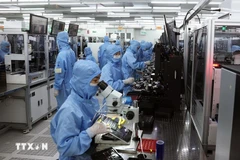
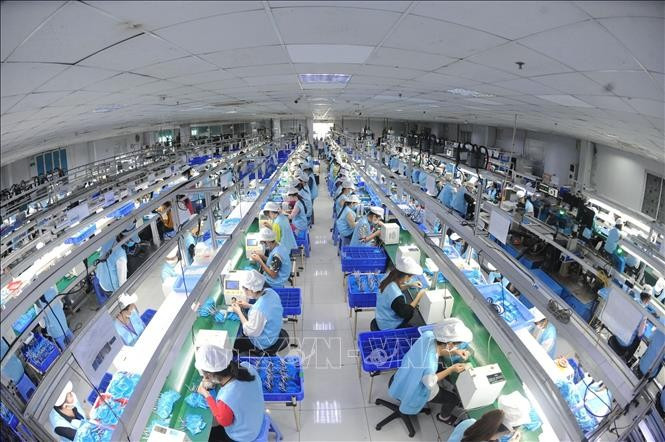
An electronics production line at the Suntech JSC in Thanh Van Industrial Cluster, Bac Ninh province (Photo: VNA)

Bac Ninh (VNA) – Bac Ninh province is accelerating efforts to attract investment to and develop high-tech, green, and digital industries, aiming to strengthen its role as a sustainable industrial hub by 2030, according to the provincial Industrial Zones Authority.

The province has set ambitious targets for 2026–2030, including consolidating its position as a hub of high-tech industries with sustainable and environmentally friendly development, maintaining GRDP growth above the national average, achieving a foreign trade turnover of 1.12 trillion USD, and reaching per capita GRDP above 9,000 USD.

To achieve these targets, the northern province has proposed that a law on industrial and economic zones be promptly issued to ensure harmony in current legislation on investment, land, construction, environment, and real estate, reducing overlaps and inconsistencies.

Bac Ninh is pursuing selective and high-quality investment attraction, prioritising projects on high technology, supporting industries, electronics, semiconductor, biotechnology, new materials, and renewable energy. The province also seeks multinational corporations' investment in research and development (R&D) and innovation centres to help form a robust high-tech industrial ecosystem. Reasonable land quotas in each industrial park are reserved for small and medium-sized enterprises (SMEs) and innovative start-ups to ensure diversity and value chain connectivity.

In addition, investment promotion will be professional and focused, targeting key markets including Japan, the Republic of Korea (RoK), the EU, the US, Singapore, and the UAE. The province aims to attract at least two major multinational and high-tech companies to its industrial parks during the next five years.

Bac Ninh will also require industrial park developers to increase green space and water surfaces, improve environmental landscapes, and develop comprehensive social infrastructure, including worker housing, kindergartens, healthcare centres, cultural and sports areas, along with supermarkets and essential services.

It is shifting from passively meeting investor needs to actively supporting them, while fostering human resources through collaboration with universities and vocational schools to develop programmes on training skilled technical manpower. Partnerships between educational institutions and enterprises are encouraged to meet industrial park workforce requirements.

Currently, Bac Ninh is home to 35 approved industrial parks covering nearly 10,500 hectares, employing approximately 552,000 workers, including over 21,000 foreign employees. These projects have proved instrumental in establishing Bac Ninh as a leading electronics – industrial hub in Vietnam.

Under its 2021–2030 master plan with a vision to 2050, Bac Ninh aims to develop 50 industrial parks covering 15,202 hectares, ensuring long-term industrial development space. To date, 41 industrial parks have gained detailed planning approvals covering nearly 13,000 hectares while remainders are undergoing final approvals.

Despite a global FDI slowdown, local industrial parks have attracted 2,805 FDI projects with registered capital of 44.85 billion USD. These projects have substantially contributed to Bac Ninh’s industrial production, which now exceeds 1.6 quadrillion VND (60.6 billion USD).

The zones currently accommodates investors from 44 countries and territories with strong technological and financial capacity, including the RoK, Japan, the US, the EU, China, and Taiwan (China). Notably, Bac Ninh has successfully drawn major multinational corporations with core technologies, such as Samsung, Canon, Amkor, Foxconn, Sunwoda, Goertek, and Amphenol.

As a result, the province has shaped an industrial ecosystem in electronics and telecommunications, and is gradually transitioning to green, digital, and semiconductor industries./.

VNA

See more

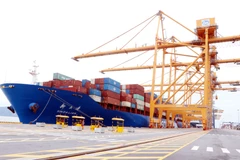
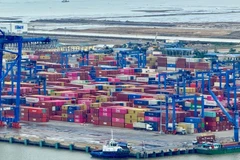
The vessel carrying the 2 millionth TEU arrives at Hai Phong Port. (Photo:VNA)

Hai Phong Port reaches 2-million-TEU milestone

Handling the 2 millionth TEU in 2025 not only demonstrates Hai Phong Port’s operational capacity and the collective efforts of its workforce, but also highlights its increasingly important role in regional and global supply chains, the confidence of shipping lines, logistics firms and the business community, and the effectiveness of policies to improve the investment climate and strengthen maritime infrastructure and services.

Melons labelled with traceability codes on display at the Song Van agricultural produce store in Ninh Binh city, Ninh Binh province. (Photo: VNA)

Tracing origins hindered by fragmented data systems

As the Government accelerates the digital economy, establishing a unified national traceability system has become a crucial move to end data fragmentation and disconnection among ministries, sectors and localities.

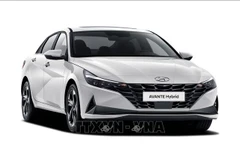
Hyundai unveils its new Avante Hybrid model in Seoul, the Republic of Korea, on August 13, 2020. (Photo: Yonhap/VNA)

Tax cuts poised to ignite Vietnam’s hybrid vehicle boom from 2026

Experts forecast that 2026-2030 will mark a period of strong growth for hybrid vehicles in Vietnam, a trend that will invigorate the automotive sector while supporting national objectives on emissions reduction, sustainable development and the broader transition to green mobility.

Illustrative image (Photo: VNA)

Vietnam targets 1 billion USD in banana exports

Bananas have been identified as a priority product under the Project for the Development of Key Fruit Crops to 2025, with a vision to 2030, approved in October 2022. Under the plan, banana acreage is projected to reach 165,000–175,000ha by 2030, with output of 2.6–3 million tonnes.

Deputy Minister of Foreign Affairs Nguyen Minh Hang (Photo: VNA)

Event connects Vietnamese businesses with African countries

Deputy Foreign Minister Nguyen Minh Hang held that to develop Vietnam – Africa ties more strongly and substantively, it is necessary to promote the engagement of businesses, and that the Government will create favourable conditions for them to enhance fruitful cooperation.

Deputy Prime Minister Ho Duc Phoc (R) and Independent Non-executive Chairman of AIA Mark Tucker at their meeting in Hanoi on December 12. (Photo: VNA)

AIA Group envisions long-term investment, cooperation in Vietnam

Over 25 years of operation in Vietnam, AIA has achieved positive results. Its premium revenue ranks among the top five life insurers, reaching nearly 14.83 trillion VND (563.71 million USD) in 2024 and an estimated 15.73 trillion VND in 2025, equivalent to around 10% of the market share.

A view of the 2025 Japan business roundtable in HCM City on December 12. (Photo: VNA)

Ho Chi Minh City courts Japanese investment with growth blueprint

Ha underscored the pivotal contributions of Japanese firms, which have long supported local socio-economic progress through major infrastructure projects, industrial zones and workforce training courses. To date, Japanese companies have invested more than 15 billion USD in over 2,200 projects, reflecting sustained confidence and commitment to the market.

Deputy Prime Minister Bui Thanh Son receives Kounlaphanh Vongnathy, Vice President of Phongsupthavy Group, in Hanoi on December 12, 2025. (Photo: VNA)

Lao group urged to deepen energy ties with Vietnam

Deputy Prime Minister Bui Thanh Son has commended Phongsupthavy Group as one of Laos’ leading investors supplying electricity to Vietnam, noting its pledge to ramp up power exports and actively contribute to the implementation of energy cooperation agreements endorsed by senior leaders of the two Parties and States.