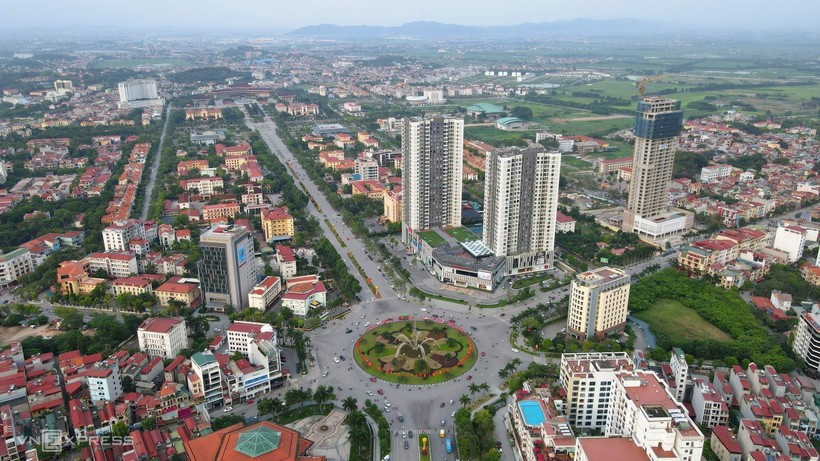
Bac Ninh (VNA) – The northern province of Bac Ninh is developing a harmonious development model, stepping up regional connectivity, shaping economic corridors, and upgrading its urban system as it works toward the goal of becoming a centrally governed Tier-1 city by 2028, according to Director of the provincial Department of Construction Nguyen Viet Hung.
Under the new orientation, Bac Ninh aims to become a major regional hub for high-tech industry, processing and manufacturing, and supporting industries, forming a fully developed industrial ecosystem that serves as a growth engine for both the northern region and Vietnam.
The province is also establishing itself as a regional logistics and trans-shipment centre, making use of its favourable transport network to link road, rail, aviation, and seaport infrastructure in the region.
Another goal is to turn Bac Ninh into a centre for education, technical training and technology transfer for northern industrial zones, through an expanded network of universities, R&D institutes, and high-quality vocational training centres.
Bac Ninh further aims to become a dynamic urban pole of the greater Capital Region, developing smart cities and urban chains combining industry, services, and education.
In addition, the province also plans to enhance its role as a cultural – tourism – ecological centre, leveraging Quan ho heritage, ancient temples and pagodas, traditional festivals, historic sites such as the Yen The Uprising locations, and natural landscapes to bolster regional cultural, spiritual, and ecological tourism.
In agriculture, Bac Ninh looks to become a high-tech farming zones and agricultural logistics hub, with concentrated fruit cultivation, organic farming, digital agriculture, and agro-exports promoted.
Another key direction is establishing Bac Ninh as a centre for innovation and industrial start-ups, with high-tech parks, innovation hubs, and facilities supporting the commercialisation of technological products.
Especially notable is the goal of making Bac Ninh an international aviation and logistics centre, with a world-class airport urban system anchored by the Gia Binh International Airport project.
To realise these goals, Hung said, Bac Ninh will review and adjust provincial, urban, and rural plans to ensure consistency and create new development spaces befitting a future centrally governed city. Economic corridors and urban axes will be incorporated into development plans, along with new growth centres, strengthened intra-provincial connectivity, and improve links with Hanoi and neighbouring provinces. It will improve multi-polar and urban governance capacity, thereby ensuring harmonious development among areas and localities.
The province is also mobilising and utilising resources for development while accelerating and completing nationally important projects, including Gia Binh Airport, Ring Roads 4 and 5, the routes connecting the airport with Hanoi and the province's administrative – political centre, and major rail projects such as the Lao Cai – Hanoi – Hai Phong route and the Hanoi – Quang Ninh high-speed line.
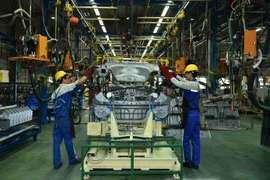
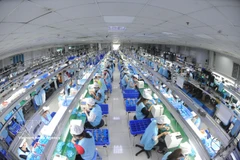
Bac Ninh continues to prioritise high-tech industry to maintain its status as a global manufacturing base for major multinational corporations, while capturing new waves of FDI and developing its emerging semiconductor sector.
The province has proposed that central authorities incorporate its targets, vision, and role into national master plans, with the strategic role of Gia Binh International Airport and key transport – economic corridors connecting with Hanoi recognised as a new development driver of the North in the national infrastructure system. It also seeks support to build a regional plan linking Bac Ninh, Hai Phong and Hanoi around interconnected urban – industrial – logistics development.
In parallel, Bac Ninh is working on a new provincial master plan, a general plan for urban areas, zoning plans, and a comprehensive assessment of its urban situation to draft urban and housing development programmes, ensuring development in accordance with Tier-1 city standards by 2027, as well as those of smart, green, and ecological cities.
During 2021–2025, Bac Ninh prioritised infrastructure planning and investment, especially in transport, power, industrial and urban infrastructure. Following the administrative merger with Bac Giang, Bac Ninh’s urbanisation rate now stands at 41.6%, with 33 wards and 66 communes.
Major transport works have been launched or completed, including the expanded Nhu Nguyet Bridge, Ha Bac 2 Bridge, Kinh Duong Vuong Bridge, Hoa Son Bridge, Net Bridge, Dong Viet Bridge, Kenh Vang Bridge, A Lu Bridge, Ring Road 4, and key connection routes, alongside Gia Binh International Airport.
These projects are opening new development spaces and building fresh momentum for Bac Ninh as it advances toward its 2028 target of becoming a centrally governed Tier-1 city./.