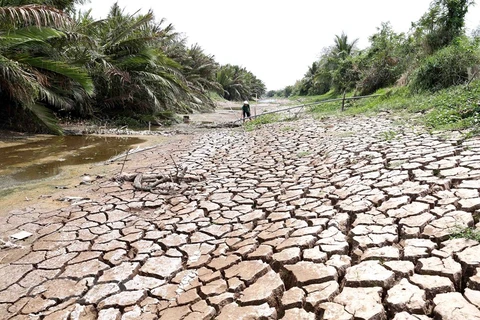
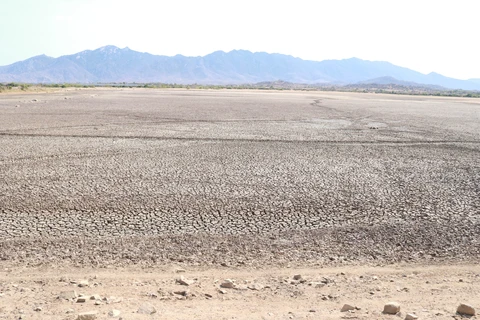
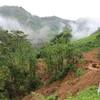
A pepper orchard in Dak Lak province faces a water shortage because of drought (Photo: vietnamnet.vn)
 HCM City (VNS/VNA) - Authorities and farmers in the Central Highlands region are taking measures to cope with severe drought to reduce damages to crops.
The region, which includes Kon Tum, Gia Lai, Dak Lak, Dak Nong and Lam Dong provinces, has had low rainfall this year and is facing a shortage of irrigation water in many areas.
In Dak Lak Province, more than 1,000ha of crops, mostly rice and vegetables, have been damaged by the lack of rainfall, according to the province’s Department of Agriculture and Rural Development.
Bui Van Ni, who grows 4,000 sq.m of winter – spring rice in Krong Bong District’s Ea Trul Commune in Dak Lak, said the commune’s key crop is rice.
The commune did not have rain for several months and irrigation works were using up water sources, he said.
“If there is no rain next month, farmers will lose all their rice harvest,” he said.
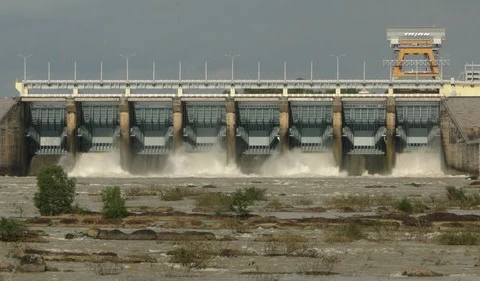
Dak Lak has 782 irrigation works, the highest number compared to other Central Highlands provinces, but the water levels of many irrigation works are declining rapidly.
In March and May, drought is expected to occur on a large scale in Dak Lak, while many irrigation works will dry up. Public pump stations will have no water, and some areas will have no groundwater for exploitation, according to the province’s Department of Agriculture and Rural Development.
In Kon Tum province, more than 168ha of crops have been affected by drought. If the drought lasts for a long period, more than 1,180ha of crops in Kon Tum will be affected, according to the province’s People’s Committee.
In Lam Dong province, thousands of hectares of coffee lack sufficient water as the province has faced prolonged heat since last December.
The Central Highlands region, which is the country’s largest coffee producer, will have 25,000 - 30,000ha of crops facing water shortage in the 2019 -20 dry season, according to the Ministry of Agriculture and Rural Development.
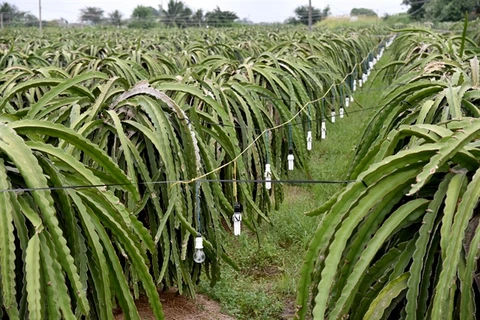
Authorities in the Central Highlands provinces are tightening measures to supply irrigation and are encouraging farmers to use efficient irrigation systems.
The Central Highlands provinces have prepared pumps and other facilities to pump water for drought-prone areas.
The Kon Tum People’s Committee has instructed localities and the province’s Irrigation Works Management Board to regularly inspect irrigation dams, dredge irrigation canals, and repair and upgrade irrigation works to increase water supply for agricultural production.
Farmers will be informed about the schedule for regulating water from irrigation works. Irrigation water for crops will be supplied alternately, said the Kon Tum People’s Committee.
In Dak Nong province, the provincial Department of Agriculture and Rural Development is regulating water from irrigation works to drought-affected areas to save crops.
Le Quang Dan, deputy director of the Dak Nong Department of Agriculture and Rural Development, said the province is speeding up the construction of irrigation works financed by official development assistance (ODA) and other funds.
The Ministry of Agriculture and Rural Development has instructed the Central Highlands provinces to reduce the rice farming area in the next summer – autumn crop in drought-prone areas.
The ministry told the provinces in drought – prone areas to plant only two rice crops and one other crop a year, or switch completely to other crops.
The Central Highlands provinces have also been asked to grow rice varieties with a short maturity period of between 90 – 95 days./.
The region, which includes Kon Tum, Gia Lai, Dak Lak, Dak Nong and Lam Dong provinces, has had low rainfall this year and is facing a shortage of irrigation water in many areas.
In Dak Lak Province, more than 1,000ha of crops, mostly rice and vegetables, have been damaged by the lack of rainfall, according to the province’s Department of Agriculture and Rural Development.
Bui Van Ni, who grows 4,000 sq.m of winter – spring rice in Krong Bong District’s Ea Trul Commune in Dak Lak, said the commune’s key crop is rice.
The commune did not have rain for several months and irrigation works were using up water sources, he said.
“If there is no rain next month, farmers will lose all their rice harvest,” he said.
Dak Lak has 782 irrigation works, the highest number compared to other Central Highlands provinces, but the water levels of many irrigation works are declining rapidly.
In March and May, drought is expected to occur on a large scale in Dak Lak, while many irrigation works will dry up. Public pump stations will have no water, and some areas will have no groundwater for exploitation, according to the province’s Department of Agriculture and Rural Development.
In Kon Tum province, more than 168ha of crops have been affected by drought. If the drought lasts for a long period, more than 1,180ha of crops in Kon Tum will be affected, according to the province’s People’s Committee.
In Lam Dong province, thousands of hectares of coffee lack sufficient water as the province has faced prolonged heat since last December.
The Central Highlands region, which is the country’s largest coffee producer, will have 25,000 - 30,000ha of crops facing water shortage in the 2019 -20 dry season, according to the Ministry of Agriculture and Rural Development.
Authorities in the Central Highlands provinces are tightening measures to supply irrigation and are encouraging farmers to use efficient irrigation systems.
The Central Highlands provinces have prepared pumps and other facilities to pump water for drought-prone areas.
The Kon Tum People’s Committee has instructed localities and the province’s Irrigation Works Management Board to regularly inspect irrigation dams, dredge irrigation canals, and repair and upgrade irrigation works to increase water supply for agricultural production.
Farmers will be informed about the schedule for regulating water from irrigation works. Irrigation water for crops will be supplied alternately, said the Kon Tum People’s Committee.
In Dak Nong province, the provincial Department of Agriculture and Rural Development is regulating water from irrigation works to drought-affected areas to save crops.
Le Quang Dan, deputy director of the Dak Nong Department of Agriculture and Rural Development, said the province is speeding up the construction of irrigation works financed by official development assistance (ODA) and other funds.
The Ministry of Agriculture and Rural Development has instructed the Central Highlands provinces to reduce the rice farming area in the next summer – autumn crop in drought-prone areas.
The ministry told the provinces in drought – prone areas to plant only two rice crops and one other crop a year, or switch completely to other crops.
The Central Highlands provinces have also been asked to grow rice varieties with a short maturity period of between 90 – 95 days./.
VNA