Many houses in Minh Hoa commune in central Quang Binh province were submerged due to flash floods. (Photo: VNA)
 Hanoi (VNA) – The World Bank said in the Vietnam Country Climate and Development Report (CCDR) released on July 14 that without proper adaptation and mitigation measures, it is estimated that climate change will cost Vietnam about 12-14.5% of GDP a year by 2050 and could plunge up to one million people into extreme poverty by 2030.
Paramount cost of climate change
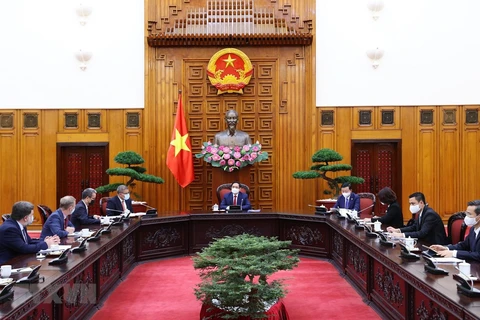
The WB Country Director for Vietnam said after over two decades of stable growth, Vietnam set an ambitious goal to become a high-income economy by 2045. However the ambition could be undermined by climate change.
Vietnam, with over 3,200 kilometers of coastline and many low-lying cities and river delta regions, is one of the most vulnerable countries in the world to climate change, the report said.
Climate change impacts – mainly higher and more variable temperatures and sea level rise – are already disrupting economic activity and undermining growth. Initial calculations suggest that Vietnam lost 10 billion USD in 2020, or 3.2% of GDP, to climate change impacts.
Without proper adaptation and mitigation measures, it is estimated that climate change will cost Vietnam about 12-14.5% of GDP a year by 2050 and could plunge up to one million people into extreme poverty by 2030.
The report noted the rise in greenhouse gas emission (GHG). Vietnam is not a major emitter and contributing only 0.8% of the global greenhouse emissions. But over the past two decades, the country has emerged as one of the fastest-growing per capita GHG emitters in the world.
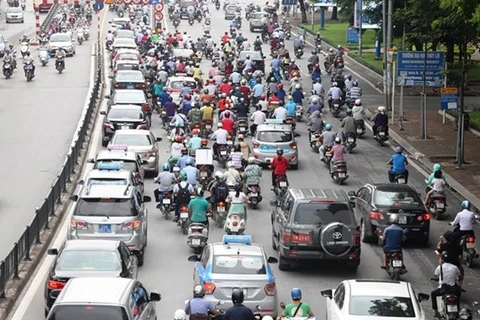
During 2000-2015, when per-capita GDP increased from 390 USD to 2,000 USD, the volume of carbon dioxide emissions also increased nearly four times. Moreover, Vietnam’s GHG emissions are also associated with the toxic air pollution that plagues many of its cities, especially Hanoi, with implications for human health and labour productivity.
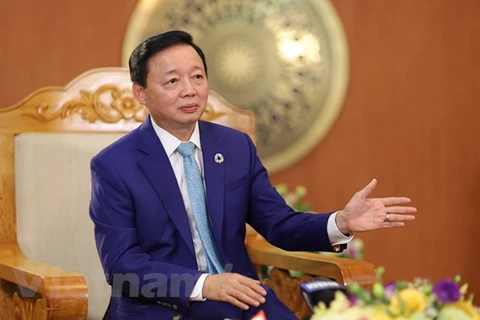
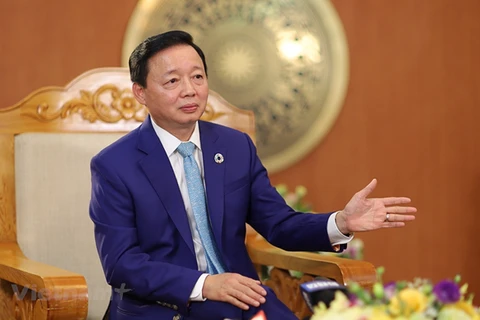
“The country’s rapid economic growth, urbanisation, and industrialisation have been powered by coal-dependent energy creating significant greenhouse gas (GHG) emissions,” the WB representative said.
A roadmap is needed for “decarbonisation” and energy transition
Vietnam needs to invest approximately 368 billion USD from now until 2040, equivalent to 6.8% of its GDP, to build a climate resilient and low-carbon economy, according to the report.
To help Vietnam achieve its development goals while implementing its climate commitments, the report proposes actions on two fronts: adapting to climate impacts and pursuing a growth strategy that steers the economy away from carbon-intensive production.
These two paths will help the country achieve its climate objectives while expanding its GDP per capita by more than 5% a year – the average rate needed to become a high-income country by 2045.
Adaptation to climate change impacts should focus on the country’s most vulnerable sectors and locations, particularly agriculture, transport, trade and industry, coastal areas, and the Mekong Delta. Complementary policy reforms in the fiscal and financial sectors will be needed to stimulate the necessary investments from both the public and private sectors. Total financing needs are estimated at around 254 billion USD from 2022 to 2040, including 219 billion USD for upgrading private assets and public infrastructure, plus 35 billion USD for social programmes.
For the decarbonizing pathway in order to bring Vietnam to net-zero carbon emissions by 2050, substantial investments are required in energy, transport, agriculture, and industry. Sectoral investments should be supported by carbon pricing instruments, which should change behavior and help finance the transition. For example, an increase in the carbon tax to 29 USD per tonne of carbon dioxide equivalent by 2030 and 90 USD by 2040 would generate 80 billion USD in additional revenue. Supporting measures will enable the pursuit of the net-zero objective without slowing GDP growth. Total financing needs for decarbonization are estimated at 114 billion USD over 2022-2040: to support the energy transition (about 64 billion USD); for industry, transport, and agriculture (17 billion USD); and for supportive social programmes (33 billion USD).
Based on the report’s modeling and analytical work, the WB recommends five priority policy packages, which are a regional programme for the vulnerable Mekong Delta, which contributes 50 percent of the country’s rice production and a third of its agricultural GDP; an integrated plan to shield coastal urban areas and transport links from extreme weather; a programme to reduce air pollution clogging the Hanoi area, where poor air quality has exceeded World Health Organization guidelines at least five times for extended periods between 2018 and 2021, and where particulate concentrates are predicted to increase; accelerating the transition to renewable energy with regulatory reforms that encourage greater private sector participation, investments in the power grid, and implementation of energy efficiency plans; and scaled up social protections to offset economic impacts climate action may have on the most vulnerable people./.