Community-based tourism drives poverty reduction in Thanh Hoa

Eco - and community-based tourism in Thanh Hoa province's mountainous regions has emerged as a vital catalyst for poverty reduction, economic transformation, and enhancing living standards.

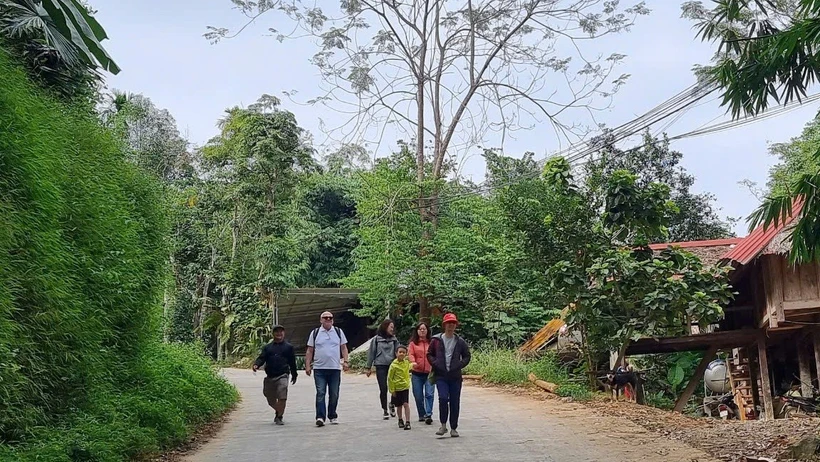
Tourists visit Pu Luong in Ba Thuoc distrit, Thanh Hoa province. (Photo: VNA)

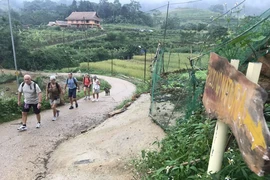
Thanh Hoa (VNA) - Eco - and community-based tourism in Thanh Hoa province's mountainous regions, particularly within the Pu Luong Nature Reserve, has emerged as a vital catalyst for poverty reduction, economic transformation, and enhancing living standards, especially among ethnic minority communities.

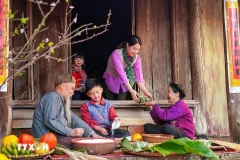
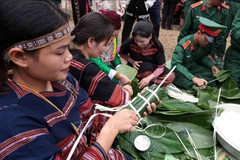
In Lan Ngoai village, Ba Thuoc district, traditional weaving was once on the brink of fading away as locals depended entirely on agriculture. However, with Pu Luong's rise as a popular eco-tourism destination, villagers have revived and embraced their traditional crafts.

Local resident Ha Thi Tinh said previously, many households in the village were poor, but since tourism developed, life has improved. The increasing number of tourists has brought stable income to many families. People now not only rely on farming but also invest in weaving and participate in community tourism services.

Tourism has not only boosted incomes but also provided new skills, such as foreign language proficiency and professional service training. Families in Pu Luong now offer experiential programmes like visiting terraced rice fields, exploring waterfalls, and engaging in cultural activities.

Along with community tourism, luxury resorts in Pu Luong have created jobs for thousands of locals. Positions such as service staff, receptionists, gardeners, and caretakers not only offer stable incomes but also improve residents' quality of life.

Tran Van began working at a resort right after graduating from high school. She said the friendly work environment allows her to learn many new skills, ranging from foreign language communication to tourism services, and provides a stable income to help support her family.

Luong Thi Du, Vice Chairwoman of the Women's Union of Thanh Son commune, Ba Thuoc district, said in addition to creating jobs at resorts, tourism also supports the revival of traditional crafts and the restoration of cultural groups dedicated to preserving local cultural heritage.

Ba Thuoc district began promoting eco-tourism and community-based tourism in Pu Luong in 2016. Initially, only a few households were involved, but now the district hosts 110 tourism businesses, with many earning 3-4 star ratings. In 2024, the district attracted 250,000 visitors and generated a revenue of 250 billion VND (approximately 9.96 million USD).

Six communes in the Pu Luong area were once among the most disadvantaged. Vice Chairman of the Ba Thuoc district People's Committee Lo Van Thang said, now, five of them have improved, and the poverty rate has decreased to 10-15% from 50% in 2010.

Community-based tourism not only helps preserve ethnic cultures but also creates stable income streams, playing a crucial role in sustainable poverty reduction.

From a business perspective, Dinh Van Loc, Director of Vietdatravel (Da Nang), recommended reopening the Da Nang - Thanh Hoa flight route, organising ethnic food festivals, and promoting Pu Luong at major events in Da Nang to attract more visitors and showcase the region's unique culture and experiences.

Pham Hai Quynh, Director of the Asian Tourism Development Institute, said community tourism has become a driver of sustainable economic growth, benefiting rural and mountainous regions. It is not only an opportunity for poverty reduction but also a way to preserve cultural heritage and create a bright future for local communities, he noted./.

VNA

See more

Youth sports strengthen Vietnam-China border friendship

Youth sports strengthen Vietnam-China border friendship

Sports exchanges between Vietnamese and Chinese youth serve as an effective bridge for fostering closer ties and mutual understanding between the two countries’ people. Through football and basketball matches, young people from both sides can improve their fitness and skills while building friendships and promoting solidarity.

A performance staged at the closing ceremony of the Hanoi International Martial Arts Festival 2026 on August 9. (Photo: VNA)

Hanoi Martial Arts Festival 2026 closes, spreading Thang Long spirit

Held under the theme “Thang Long Spirit – Quintessence of Vietnamese Martial Arts,” the festival took place at the Thang Long Imperial Citadel from August 7-9. It was part of Hanoi's efforts to implement Politburo Resolution No. 80-NQ/TW on the development of Vietnamese culture.

The poster of "Glorious Ashes" movie.

Vietnamese cinema returns to Berlin summer film programme

The screening attracted considerable interest from film enthusiasts and the Vietnamese community in the German capital. It marked the fourth time Vietnamese films have been featured in the programme, following "The House of No Man" by Tran Thanh, "Glorious Ashes" by Bui Thac Chuyen, and "My Best Friend's Wedding" by Nguyen Quang Dung and Diep The Vinh in previous years.

Xuan Son comes on in the second half and contributes to Vietnam’s second goal, with his shot forcing a Cambodian defender into an own goal to put Vietnam 2-1 ahead (Photo: VNA)

Vietnam's 22-match unbeaten run draws praise from RoK media

Under the tournament format, the semifinals and final will be played over two legs. Vietnam will travel to Malaysia for the first leg on August 16 before hosting the second leg on August 19. Should Vietnam overcome Malaysia, they will meet the winner of the other semifinal between Thailand and Singapore in the final.

A performance at the Vietnam–Korea Festival 2026 in Da Nang city (Photo: VNA)

Vietnam–Korea Festival 2026 kicks off in Da Nang

Now in its fifth edition, the festival has cemented its place as Da Nang’s signature annual diplomatic event, spotlighting the distinct cultures of both nations, fostering friendship and driving cooperation with Korean localities and partners.

A performance at the opening ceremony of the 2026 Hanoi International Martial Arts Festival on August 7 (Photo: VNA)

Hanoi opens international martial arts festival

The event attracts about 2,000 martial artists of 66 delegations, including seven international delegations from six countries, namely Indonesia, Russia, France, Germany, Switzerland and Morocco.

The statue of Vietnam's King Ly Thai To ( (974 - 1028) in Bonghwa county (Photo: VNA)

RoK to develop K-Vietnam Valley project linked to Ly Dynasty heritage

With the designation in place, Bonghwa will carry out eight specialised projects worth a combined 347.6 billion KRW (245.1 million USD) from 2026 to 2030 – among them the K-Vietnam Valley itself, tourism development around Changpyeong Reservoir, rental smart farms, and a Baekdudaegan healing ‘pet village.’

The organising committee presents awards to outstanding martial artists at the festival. (Photo: VNA)

9th Int’l Festival of Vietnamese Traditional Martial Arts wraps up

The ninth International Festival of Vietnamese Traditional Martial Arts has fostered the martial spirit, strengthened national pride, promoted cultural exchanges and reinforced the aspiration to bring Vietnamese traditional martial arts to a wider international audience.

An appetising bowl of My Quang features a rich combination of ingredients. (Photo: VNA)

Da Nang to host festival honouring Quang Nam-style noodle soup

My Quang is not only a signature dish of the Quang region but also reflects the history, culture and daily life of communities in central Vietnam. With its diverse ingredients, preparation methods and distinctive flavours, the noodle soup has become one of Vietnam's best-known culinary specialities, helping strengthen Da Nang's position on the culinary tourism map.