Lao Cai (VNA) - For those enchanted by the allure of Southeast Asia and the majestic beauty of the Northwest region of Vietnam, conquering Mount Fansipan - the Roof of Indochina, is hailed as the pinnacle of every adventurous expedition.
 Fansipan - the Roof of Indochina
 Vietnam may not have a mountain that stands as a national symbol like Mount Fuji in Japan or the Matterhorn in Switzerland. However, if there were to be a mountain that the Vietnamese people can proudly boast about, it would undoubtedly be Mount Fansipan - the highest peak in the Indochinese peninsula among the former French Indochina (comprising Vietnam, Cambodia and Laos). It’s not just by chance that the Vietnamese people have a saying: “Everyone has their own Fansipan to climb”, as a metaphor for their greatest dreams in life.
The allure of Fansipan - A familiar stranger
Fansipan, also known as Hua Xi Pan in the local language, carries the meaning of ‘the tottering giant rock’. According to the records of the Vietnam Institute of Geological Sciences, the mountain is a majestic granite rock that rose from deep within the earth over 250 million years ago. The Northwest region is renowned for its treacherous terrain, ranking among the most challenging in Southeast Asia. Nestled within this rugged landscape, Fansipan stands as a part of the Hoang Lien Son Mountain Range, which boasts the most complex topography in the Northwestern region. As stated in various sources, the Hoang Lien Son Mountain Range is also regarded as the southeastern terminus of the magnificent Himalayas.
 Sa Pa in the season of canola flowers
 Throughout the four seasons, the swirling clouds and treacherous terrain have bestowed upon Fansipan a breathtaking and surreal beauty. It's fascinating how, for each individual, that beauty manifests itself in unique ways. When the French first set foot here for exploration 120 years ago, they likened Sa Pa to the renowned Alps of Europe. A Vietnamese, immersed in the rich tapestry of folk tales, believes that Fansipan is the mystical gateway connecting the sky and the earth. An adventurous traveler assumes that the beauty of Fansipan evokes a slight resemblance to the spectacular Himalayan range. Regardless of the interpretation, Fansipan not only embodies grandeur but also evokes a profound sense of connection and familiarity for each person.
The awakening of hidden paradise
The challenging nature of the journey has made the conquest of Fansipan peak an endeavor that was once exclusive to the adventurous souls, who have courage and physical stamina to trek through dense forests for days to finally reach the top. When it comes to Fansipan, many travellers have regarded it as a distant dream. Like a hidden paradise, Fansipan stands as a coveted destination that has stolen the hearts of countless travellers who visited Sa Pa. However, climbing to its summit remains beyond reach for many due to the considerable travel time required.
 The Fansipan cable car
 In 2016, Sun Group introduced the Fansipan cable car, which was designed by the world-renowned cable manufacturer Doppelmayr Garaventa. It opened up the opportunity for travelers of all ages to conquer the highest peak in Indochina. This innovation has significantly shortened the travel time from a 2-to 7-day journey to a 15–to 20-minute route through the ethereal clouds.
“With its origins rooted in a dream and a legend, Fansipan has transformed into a destination that beckons foreign travelers with the allure of exploring its wonders within a day.”
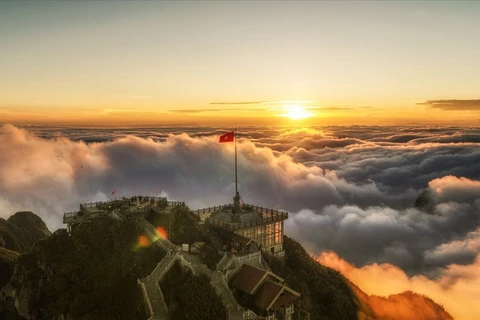
As the doors of the cabins swing open, visitors are instantly immersed in a breathtaking panorama where the lines between land and sky blur with the rolling sea of clouds. Bathed in the resplendent glow of the sun, this destination surpasses the splendor found anywhere else in Vietnam. Embarking on the journey to Fansipan on a day shrouded in clouds allows visitors to fully immerse themselves in the mysteries and legends of the past. In the mist, visitors can catch a glimpse of spiritual structures that embody the essence of ancient Vietnamese temples in the 15th and 16th centuries.
 Fansipan is also known as “Gateway to the Sky”
 “Sun World Fansipan Legend was honoured as the World’s Leading Natural Landscape Tourist Attraction 2020 at the prestigious World Travel Awards – The Oscars of the Travel Industry.”
Fansipan, known for its breathtaking landscapes, is also celebrated for its four distinct seasons, each unveiling a kaleidoscope of vibrant blooms that embellish the landscape all year round. In this captivating realm, the tourism developer has taken on the role of guardians, carefully selecting and nurturing a diverse array of flowers.
In the spring of Fansipan, flowers bloom above the clouds, leading the way to ‘Gateway to the Sky’. Nestled amidst the magnificent mountains, the forests of cherry blossoms and Himalayan cherry blossoms create an enchanting scenery with the beautiful birdsongs in the early morning mist. Spring is also the time when the 300-to 400-year-old rhododendrons showcase their vibrant splendor, weaving a floral tapestry upon the ancient foundations of this mystical land.
 The crocosmia flowers field in Sun World Fansipan Legend
 When summer comes around, Fansipan becomes a symphony of blossoms and gentle breezes. In the grandeur of Sun World Fansipan Legend, the largest rose valley in Vietnam adorns itself in the captivating red hues of the exclusive climbing roses found only in Sa Pa. Along the hillsides, the flourishing fields of verbenas come into full bloom, exuding a beauty akin to purple clouds gracefully dancing in the sunlight.
Particularly, autumn is the “cloud-hunting” season of Fansipan. At an altitude of 3,143m, fluffy clouds roll over the sacred summit. The terraced rice fields on mountain slopes look like golden waterfalls, descending from the sky. At any corner of Sun World Fansipan Legend, visitors are treated to the mesmerizing sight of crocosmia flowers drenched in brilliant red, gracing the mountainous landscape. It may be autumn, and it may be red, but this hue of red is truly distinct from that of temperate regions.
 A snow blanket on the peak of Fansipan
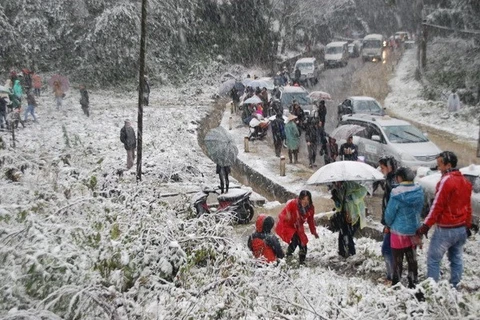
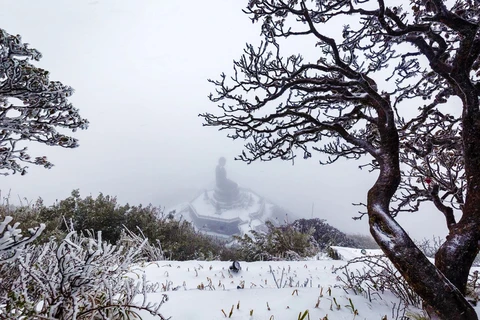
 During winter, the temperature on the peak of Fansipan can drop as low as -9 degrees Celsius, offering a rare opportunity to experience snow in this part of Southeast Asia. Sometimes, over half a meter of snow blankets the mountain, creating a fascinating landscape reminiscent of a charming Nordic fairy tale.
The colorful culture of Fansipan
Choosing Fansipan as your destination is not just about visiting a place; it's about embarking on a journey to explore Sa Pa - a melting pot of ethnic groups in the Northwest region. There is a beautiful song that perfectly describes the people of Sa Pa: "The sun shines on your face," capturing the radiant smiles of the Northwesterners and their rosy cheeks flushed by the sun's warmth. Within the Northwest Cultural Space, which is closely akin to a small village nestled at the foot of Mount Fansipan, visitors can truly grasp the vibrancy reminiscent of embracing the sun itself in the colorful traditional costumes of the indigenous highland communities, such as the Mong, Giay, Tay, Dao, and Xa Pho. The exhilarating rhythms of Cheraw dances and the haunting melodies of the Khen instrument create the distinct soundscape of Sa Pa. These spiritual elements linger in the hearts of visitors, evoking a deep longing for this northern land even after they have left.
 A Mong house in the Northwest Cultural Space
 Notably, visiting Sa Pa is an opportunity to bond over the unique culinary experiences. Delight in the flavours of wild forest vegetables, indulge in the traditional dish called ‘Thang Co’, and share a toast with the friendly locals. Immerse yourself in the vibrant atmosphere of the Rose Festival, the Golden Season Festival, and the Winter Festival, where you can witness the rich cultural traditions of the region. And don't miss the thrilling horse race known poetically as "Race Through the Clouds”.
 Making traditional cakes in Tay’s house
 With every visit to Fansipan or Sa Pa, travellers will discover that no experience is ever repeated. Each moment or each season unveils a distinct and extraordinary beauty that sets Fansipan and Sa Pa apart. Hence, Fansipan is known as a once-in-a-lifetime destination, beckoning travelers to return time and again. With each ascent to its sacred peak, where humans, legends, and nature coexist in perfect harmony, you will experience different emotions and enjoy unique moments./.