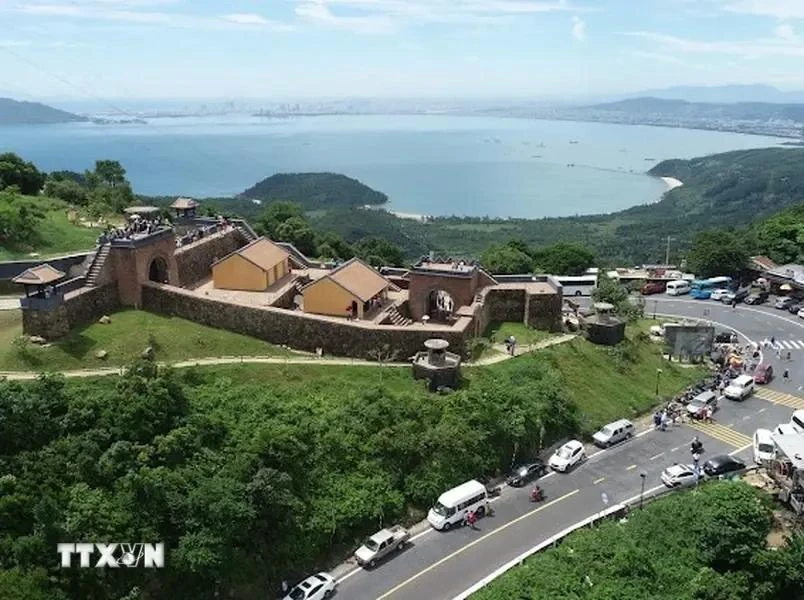
Hai Van Gate reopens to visitors

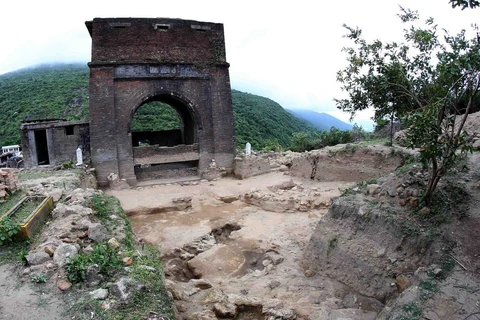
The Hai Van Quan (Hai Van Gate) national relic site was reopened to tourists on August 1, after two years of restoration.

Hai Van Gate reopens to visitors after two years of restoration. (Photo: VNA)

Thua Thien – Hue (VNA) –The Hai Van Quan (Hai Van Gate) national relic site was reopened to tourists on August 1, after two years of restoration.

The Hai Van Gate is the only national relic site managed by two central localities: Thua Thien-Hue province and Da Nang city.

In late 2021, the retoration work on the relic site started with a total cost of 42 billion (1.6 million USD) from the two localities' budget.

According to Pham Van Tuan, Deputy Director of the Hue Monument Conservation Centre, the Hai Van Gate will offer free admission to tourists in the initial stage until the two localities reach a decision on entry fees.

Located 490m above sea level, Hai Van Gate sits atop its namesake mountain pass and connects Da Nang’s Lien Chieu district with Thua Thien-Hue’s Lang Co township, Phu Loc district.

The Hai Van Pass runs some 21km on the Bach Ma Range, which juts into the East Sea in central Vietnam.

The relic complex was built in 1826 under the rule of the Nguyen Dynasty’s King Minh Mang (1791-1841), who ordered the construction of multiple defensive structures on Hai Van Pass to protect the then imperial capital of Vietnam in Hue. The structures included fortifications, store houses and cannon forts.

According to historical records, after building the complex, King Minh Mang inscribed its name in Vietnamese - “Hai Van Quan” - on the side of the gate facing the Hue Imperial Citadel, and the words “Thien ha de nhat hung quan” (the world’s most marvelous wonder) on the other side facing Da Nang.

The gate was recognised as a national relic site in April 2017.

It has grown to become a popular attraction among tourists as it offers stunning views of the surrounding water bodies and landscape./.

VNA

See more

Ha Long Bay in Quang Ninh province. (Photo: VNA)

Quang Ninh - magnet for affluent Indian travellers

Alongside wedding tourism, Quang Ninh is also seeing robust growth in arrivals of Indian MICE travellers. Delegations of hundreds, and sometimes thousands, of visitors have been coming to the province for conferences, seminars and incentive travel programmes combined with leisure stays.

Visitors at Van Mieu - Quoc Tu Giam (The Temple of Literature) in central Hanoi. (Photo: hanoi.gov.vn)

Hanoi gears up for tourism boom during national holidays

For Hanoi tourism sector, the national holidays to commemorate Hung Kings (April 25-27), along with the national reunification celebration (April 30) and the Labour Day (May 1) are not only a peak time for welcoming visitors but also a test of its operational capacity, service organisation, and destination quality in the context of a volatile market.

The sea area off the southern coast of Phu Quoc Island. (Photo: VNA)

UK newspaper praises Phu Quoc’s unspoilt charm amid tourism boom

Phu Quoc is positioned as a compelling alternative – even a potential rival to Phuket – for travellers seeking authenticity in Southeast Asia. Its appeal lies not only in scenic beauty and fresh seafood, but also in the harmonious coexistence of modern tourism and enduring local culture.

Cua Viet beach is a magnet for both locals and visitors during holidays. (Photo: VNA)

Quang Tri seeks to unlock potential of marine tourism’s “golden triangle”

Cua Tung, Cua Viet and Con Co special zone are identified as three key destinations of marine tourism, and to transform this “tourism triangle” into premium and peaceful resorts, a new strategy is needed to enhance attractiveness to high-end travellers seeking private spaces as the strength of these places lies in their pristine and tranquil beauty.