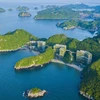
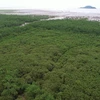
Mangroves are considered as a highly productive ecosystem in tropical and subtropical coastal areas globally. (Photo: VNA)
 Dr. Du Van Toan from the Institute of Environmental Science, Seas and Islands under the Ministry of Natural Resources and Environment, said that mangroves are considered as a highly productive ecosystem in tropical and subtropical coastal areas globally, contributing 50% of materials to the ocean from materials in the forest and 15% of the total organic matter in marine sediments.
The function of storing organic carbon of wetlands plays an important role in the global carbon stocks and mitigation of climate change impacts, Toan said, stressing the need to conduct research to provide policies and orientations on mangrove conservation and assessment of carbon stocks.
 Vietnam will prioritise perfecting mechanisms and policies related to the conservation and sustainable use of wetlands. (Photo: VNA)
 In addition, in order to fulfill commitments to and join the international community in reducing carbon emissions, it is necessary to have orientations on mangrove conservation and assessment of carbon stocks in mangrove ecosystems in the coming time.
Accordingly, Vietnam needs to develop a national policy on operating a carbon credit exchange; and make legal documents on economic valuation of carbon sequestration and storage functions of mangrove forests. It is also necessary for the nation to actively participate in and implement conventions on emission, deforestation and forest degradation reduction to enhance its position in the international arena; participate in and contribute to major international initiatives on mangrove restoration; and develop basic surveys on assessment, and calculation of carbon stocks in mangrove ecosystems.
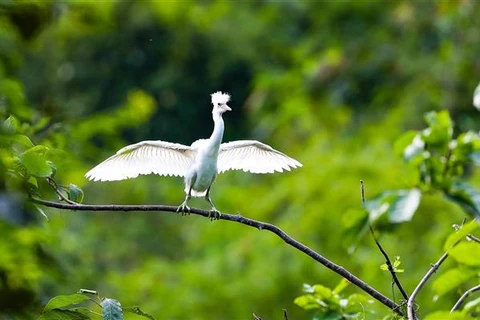
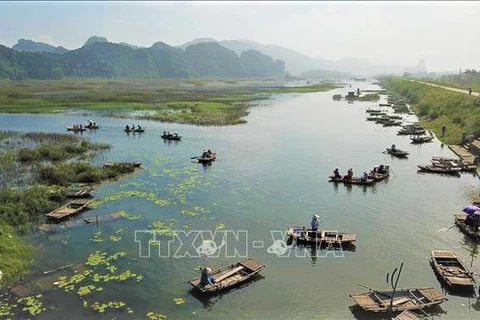
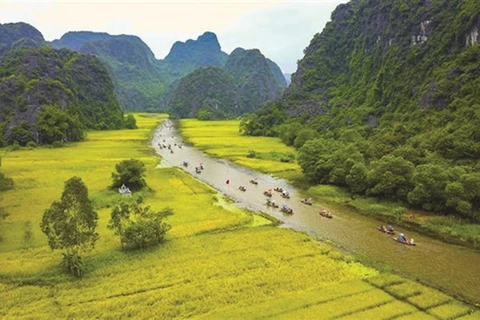
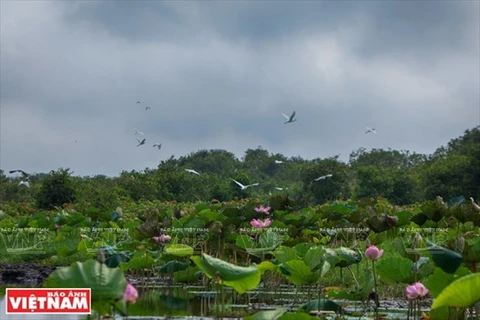
Vietnam became a member of the Convention on Wetlands, known as the Ramsar Convention, in 1989. So far, nine wetlands, with a total area of 120,549 hectares in the country have been recognised as Ramsar sites – wetlands of international importance. They are Xuan Thuy National Park (recognised in 1989), Bau Sau Wetlands and Seasonal Floodplains (2005), Ba Be National Park (2011), Tram Chim National Park (2012), Ca Mau Cape National Park (2013), Con Dao National Park (2014), Lang Sen Wetland Reserve (2015), U Minh Thuong National Park (2016), and Van Long Wetland Nature Reserve (2017).
By now, a network of Vietnamese Ramsar sites has been set up and operated at the website https://vran.vn/.
To effectively implement the Ramsar Convention on Wetlands of International Importance Especially as Waterfowl Habitat, Vietnam will prioritise perfecting mechanisms and policies related to the conservation and sustainable use of wetlands./.
VNA