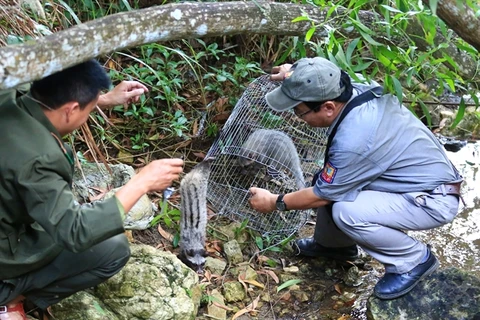
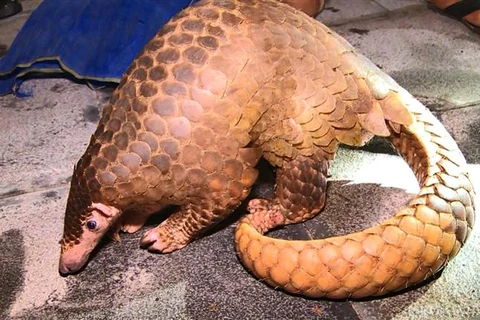
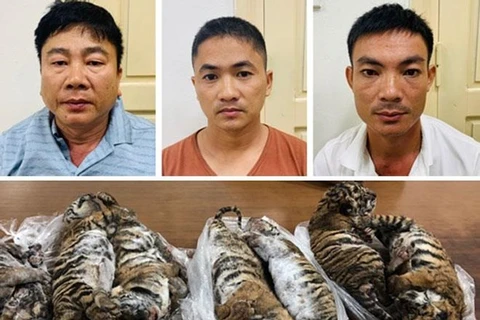
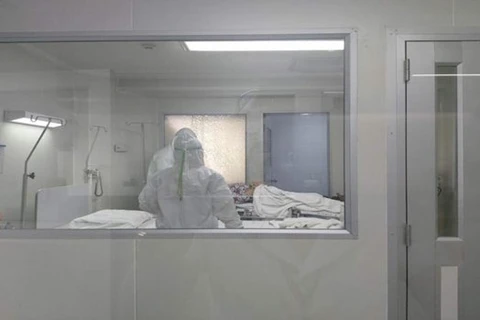
Many believe pangolins could have passed the acute respiratory disease caused by the 2019 novel coronavirus (2019-nCoV) to humans (Photo: VietnamPlus)
 Hanoi (VNA) – Facing complex developments of the acute respiratory disease caused by the 2019 novel coronavirus (2019-nCoV), Vietnamese and foreign non-profit organisations on nature and wildlife conservation on February 16 sent an open letter to Prime Minister Nguyen Xuan Phuc to propose actions against threats generated by illegal wildlife trading and consumption.
Wildlife-triggered virus concerns
In their open letter, the organisations stressed that the COVID-19 outbreak has stirred public concerns about health and caused considerable damage to the Vietnamese economy.
Like the severe acute respiratory syndrome (SARS) outbreak in 2003 that claimed five lives in Vietnam, this novel coronavirus is believed to be transmitted from wild animals to humans via close contact at a seafood market in China’s Wuhan city, where illegal wildlife trading took place.
Scientific evidence has also proved that the coronavirus originated from bats and was passed to humans via wild species. Though scientists are still not sure about this host animal, a group of Chinese researchers said it could be pangolins.
Whatever species it is, it can be confirmed that wildlife trading is a cause of the disease transmission via close contact between humans and wild animals, the letter emphasised.
[Over 1,700 wildlife violations recorded in 2019]
The organisations pointed out that many pandemics over the past 20 years have connections with virus clusters in wildlife populations.
For example, the SARS outbreak in late 2002 and early 2003 that infected more than 8,000 people in 37 countries and killed 774 of them came from a new beta-coronavirus strain that hailed from bats and was transmitted via the masked palm civet (Paguma larvata).
Meanwhile, the Middle East respiratory syndrome (MERS) that broke out in 2012, spread to 2,494 people and killed 858 was caused by another coronavirus strain passed from camels to humans.
The African swine fever, which recently wreaked havoc on pig farming in China, Vietnam and nine other countries, is believed to come from wild boars in Africa, according to the organisations.
 Birds are strung and hung on a bike for sale (Photo: VietnamPlus)
 As of the end of 2019, all the 63 provinces and centrally-run cities of Vietnam were affected by the ASF with more than 5 million pigs culled.
The organisations said COVID-19 will also cause substantial impact on Vietnam.
Preliminary estimates by the Ministry of Planning and Investment suggested that the country’s GDP will be 0.53 percent lower than expected if the outbreak is put under control in the first quarter or 0.71 percent lower if it is contained in the second quarter.
So far, the aviation sector has been hit hard, losing about 10 trillion VND, due to coronavirus-induced flight cancellation.
[Wild animals released in Son Tra reserve]
Lessons from SARS and now COVID-19 show that new virus strains will continue to transmit from wildlife to humans during the trading and consumption of wild species. Several studies conducted in Vietnam and some other countries have proved that the coronavirus existed in wildlife populations, and wildlife trading has created chances for this virus to pass from wild animals to humans.
Despite efforts to reform policies and enhance the enforcement of wildlife protection laws, there remain numerous problems that need to be solved in Vietnam.
Actions recommended
The organisations said limiting contact between wild species and humans by strongly enforcing laws against wildlife trading and markets is the most effective way to minimise risks of animal-to-human transmission of diseases in the future.
As the first place COVID-19 broke out, China has taken some important actions to minimise risks of future disease outbreaks, including temporarily shutting down all wildlife markets. This measure is a recognition of serious threats humans will have to face if wildlife trading is disregarded, according to the open letter.
 Illustrative image (Source: SVW)
 Given this, to guarantee national security, economic security and public health and to preserve precious ecosystems in Vietnam, the organisations proposed the country’s Government take strong and sustainable actions to prevent all illegal wildlife trading and consumption activities.
They called on the Government to close illegal wildlife selling places, ban restaurants from illegally selling wild animal products, and build strict regulations and processes for effective management of commercial farming of wild species.
Besides, Vietnam also needs to reform judicial procedures to enhance deterrence against wildlife crime, further improve people’s awareness of risks posed by wildlife consumption to public security and health, and ensure cooperation among ministries and sectors in performing the tasks.
[Strict punishments needed to stop wildlife trade]
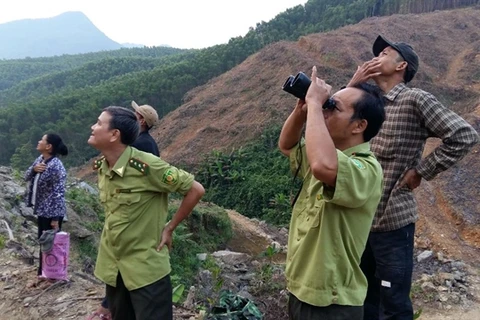
Under the Prime Minister’s Directive 05/CT-TTg, dated January 28, on the COVID-19 prevention and control, the Vietnam Administration of Forestry on February 6 requested authorities of provinces and cities to tighten the control of wildlife trading so as to prevent the spread of the coronavirus.
In their letter, the organisations showed their support for this effort but also recommended the Government have more concrete and drastic actions to eradicate future virus clusters.
Such actions will show that Vietnam is a country taking the lead in fighting illegal wildlife trading and biodiversity conservation in the region, they added./.
| The non-profit organisations sending the letter to the Prime Minister consist of the World Wide Fund for Nature (WWF), Wildlife Conservation Society, Education for Nature Vietnam, Wildlife at Risk, Animals Asia, GreenViet, Fauna and Flora International, Save Vietnam’s Wildlife, TRAFFIC, and PanNature. |