Consumers, businesses urged to join fight against counterfeit sold online

Consumers and businesses are called on to join authorities to curb counterfeit, fake, and smuggled goods on online shopping platforms, particularly as e-commerce has been thriving strongly in Vietnam.
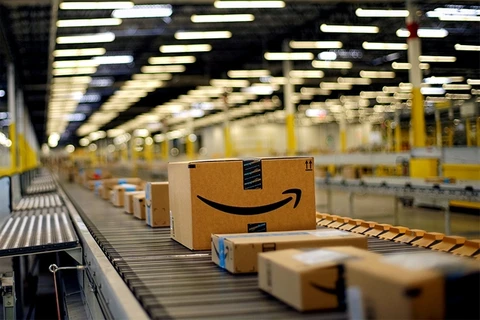
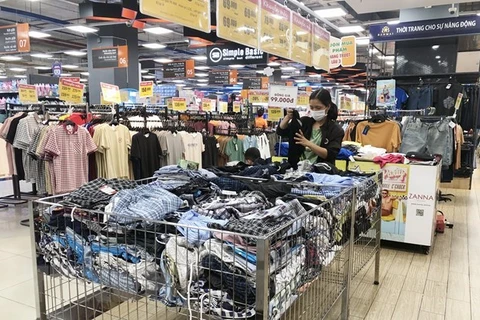
Consumers, businesses urged to join fight against counterfeit sold online ảnh 1Illustrative photo 

Hanoi (VNA) – Consumers and businesses are called on tojoin authorities to curb counterfeit, fake, and smuggled goods on online shoppingplatforms, particularly as e-commerce has been thriving strongly in Vietnam.

Statistics from the Vietnam E-commerce Association (VECOM) showthat in 2021, Vietnam’s retail e-commerce market size reached 13.5-13.7 billionUSD. In 2022, the figure increased to 16.4 billion USD and is forecasted toreach about 38 - 39 billion USD by 2025.

According to experts, the buying trend of consumers has changedrapidly in the past three years with all items due to the COVID-19 pandemic,from consumer goods, food, drinks, fashion, and cosmetics.

However, according to preliminary statistics from the Ministryof Industry and Trade (MoIT), authorities receive about 1,500 complaints viahotlines and written documents each year related to online shopping.

Tran Huu Linh, Director General of the MOIT’s General Departmentof Market Management, said that last year, the market management forcenationwide inspected 774 cases relating to e-commerce, detected 439 violations,and collected a total fine of nearly 5.9 billion VND (over 250,000 USD).

“This is still quite a modest number compared to reality,” hesaid.

Nguyen Thi Minh Huyen, Deputy Director of the MOIT’s E-Commerceand Digital Economy Authority, said that violations that exist in conventionaltrade all appear in e-commerce. Moreover, it’s easier to conduct violations onthe internet while it’s much more difficult to detect and handle them becausesellers don’t set up physical warehouses/stores, or goods are stored in manyplaces and they only accept online orders.

Moreover, online stores are easily created and closed in a shorttime. The product information posted online may be real, but the productdelivered to buyers can be fake, she said.

Nguyen Duc Le, Deputy Director of the Operations Department,General Department of Market Management, said that acts of trading counterfeitsmuggled goods, those infringing intellectual property rights, and goods ofunknown origin are increasingly sophisticated and occur more often in theonline environment.

E-commerce activities are based on technology infrastructure, soduring the inspection, violators can hide and delete pieces of evidencequickly, making it difficult for law enforcement force.

In addition, for transactions on social networks, it is verydifficult to prove them commercial transactions as sellers and buyers usepersonal accounts to contact each other and pay online too.

Nguyen Huu Tuan, Head of the Department of E-commerce Managementunder MOIT’s E-Commerce and Digital Economy Authority, said that in many cases, consumers know that the goods are fake or of unknown origin, but still buy or donot denounce them. Meanwhile, many businesses have not paid attention toanti-counterfeiting and brand protection.

Deputy Director of the MOIT’s E-Commerce and Digital EconomyAuthority Huyen said that to strengthen the control over online counterfeiting goodsand promote the development of e-commerce, it is necessary to review andperfect relevant legal framework and increase public legal understanding,especially for traders, organisations and individuals.

It’s also a must to increase the responsibility of e-commerceplatforms and social networking sites in screening, preventing, and preventingaccounts that do not provide sufficient information, and accounts with signs oftrading infringing goods.

Moreover, the agency has planned to offer training for businessesand owners of protected trademarks to create a favourable mechanism forcomplaint settlement, verifying infringing goods as well as strengtheningcoordination among relevant agencies./.
VNA

See more

Thanks to digital transformation among local officials, Tam Dao commune of Phu Tho province has achieved an almost 100% on-time rate for processing administrative applications, helping improve public services for residents. (Photo: VNA)

Institutional reform fuels private sector's growth in Phu Tho province

The private sector is increasingly emerging as a key growth engine of the economy. To unleash its potential and ensure sustainable development, the northern province of Phu Tho is stepping up institutional and administrative reforms to cut costs, shorten procedures, and build a more transparent, business-friendly investment climate.

Hoa Phat Wharf inside the Dung Quat Economic Zone (Photo: VNA)

Dung Quat EZ, Quang Ngai IPs draw nearly 19.4 bln USD

The Dung Quat Economic Zone and Quang Ngai industrial parks have so far attracted 441 projects worth around 19.4 billion USD, according to the Dung Quat Economic Zone and Quang Ngai Industrial Parks Authority (DEZA).

The Kim Long Motor Hue factory (Photo: VNA)

Hue courts capital to turn industrial zones into growth engine

The economic and industrial zones in Hue city host more than 200 active investment projects worth over 152 trillion VND (5.84 billion USD), with 139 already operational. Since the start of 2026, they have generated about 32 trillion VND, contributed 4.2 trillion VND to the state budget and brought in 730 million USD in exports, while employing more than 46,000 workers.

Processing cashew nuts for export at Nguyen Thong Co., Ltd. in Dak Lak province. (Photo: VNA)

Vietnam’s exports to New Zealand post strong growth

According to the Customs Department, two-way trade reached 844 million USD in the first half of 2026, of which Vietnam’s exports to New Zealand totaled 399.7 million USD, up 18.8% year-on-year, while imports stood at 444 million USD.

Starting from September 2026, agricultural products from the Mekong Delta are expected to be transported directly from Cai Cui Port to Guangxi, China. (Photo: VNA)

Investing in logistics to boost agricultural production and exports

Logistics is increasingly becoming a major bottleneck for exports as transport costs rise and requirements for data management, low emissions and supply chain transparency become more stringent, requiring coordinated investment in logistics infrastructure, data infrastructure and transport capacity.

Harvesting rice in the Mekong Delta (Photo: VNA)

Vietnam seen as gateway for Canadian farm produce to ASEAN

As Canada steps up trade diversification and seeks to reduce its dependence on the North American market, Vietnam could serve both as a market for Canadian goods and a base for Canadian businesses to build production capacity and expand operations in the region.

Illustrative image (Photo: VNA)

Turkish cooperatives open sourcing channel for Vietnamese businesses

The Vietnam Trade Office recommended that Vietnamese businesses in agriculture and food actively study cooperative networks in different localities in Türkiye and consider them an additional channel for accessing raw materials, processing partners, and distribution networks.

Delegates at the signing ceremony (Photo: VNA)

VPI, Beicip-Franlab Asia deepen oil, gas cooperation

Under the MoU, VPI and Beicip-Franlab Asia will undertake advanced studies in geology, geophysics, and reservoir engineering to support exploration, field development, and oil and gas resource assessment.

A visitor explores Vietnamese coffee at the expo. (Photo: VNA)

Vietnam pushes coffee, farm produce at Hong Kong food expo

After nearly 200 years, especially since the Doi Moi (renewal) began in 1986, Vietnamese coffee is now exported to more than 100 countries and territories and supports about 2.6 million jobs. Vietnam remains the world’s second largest coffee exporter, holding roughly 19-21% of the global market, and is the top producer of Robusta coffee.