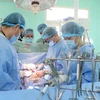
With 2,000–2,500 severe thalassemia cases diagnosed each year in Vietnam, expanded access to stem cell transplantation is opening up new prospects for patients to lead healthier, more independent lives.
From the cash-only days, plenty of hospitals have made a fast switch to modern payment options like QR code scans, bank cards, e-wallets, and payments straight through healthcare apps.
The silver economy offers a new perspective on population ageing: instead of treating it as a burden, it is seen as a major economic opportunity
A 19-year-old British tourist who died during a trip to Vietnam has saved the lives of three Vietnamese patients with end-stage organ failure, in a deeply moving act of compassion. The young woman is the first foreign national to donate organs in Vietnam.
Bayer Vietnam, in strategic partnership with FPT Long Chau Pharmacy Chain and Vaccination Centre, took part in the 2026 National Health Day event at Thong Nhat Park in Hanoi on April 5, joinning a wide range of stakeholders in advancing public health awareness and preventive care across the country.
The MAE welcomed the French Government’s organisation of the One Health Summit, describing it as an important forum to advance global political commitments and strengthen international cooperation in preventing zoonotic diseases.
A France-based expert has described Vietnam's “One Health Partnership” as a notable and distinctive platform with strong potential for replication elsewhere.
Child healthcare is both a humanitarian priority and a long-term investment in population quality and human resources. Early interventions in maternal care, nutrition, immunisation, and neonatal services play a decisive role in shaping physical and intellectual development.
The “Community-based continuous healthcare teams” model not only improves primary healthcare effectiveness but also marks a transition from passive to proactive healthcare delivery at the grassroots level.
Prof. Dr. Nguyen Huy Hoang, Deputy Director of the Institute of Biology under the Vietnam Academy of Science and Technology, and his research team conducted a project titled “Genetic mutation analysis in Vietnamese patients with selected rare diseases using whole-exome sequencing technology.” The project, implemented from 2022 to 2024, aims to clarify the genetic causes of these diseases within the Vietnamese population.
On April 5 alone, 58 hospitals and health centres conducted screening programmes across 64 wards and communes, with a focus on outlying areas. Beyond early detection, residents receive consultations, long-term health monitoring guidance, and access to specialised services locally.
Vice Chairwoman of the National Assembly Nguyen Thi Thanh emphasised the need for consistent and effective implementation of the resolution across the political system, with priorities including refining healthcare policies and institutions, strengthening preventive and grassroots healthcare networks, expanding population health management, promoting early detection, and improving school-based physical education and nutrition.
The initiative aims to bring healthcare services closer to residents and strengthen grassroots medical care, with a long-term goal of extending preventive health services to the city’s nearly 15 million people.
The launch marked the first year the activity has been implemented in a coordinated manner nationwide. Members of the public were able to visit free screening areas, receive nutritional advice, participate in mass exercise performances, enjoy artistic programmes, and join a walk in response following the ceremony.
Vietnam’s medical tourism market was valued at approximately 700 million USD in 2024 and is projected to expand to nearly 4 billion USD by 2033, representing an average annual growth rate of around 18%. The figures underscore the sector’s considerable potential.
Participants will receive comprehensive health checks through a streamlined one-stop process, including blood pressure measurement, height and weight assessment, BMI and cardiovascular risk evaluation, blood tests, general examinations and specialist consultations in internal medicine, paediatrics, obstetrics, ophthalmology, ENT, dentistry and oncology. Rapid blood glucose testing and biochemical screening will also be conducted to detect diabetes and metabolic disorders.
In the first three months, more than 25,000 cases of hand, foot and mouth disease have been recorded nationwide. Of the total cases, around 18,000, or nearly 72%, were concentrated in southern provinces. The disease has primarily affected children aged between one and five.
Deputy Minister of Health Nguyen Thi Lien Huong said NCDs pose a growing global challenge, accounting for over 70% of deaths worldwide, mainly from cardiovascular diseases, cancer, diabetes and chronic respiratory diseases. In Vietnam, the burden is rising rapidly, requiring urgent and sustained preventive strategies.
The Ministry of Health stressed that prioritising prevention over treatment is an urgent requirement, as the cost of treating NCDs, especially cardiovascular diseases, cancer, diabetes, and metabolic disorders, is several times higher than the cost of prevention.
Most infections were reported among children under 10 years old, making up 99.3%, with those aged 1–5 accounting for the highest proportion (92.7%) due to close contact in kindergartens and limited hygiene practices.