Da Nang planning to get smart by 2030

Da Nang is planning to become a ‘smart city’ and the first in Vietnam to join the ASEAN ‘smart’ city network by 2030.
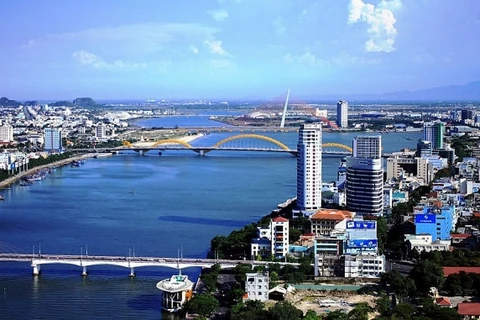
Da Nang planning to get smart by 2030 ảnh 1A corner of Da Nang City by the Han River. (Photo: VNA)

Da Nang (VNS/VNA) - Da Nang is planning to become a ‘smart city’ andthe first in Vietnam to join the ASEAN ‘smart’ city network by 2030.

Director of the city’s IT Department Nguyen Quang Thanh said at the launch ofthe city’s plan towards 2030 with a vision to 2045 on April 11 that it would bebuilt in three phases with total investment of 2.14 trillion VND (95 millionUSD), of which 30 percent would come from the State budget.

Thanh said the city had approved the framework the plan in 2018 withinformation and communication technology (ICT) infrastructure and database.

It will include smart management, smart economy, smart environment, smartliving, smart citizens and smart traffic to connect the city to the 126 ASEAN‘smart city’ network, Thanh said.

“The plan will help develop Da Nang as a ‘start-up and innovative’ city increating a driving force for socio-economic growth for the central region of Vietnam.”

Da Nang was the first city in Vietnam to launch an e-Government system in 2014,and transferred the system to 16 cities and provinces in 2016.

According to a report, Da Nang’s e-Government system had been used by 225agencies and 4,000 users.

Da Nang had provided 1,200 online administration procedures, including one-stopshops, residential management, public transport and water supervision throughthe e-Government system, while free wireless internet services offer a maximumof 20,000 connections in public places, according to the city’s information andcommunications department.

Thanh also said the plan would raise funds from partners including the VietnamPosts and Telecommunications (VNPT) Group; Software giant FPT, Viettel Group,the World Bank, Vietinbank and KOICA and other ODA.

Nguyen Thanh Phuc from Ministry of Information and Communications said the planwould save 1 trillion VND (44.2 million USD) and 20 percent of other costs forhuman resources in the city.

Phuc said the plan would also help promote transparency, while improvingadministrative reform.

He said residents would have easy access to clear information on land,administrative procedure, planning, social services, disaster warnings,healthcare and education online.

The city’s IT infrastructure was available for smart connections for aircontrol, water, garbage, meteorology and energy agencies. It could also provideearthquake and tsunami warnings, and data on flooding, erosion, sewagemanagement and food safety.

Last year, Da Nang’s information technology and communications industry earned 1.23billion USD in revenue, of which 68 percent was from the IT and electronicsmanufacturing sectors, contributing 5.5 percent to Da Nang’s Gross RegionalDomestic Product (GRDP).

The city’s software exports grew in 2018 to 78 million USD.

There were 3,000 IT businesses with 25,000 jobs, of which 43 percent were insoftware services and IT outsourcing.

According to the department, Japan and the US were seen as the two key marketsfor Da Nang’s software exports, accounting for 72 percent of export turnover in2018.

The city has launched the first stage of the 341ha Da Nang InformationTechnology Park (DITP) – central Vietnam’s ‘Silicon Valley’ - with totalinvestment of 278 million USD.

The park will create revenue of 1.5 billion USD each year with 25,000 jobs anda satellite city of 100,000 people.

Da Nang’s software park has been recognised as a centralised informationtechnology centre, the third in Vietnam after Hanoi and Ho Chi Minh City. – VNS/VNA
VNA
See more

Prime Minister Pham Minh Chinh talks to people receiving medical services at the Yen Khuong health station in Thanh Hoa province on November 9. (Photo: VNA)

PM visits residents, armed forces in Thanh Hoa's border commune

In Yen Khuong commune, the PM called for greater attention to school health, nutrition for children and the elderly, and the development of a civil-military medical cooperation model, not only to serve local residents but also to support people living across the border in Laos.

Party General Secretary To Lam (front, fourth from left) and officials mark the start of construction on the Na Ngoi Primary and Junior Secondary Boarding School in Na Ngoi commune, Nghe An province, on October 11, 2025. (Photo: VNA)

Work starts on inter-level boarding schools in border areas

The simultaneous beginning of construction on 72 schools, with the participation of leaders of the Government, ministries, sectors, and localities, is meant to reflect the strong determination and close coordination across the entire political system in caring for students in border areas.

Co.opmart Hue staff pack relief goods to ensure they reach those in need as quickly as possible. (Photo courtesy of Saigon Co.op)

Saigon Co.op rushes to deliver essential goods to storm-hit areas

The Saigon Union of Trading Cooperatives (Saigon Co.op) has urgently deployed an emergency support package, sending tens of tonnes of essential goods and relief teams to provinces hit by by recent historic storms and floods across central and northern Vietnam.

Local residents take the donated breeding cows home. (Photo: VNA)

Breeding cows presented to poor households along Vietnam–Cambodia border

Accordingly, leaders of the Border Guard High Command and Tay Ninh province of Vietnam, and Svay Teap district in Svay Rieng province of Cambodia presented 20 breeding cows, valued at 20 million VND (760 USD) each, to 20 households - 10 in Long Thuan commune (Tay Ninh) and 10 in Monorom commune of Svay Teap district.

Tuyen Quang province's tax officer assist people in carrying out tax payment procedures. (Photo: Nhandan.vn)

Tuyen Quang works hard to maximise state revenue in 2025

Tuyen Quang’s state budget revenue was estimated at more than 5.55 trillion VND (210.8 million USD) in the first 10 months of 2025, reaching 91% of the target assigned by the Prime Minister and 62.5% of the plan set by the provincial People’s Committee.

A ceremony in response to Vietnam Law Day held in Khuong Mai secondary school in Hanoi (Photo: nhandan.vn)

Vietnam Law Day to be observed in Hanoi

A national-scale ceremony marking Vietnam Law Day (November 9) is scheduled for November 7 afternoon in Hanoi, offering a chance for every citizen to uphold the spirit of respecting the Constitution and law, fostering a culture of legal compliance for the goal of wealthy people and a strong, democratic, equitable, and civilised nation.

The success of the Russian October Revolution had a profound impact on revolutionary movements around the world, including in Vietnam. Under the light of Marxism–Leninism and the October Revolution, Nguyen Ai Quoc found in it a “miraculous handbook,” the path to national salvation for the Vietnamese people. In the photo: The people of Hanoi seized the Residential Palace of the Tonkin Governor – the headquarters of the French-backed administration in northern Vietnam, marking the success of the August Revolution in Vietnam on August 19, 1945. (Photo: VNA Archives)

Russian October Revolution opens a window into Vietnam

On the eve of the 108th anniversary of the October Revolution, through a bilingual presentation by lecturer Hong Hoa and documentary footage, the question of how a revolution that took place in faraway Russia in 1917 could help an Asian nation like Vietnam achieve independence and freedom in 1945 was vividly explained to students born a century after the event.