Department seeks funds for Da Lat railway

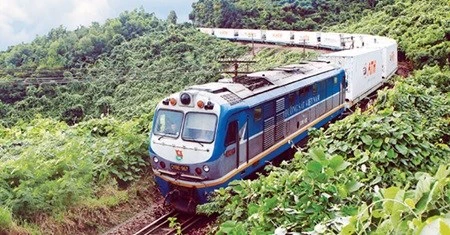
The Vietnam Railway Department has drafted plans to lease out infrastructure in the Da Lat-Trai Mat rail section to mobilise private investment for developing railway infrastructure.
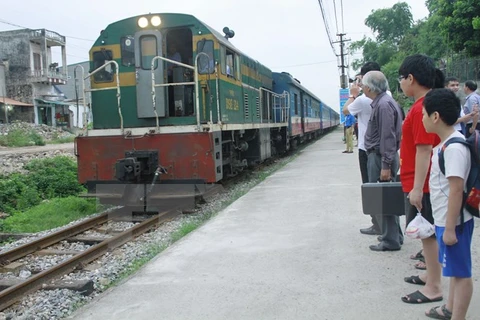
Department seeks funds for Da Lat railway ảnh 1At Da Lat station (Photo: baolamdong)

Hanoi (VNA) – The Vietnam Railway Department has drafted plans to lease out infrastructure in the Da Lat-Trai Mat rail section to mobilise private investment for developing railway infrastructure.

The lease of the first rail section aims to create a "breakthrough" in the operation of the country's railways.

The 6.7km Da Lat-Trai Mat stretch is part of the Thap Cham-Da Lat rail route built in 1932 and unused since 1972.

In 1991 the stretch was restored and put into operation again to carry visitors to Linh Ung Pagoda and nearby areas in the Central Highlands province of Lam Dong.

The meagre number of passengers served by the route and the degraded infrastructure are a burden for the railway department.

Figures from the department show that in the past three years the Da Lat-Trai Mat section has earned annual revenues of 2.981 billion VND (over 130,000 USD), while maintenance expenses amount to 1.27 billion VND (56,700 USD), operation expenses to 2.691 billion VND (over 120,000 USD), and infrastructure fees to 280 million VND per year.

"On average, the operation of the Da Lat-Trai Mat section gets a subsidy of 983 million VND per year [from the Government]," Khuong The Duy, deputy chief of the railway operator, said.

"The subsidy will increase in future because infrastructure has been degrading and the number of passengers is declining."

The department has lands and other properties like the ancient villas situated inside the nearly 44,000sq.m Da Lat station at 1 Quang Trung street.

"Mobilising funds from investors for restoring and upgrading infrastructure and locomotives to effectively operate and serve Da Lat's tourism industry is a very urgent need," Duy said.

Under the proposal by the Vietnam Railway Department, the leasing would be divided into two phases. In phase 1, the investor will have to spend on construction, management, operation, and maintenance of the section.

In the second phase, the investor will develop tourism and hospitality facilities along the route to tap the tourism potential of the route.-VNA
VNA

See more

Defendants at the court (Photo: VNA)

Ho Chi Minh City court opens trial over Agribank lending scandal

The investigation revealed that multiple credit files were incomplete or riddled with inaccurate information, while some pledged assets lacked proper legal standing yet were accepted and grossly overvalued. As a result, the loans became high-risk and largely unrecoverable, leading to losses surpassing 1 trillion VND.

Hanoi introduces 53 electric buses from April 18 (Photo: VNA)

Hanoi to add 53 electric buses from April 18

According to the plan, all buses operating within Ring Road 1 will use green energy by July 1, 2026. The requirement will expand to Ring Road 2 by January 1, 2028, and to Ring Road 3 by 2030.

Illustrative image (Photo: VNA)

National, local traffic safety committees to be dissolved from June 1

Under the dicision, ministries and ministerial-level agencies will assume responsibility for tasks previously performed by the committee, in line with their mandates under the Law on Government Organisation, the Law on Road Traffic Order and Safety, the Law on Roads and other relevant legal frameworks, ensuring that traffic safety and order are maintained without disrupiton.

Visitors explore technology showcases at the exhibition held during the Da Nang Startup and Innovation Festival (SURF 2025). (Photo: VNA)

About 10,000 students expected at National Startup Day 2026

This year marks the rollout of the “Student Startup Support Programme for 2026 – 2035”, approved under Decision No. 336/QD-TTg, which places emphasis on practical outcomes, real products, real testing, real partnerships, and measurable impact.

Hong Quang High School pilots teaching mathematics in English starting from the 2025–2026 academic year. (Photo: VNA)

National foreign language proficiency framework issued

The circular establishes a unified benchmark for foreign language proficiency across the national education system, providing a foundation for curriculum design, teaching, testing, assessment, and certification. It is expected to help learners better map out their language development pathways while enabling educational institutions to improve training quality and strengthen articulation between different levels of education.