Deputy PM receives Cuban Deputy FM to strengthen bilateral ties

The two sides agreed to closely coordinate in the implementation of measures for further strengthening bilateral ties, including promoting all-level mutual visits, realising high-level agreements, and enhancing the effectiveness of cooperation mechanisms between the countries.

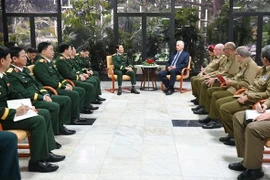
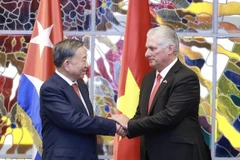
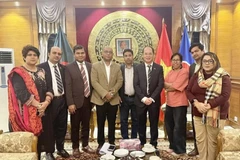
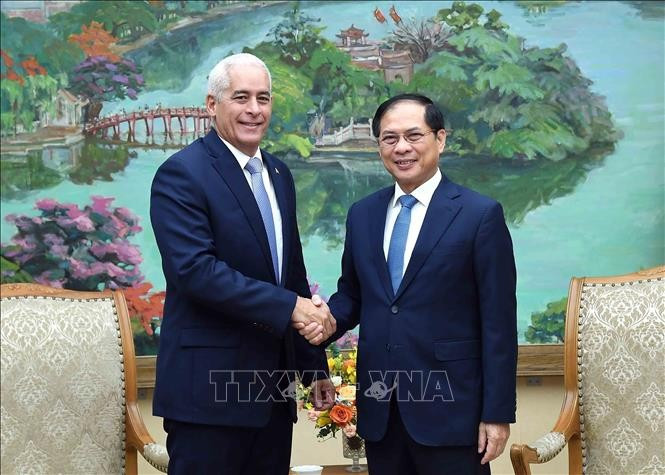
Deputy Prime Minister and Minister of Foreign Affairs Bui Thanh Son (R) receives Cuba's First Deputy Minister of Foreign Affairs Gerardo Penalver Portal in Hanoi on July 23. (Photo: VNA)

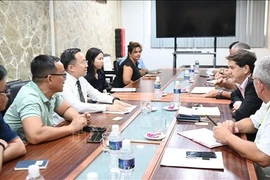
Hanoi (VNA) – Deputy Prime Minister and Minister of Foreign Affairs Bui Thanh Son hosted a reception in Hanoi on July 23 for Cuba's First Deputy Minister of Foreign Affairs Gerardo Penalver Portal, who is visiting Vietnam from July 22 to 25 for a political consultation.

Welcoming the Cuban Deputy FM back to Vietnam, Deputy PM Son expressed delight at the continued consolidation and development of Vietnam – Cuba relations across multiple fields.

The host reaffirmed the consistent solidarity and support from the Vietnamese Party, State, and people to their Cuban counterparts, expressing his belief that the Cuban Party, State, and people will overcome all difficulties and challenges to firmly advance on the path of peace and development, and further enhance the country’s role and reputation in the international arena.

For his part, Penalver Portal expressed his pleasure to return to Vietnam, affirming that for the past 65 years, the Party, State, and people of Cuba have always treasured and preserved the special friendship between the two nations. He extended deep gratitude for Vietnam’s timely and practical assistance, including that from Vietnamese ministries, sectors, localities, and businesses, which has contributed to Cuba’s socio-economic development amid current challenges.

During the meeting, both sides agreed to closely coordinate in the implementation of measures for further strengthening bilateral ties. These include promoting all-level mutual visits, realising high-level agreements reached during the State visit to Cuba by Party General Secretary and then State President To Lam in September 2024, and enhancing the effectiveness of cooperation mechanisms between the two countries.

They also pledged to boost cooperation across the board, especially trade, agriculture, energy, biotechnology, and pharmaceutical, and to jointly organise a series of events marking the 65th anniversary of Vietnam – Cuba diplomatic relations in 2025 – the “Vietnam – Cuba Friendship Year”. The two sides also pledged coordination and mutual support at international organisations and multilateral forums.

As part of his visit, the First Deputy FM of Cuba will co-chair the 8th political consultation between the two foreign ministries, and hold meetings with leaders of the National Assembly's Committee on National Defence, Security and External Relations, and the Ministry of Construction – which serves as the standing body of the Vietnam – Cuba Intergovernmental Committee. He will also visit several economic, cultural, social, and historical institutions in Hanoi./.
VNA

See more

All members of the NA Standing Committee present at the session vote in favour of resolutions on administrative unit standards and urban classification. (Photo: VNA)

Resolutions on urban classification and administrative unit standards approved

The draft resolution streamlines urban classification around three key areas - role and socio-economic conditions, urbanisation level, and infrastructure development. It also integrates green, smart, climate-resilient, and digital transformation requirements, while promoting decentralisation in urban management.

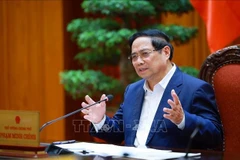
Prime Minister Pham Minh speaks at the working session. (Photo: VNA)

PM requests development of modern, hi-tech, dual-use defence industry

In 2026, the entire military must focus on building a revolutionary, regular, elite, and modern force; strictly implementing the Party Central Committee’s directives on Party building and rectification; flexibly, substantively, and effectively conducting defence diplomacy; and promoting self-reliance and resilience in the defence industry, logistics, and technical operations.

☕ Afternoon briefing on December 24

☕ Afternoon briefing on December 24

Outstanding domestic and international events of 2025 selected by the VNA, the Christmas atmosphere in Vietnam, and a seminar aimed at exploring cooperation opportunities between Vietnam and Russia in the digital era are among news highlights on December 24.

The closing of the 13th Party Central Committee's 15th plenum on December 23 (Photo: VNA)

📝OP-ED: Party Congress personnel: No room for rumours!

As Vietnam stands on the threshold of a promising new development phase brimming with opportunities and high expectations, staying alert to fake news, rumours, and baseless accusations is not merely a voice of rationality but a civic duty towards the nation’s future.

☀️ Morning digest on December 24

☀️ Morning digest on December 24

The PM's demand for coordinated efforts to repair infrastructure and restore livelihoods following storms and floods in the central region; the establishment of the Central Steering Committee for People’s Air Defence; and the phone talks between the Vietnamese and French foreign ministers are among news highlights on December 23 evening.

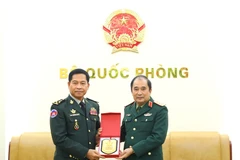
Deputy Chief of the General Staff of the Vietnam People’s Army Sen. Lieut. Gen Phung Sy Tan presents a souvenir to Gen. Phorn Nara, Secretary General of the National Authority for the Prohibition of Chemical, Nuclear, Biological and Radiological Weapons of Cambodia (CBRNE) in Hanoi on December 23 (Photo: qdnd.vn)

Military official hosts Cambodian chemical weapons authority chief

The success of the second Vietnam - Cambodia border defence friendship exchange in November has contributed to the practical and effective cooperation among the two countries’ armies, local authorities, and border communities, for a borderline of peace, friendship, stability, cooperation, and development.

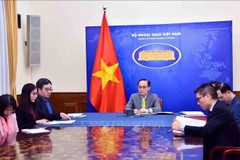
Vietnamese Minister of Foreign Affairs Le Hoai Trung at the phone talks with French Minister for Europe and Foreign Affairs Jean-Noël Barrot on December 23 (Photo: VNA)

Vietnamese, French foreign ministers hold phone talks

France wishes to increase cooperation with Vietnam in such strategic sectors as energy, transport, and aerospace, while continuing to work closely with Vietnam to promote multilateralism and tackle global challenges, said French Minister for Europe and Foreign Affairs Jean-Noël Barrot.

Party General Secretary To Lam delivers remarks at the closing session of the 15th plenum of the 13th Party Central Committee in Hanoi on December 23 (Photo: VNA)

Announcement on 15th plenum of 13th Party Central Committee

The 15th plenum of the 13th Party Central Committee was held in Hanoi from December 22 to 23. The Party Central Committee agreed to adopt the report of the 13th Party Central Committee to be submitted to the 14th National Party Congress on personnel for the 14th Party Central Committee.

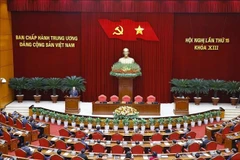
An overview of the closing session of the 15th plenum of the 13th Party Central Committee on the morning of December 23. (Photo: VNA)

Party Central Committee’s 15th plenum wraps up

The implementation of the 1991 Party Platform and its revised and supplemented version in 2011 has reaffirmed the correctness, creativity, and appropriateness of the Party’s "Doi moi" (renewal) path, as well as the inevitability of Vietnam’s socialist-oriented development, which is in line with national realities and global trends, said the Party leader.

The Vesak Day 2025 Celebration in Hue city (Photo: VNA)

📝OP-ED: “Freedom of Religion” not subject to politicisation

It is not difficult to recognise the report’s outdated tone, built on unsubstantiated arguments, entrenched prejudice, and imposed interpretations regarding the freedom of religion in Vietnam. This is also not the first time the organisation’s conclusions have exposed clear shortcomings in objectivity and methodology, raising questions about political motivations behind what is presented as a human rights assessment.