Difficulties still ahead for coffee sector: insiders

The export of coffee declined in both volume and value last year due to certain difficulties that are forecast to linger on for the time to come, insiders have said.
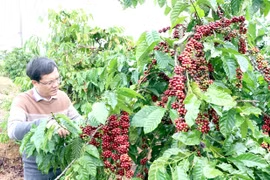
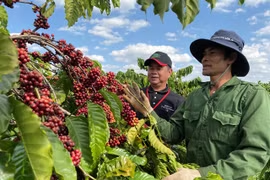
Difficulties still ahead for coffee sector: insiders ảnh 1A coffee farm in the Central Highlands province of Kon Tum (Photo: VNA)
HCM City (VNA) – The export of coffee declinedin both volume and value last year due to certain difficulties that areforecast to linger on for the time to come, insiders have said.

Nguyen Viet Hai, Vice Chairman of the Vietnam Coffee - CocoaAssociation (Vicofa), told a meeting in Ho Chi Minh City on January 15 that inthe 2019 - 2020 crop, 1.61 million tonnes of the bean was shipped abroad at theaverage price of 1,740 USD per tonne, bringing home 2.8 billion USD.

The figures respectively fell 5 percent, 0.4 percent, and5.3 percent from the previous crop.

The export volume of processed coffee (roasted and groundcoffee, instant coffee) dropped by over 17 percent to 110,000 tonnes, resultinga fall of 8.7 percent in value to more than 443 million USD, he pointed out.

Hai noted coffee prices remain unstable, leading to a plungein the purchase of the produce from farmers in the 2020 - 2021 crop. Fresh coffee iscurrently priced at 6.7 million - 6.9 million VND (about 289 - 298 USD) per tonne and coffee bean, 32 million - 32.5 million VND per tones, which has continued exposingfarmers to difficulties.

Vicofa Chairman Luong Van Tu cited experts as forecasting thatthe coffee market may recover in the time ahead but very slowly because theCOVID-19 pandemic remains complicated and many regions around the world haveyet to resume tourism activities. Domestic consumption still falls short ofexpectations as many coffee shops have had to shut down due to the lack of customers.

Meanwhile, coffee production has also endured impact ofstorms, climate change, ageing trees, he added.

Facing that fact, Vicofa will carry out some programmes toimprove the sector’s efficiency, Tu said, elaborating that it will step upcoffee re-cultivation, increase support to help businesses capitalise on exportchances under the EU-Vietnam Free Trade Agreement (EVFTA) and the Comprehensiveand Progressive Agreement for Trans-Pacific Partnership (CPTPP), and boost theexport of processed coffee for higher value.

Efforts will also be augmented to stimulate domestic demandto overcome the current trying time, he said.

For his part, Thai Nhu Hiep, Director of the Vinh Hiep CoffeeCompany, held that Vietnam now has a number of opportunities to expand itspresence in major markets like the EU, Japan, and the Republic of Korea thanksto FTAs.

However, he noted, to make use of those chances, the coffeesector needs to standardise farming, harvesting, and processing andensure quality and food safety meets importers’ requirements.

In the domestic market, specific quality standards are alsonecessary to differentiate coffee and coffee products added with other farmproduce in order to promote fair competition and a true coffee culture, accordingto Hiep./.
VNA

See more

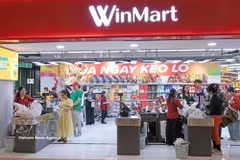
Shoppers at Winmart (Photo: VNA)

National brand programme drives Vietnamese corporate competitiveness

Vietnam’s national brand value reached 462.28 billion USD in 2026, up 45.14% from 2020 and ranking 32nd among 193 countries, according to Brand Finance. The challenge, however, goes beyond climbing the rankings or scaling up. It is turning those gains into lasting competitiveness and getting Vietnamese firms deeper into global value chains.

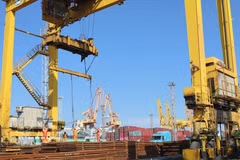
Loading and unloading steel products at Hoang Dieu–Chua Ve Port, Hai Phong city (Photo: VNA)

Hai Phong city seeks to boost inland waterway transport

According to the Hai Phong Maritime Administration, inland waterways carry coal, agricultural products, ores, stone, cement and other bulk cargoes, helping ease pressure on roads, particularly those connecting seaports and industrial parks.

Speakers at the conference (from left): AVPI Advisory Board Chair Dr Le Thu Huong, Australian Ambassador to Vietnam Gillian Bird, and Vietnamese Consul General in Sydney Nguyen Thanh Tung. (Photo: VNA)

Vietnam, Australia turn momentum into practical cooperation

Vietnam and Australia should focus on promoting two-way investment, expanding cooperation linked to APEC 2027 and making better use of people-to-people connections. Vietnam needs capital, skills, technology, infrastructure, and energy transition expertise - areas where Australia could offer valuable support.

The interface of the National E-Procurement System. (Photo: muasamcong.mpi.gov.vn)

Vietnam to move PPP bidding online from 2027

From January 1, 2027, PPP project proposals must be submitted through the National E-Procurement System. From September 1, 2027, investor selection for PPP projects tendered through open bidding will move fully online.

An automated robot-based production line at CAYI Technology Vietnam Co., Ltd. in Yen Phong II-C Industrial Park, Bac Ninh city (Photo: VNA)

EuroCham: Business Confidence Index in Vietnam remains high at 78.3 in Q3

The survey found that 64% of respondents described their current business conditions as good or very good, while 28% maintained a neutral or cautious outlook, reflecting a wait-and-see attitude as international demand remains flat and businesses look for policy momentum to translate into faster procedures and more predictable outcomes.

Workers manufacture handheld power tools at the Keystone Electrical Vietnam factory in Lien Ha Thai Industrial Park, Thai Thuy commune, Hung Yen province (Photo: VNA)

Vietnam seeks to turn FDI inflows into domestic value added

Vietnam is shifting its FDI attraction strategy from expanding investment volumes to prioritising capital inflows that brings technology, knowledge, modern management practices and stronger links with domestic businesses, particularly in semiconductors, artificial intelligence (AI), chips and renewable energy.

At Yadea Vietnam’s smart manufacturing plant in Tan Hung Industrial Park, Bac Ninh province (Photo: VNA)

Vietnam ties FDI incentives to local supplier commitments

Incentives will increasingly hinge on investors’ performance and commitments, not just on landing projects. Key commitments include transferring technology to Vietnamese firms, training workers, providing technical support and opening FDI supply chains to domestic companies.

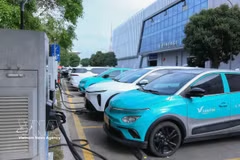
Green SM has launched all-electric taxi service in the US. (Illustrative photo: VNA)

Green SM launches all-electric taxi service in US

The move brings Green SM into one of the world’s most dynamic and demanding markets. It also marks another step in the international expansion of the Vietnamese mobility brand, following its rapid growth across markets in Asia and Europe.

An overview of the meeting between IMF Managing Director Kristalina Georgieva and ASEAN Finance Ministers and Central Bank Governors (Photo: VNA)

Vietnam strengthens financial cooperation at IMF-World Bank annual meetings

The Vietnamese Governor underscored the complementary roles of global and regional financial cooperation mechanisms, including the Chiang Mai Initiative Multilateralisation (CMIM) and the ASEAN+3 Macroeconomic Research Office (AMRO). He also highlighted the importance of technical assistance in fintech, digital transformation, cybersecurity and risk management.