Digital archives – a driving force for two-tier local administration system

The Law on Archives 2024 and its guiding documents, which took effect on July 1, 2025, provide a comprehensive legal foundation for the management of electronic documents. This framework supports the implementation of strategic, breakthrough decisions by the central government on restructuring the two-tier local administration system.

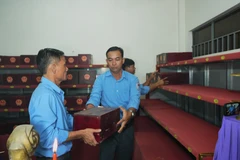
Digital archives – a driving force for two-tier local administration system. (Illustrative photo: internet)

Hanoi (VNA) - In the context of administrative modernisation and national digital transformation, effective records and archival management plays a crucial role in enhancing the efficiency of state governance, while facilitating timely access to information in service of leaders and the public.

The Law on Archives 2024 and its guiding documents, which took effect on July 1, 2025, provide a comprehensive legal foundation for the management of electronic documents. This framework supports the implementation of strategic, breakthrough decisions by the central government on restructuring the two-tier local administration system.

According to Nguyen Thanh Binh, Deputy Director of the State Records and Archives Department under the Ministry of Home Affairs (MoHA), electronic document management as stipulated in the new law is a key driver for the archival sector in building internationally standardised digital archival infrastructure, applying modern technologies, and ensuring data security.

These objectives align with the orientation set out in the Politburo’s Resolution No. 57 on the groundbreaking development of science, technology, innovation, and national digital transformation. Practical steps in this direction include the development of digital repositories, archival databases, and integration with national digital platforms, he said.

Electronic documents contribute to saving costs, reducing physical storage needs, minimising paperwork, enhancing transparency, improving public services, and supporting timely decision-making, Binh noted.

He also stressed the critical role of provincial historical archives in managing local data, ensuring appropriate technical infrastructure that meets development requirements. A synchronised rollout of digital archival systems is essential for realising the objectives of Resolution 57.

Despite the legal framework being in place, Binh noted several challenges emerging during the implementation, including underdeveloped digital infrastructure, limited human resources, cybersecurity threats, and difficulties in data synchronisation and system integration. Many localities, particularly at the commune level, lack the digital tools and infrastructure necessary for digitising and managing records. Moreover, the number of trained archival staff remains insufficient, especially at the commune level, with notable gaps in digital skills and professional expertise.

The lack of standardised technical specifications across current software systems poses further integration challenges, and earlier digitised records often do not conform to new standards. Digital transformation in the archival field also requires significant investment, which remains a challenge for financially constrained local budgets. Risks related to data breaches and cyberattacks necessitate the adoption of advanced security solutions.

One of the key tasks for ministries, agencies, and localities today is to implement the goals outlined in Resolution 57 by applying scientific and technological advances to the digital transformation of records and archival work. This is vital for efficient management and the effective use and promotion of the value of archival materials.

MoHA has issued and directed the State Records and Archives Department to release several guiding documents to help ministries, agencies, and localities enhance the management of records and archives during the restructuring of the political system’s organisational apparatus.

The department has also sent working groups to directly support localities in managing records and archives throughout the re-organisation process. Some localities have proactively issued instructions, provided training, and conducted inventories, packing, handover, and implemented safety measures for archival materials, even ahead of official guidance from the ministry./.

VNA

See more

Professor Dr. Tran Hong Thai receives the honorary doctorate title and certificate from Professor Nikolay Rogalev of MPEI. (Photo published by VNA)

Vietnamese professor awarded honorary doctorate by Moscow institute

Professor Dr. Tran Hong Thai, Standing Vice President of the Vietnam Academy of Science and Technology (VAST) was granted an Honorary Doctorate by The Moscow Power Engineering Institute (MPEI) for his outstanding contributions to scientific development, education and international cooperation in the energy sector.

Delegates perform the inauguration protocol for the Hanoi smart traffic control centre in the capital on December 13. (Photo: VNA)

Hanoi officially launches smart traffic control centre

Equipped with 1,837 AI-powered cameras installed at 195 key intersections, the centre serves as the “brain” for real-time monitoring of traffic conditions and urban order. Through the system, police officers can observe traffic on major roads and junctions, promptly detect congestion, violations, accidents and incidents, and take timely response measures.

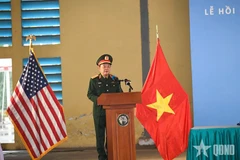
Vietnamese Deputy Minister of National Defence Sen. Lieut. Gen. Hoang Xuan Chien speaks at the event. (Photo: VNA)

Vietnam repatriates remains of US MIA servicemen

Vietnamese Deputy Minister of National Defence Sen. Lieut. Gen. Hoang Xuan Chien voiced his confidence that sustained goodwill and joint action would allow both sides to tackle lingering war consequences while broadening cooperation across other domains, which, he described as the best way to heal physical, emotional, and societal scars and fostering the stronger Vietnam - US relationship.

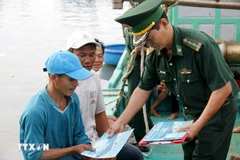
Law enforcement forces at sea in Ho Chi Minh City are working to raise awareness among fishermen about combating illegal, unreported, and unregulated (IUU) fishing (Photo: VNA)

HCM City tackles fishing violations at roots

As of December 9, all of the 4,475 fishing vessels in HCM City had registered and updated in the VNFishbase database, of them 4,268 licensed. The remainder, classified as ineligible, are strictly monitored and kept moored locally, with no permission to put to sea.

Vice Chairman of the municipal People’s Committee Hoang Nguyen Dinh addresses the event (Photo: VNA)

HCM City takes tough measures to curb IUU fishing violations

Ho Chi Minh City is mobilising its entire political system to intensify the fight against illegal, unreported and unregulated (IUU) fishing, aiming to join the national effort to have the European Commission’s “yellow card” removed.

Soldiers of Division 315 helping build a house for a flood-hit family in Dak Lak (Photo: VNA)

Dak Lak launches all-out, rapid “Quang Trung Campaign”

The central province of Dak Lak is mobilising all resources to swiftly rebuild and repair houses damaged by Storm Kalmaegi (Storm No. 13) and the historic floods in November, under the “Quang Trung Campaign” directed by the Prime Minister.

The chosen location for the construction of the Ninh Thuan 1 Nuclear Power Plant is Phuoc Dinh commune. (Photo: VNA)

Vietnam, IAEA comprehensively assess national nuclear power infrastructure

The delegation, led by Eric Mathet, Operational Lead, the IAEA’s Nuclear Infrastructure Development Section, evaluated the current status of Vietnam’s national nuclear infrastructure according to the assessment criteria outlined by the IAEA for Stage 2 – assessing the readiness of a country to invite bids or negotiate contracts for the construction of its first nuclear power plant.