Can Tho accelerates digitalisation to combat IUU fishing

The Mekong Delta city of Can Tho is stepping up the application of digital technologies in managing and monitoring fishing vessels.

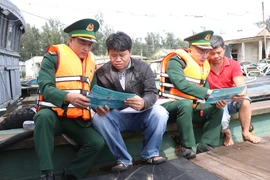
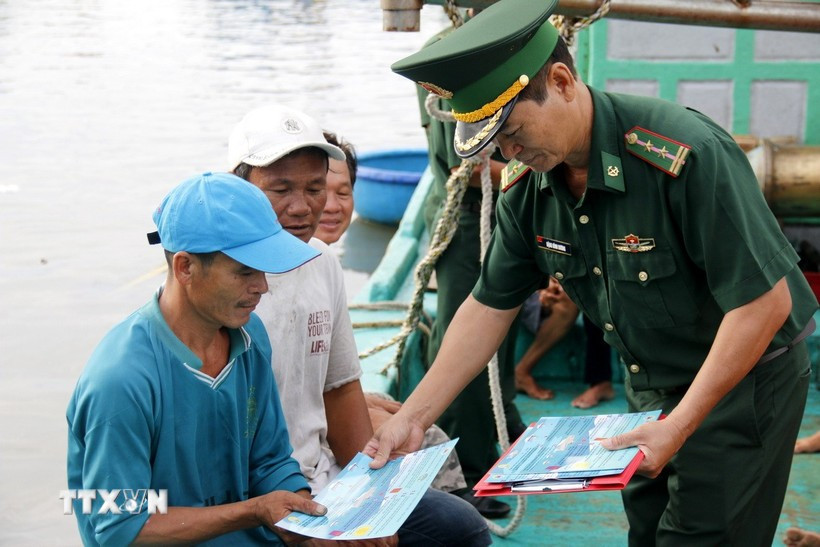
Distributing documents on anti-IUU fishing to fishermen. (Photo: VNA)

Can Tho (VNA) – In strict compliance with the Government’s directives on accelerating the digitalisation of fisheries data, the Mekong Delta city of Can Tho is stepping up the application of digital technologies in managing and monitoring fishing vessels.

With the coordinated rollout of these solutions, the city aims to restore order in the sector and guide local fishing activities toward a sustainable, modern model aligned with international standards, an important step in addressing the European Commission’s “yellow card” warning on illegal, unreported and unregulated (IUU) fishing.

Instead of spending hours completing paperwork at the Tran De Fishing Port Authority, fishermen like Le Hoai Thuong can now file electronic declarations through the eCDT VN mobile application one hour before docking. Integrating key information such as catch volume and fishing grounds, the system streamlines administrative procedures while helping the port authority reduce time spent on inspection, monitoring and documentation.

Thuong said that submitting information in advance allows port officials to arrange docking schedules more efficiently.

“Previously, I had to wait at the port to register. Now everything is handled through the app,” he noted.

To strengthen vessel oversight, Can Tho has completed the classification, registration, certification and licensing of all eligible vessels, and updated data for 100% of fishing boats and their owners into the national fisheries database (VNFishbase) and the national population database (VNeID).

In addition, instead of relying solely on indirect SMS messages, the municipal Fisheries and Fishery Surveillance Sub-Department now sends real-time notifications directly to vessel owners and captains through its website and smartphone messages whenever a vessel loses connection with its vessel monitoring device.

According to Lu Tan Hoa, Deputy Director of the municipal Fisheries and Fishery Surveillance Sub-Department, the new approach ensures that alerts are not missed. “Once a message is sent, the phone rings immediately, allowing fishermen to respond quickly,” he said.

Digitalisation has significantly strengthened fleet management capacity, enabling timely detection of vessels at risk of IUU fishing and enhancing transparency in traceability for export markets.

With a fleet of 784 fishing vessels and around 30,000 workers in the sector, Can Tho continues to prioritise training programmes, infrastructure upgrades and equipment synchronisation from vessel monitoring systems to electronic logbooks to ensure the smooth adoption of digital tools.

By accelerating digital transformation, the city not only meets key EC recommendations on combating IUU fishing but also lays the foundation for restructuring the local fisheries sector toward greater transparency, accountability and sustainable development./.
VN

See more

Brocade weaving is a cultural lifeblood for the Khmer community in the Bay Nui (seven-mountain) area of An Giang. (Photo: VNA)

Khmer brocade weaving helps drive heritage-based economic development

Nestled at the foot of the majestic That Son mountain range, Van Giao - the brocade weaving village of Khmer people in An Cu commune, An Giang province - is not only a repository of centuries-old cultural heritage but is also emerging as a model for heritage-based economic development.

People and vehicles travel across the Lo river pontoon bridge on the morning of February 16. (Photo: VNA)

PM commends units for constructing pontoon bridge to serve Tet travel demand

Prime Minister Pham Minh Chinh on February 16 sent a letter commending the determination and strong sense of responsibility of agencies and units in urgently building a pontoon bridge across the Lo river in Phu Tho province to promptly serve people’s travel demand during the Lunar New Year (Tet) 2026.

Prime Minister Pham Minh Chinh visits and extends Lunar New Year greetings to a patient undergoing treatment at Bach Mai Hospital. (Photo: VNA)

PM extends best wishes to doctors, patients on Tet occasion

Prime Minister Pham Minh Chinh visited and extended Tet greetings to medical staff and patients at Bach Mai Hospital and Viet Duc University Hospital in Hanoi while inspecting healthcare services during the holiday at these two leading central hospitals on February 16, or the last day of the Year of the Snake.

The Van Mieu-Quoc Tu Giam heritage site in Hanoi remains a major attraction for large numbers of visitors during the early days of spring. (Photo: VNA)

Hanoi offers free parking, public transport during Lunar New Year

During Tet, Hanoi offers free parking at selected schools and locations surrounding central heritage sites. In addition, single-journey fares are waived on the Cat Linh–Ha Dong and Nhon–Hanoi Station metro lines, while subsidised public bus services across the city are operating free of charge during the holiday period.

President Luong Cuong, his spouse, delegates and artists at the special Spring Homeland Art Programme 2026. (Photo: VNA)

Five major shifts chart overseas Vietnamese affairs in 2026 and beyond

In a world marked by intensifying strategic competition, emerging conflicts and intertwined economic, security and social challenges, nearly 6.5 million Vietnamese living in over 130 countries and territories have continued to look to the homeland as a firm spiritual anchor. The homeland remains a source of confidence, connection and aspiration for Vietnamese abroad.

Vietnamese Ambassador to Cuba Le Quang Long (right) symbolically hands over 250 tonnes of rice to Cuban Deputy Minister of Agriculture Telce Abdel González (Photo: VNA)

Vietnam supports Cuba in ensuring food security

Cuban Deputy Minister of Agriculture Telce Abdel González affirmed that Cuba will create all favourable conditions for AgriVMA’s rice production project in Los Palacios district, Pinar del Río province, with a view to expanding the model to other localities across the country.

The Binh Phuoc provincial Intelligent Operations Center (IOC), operational since September 2020, has played an important role in supporting the development of digital government. (Photo: VNA)

Breakthroughs under Resolution 57 drive local development

Following the Politburo’s Resolution No. 57-NQ/TW on advancing science, technology, innovation and national digital transformation, many localities across Vietnam are translating strategic guidelines into concrete action, laying the foundation for a new development model based on knowledge, technology and modern governance.