Doctors warn mothers of donated breast milk use

Vietnamese women who are unable to breast-feed their children for health reasons are increasingly using donated breast milk from other women, sparking warnings from physicians.
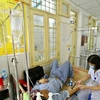
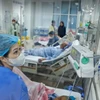
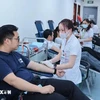
Doctors warn mothers of donated breast milk use ảnh 1Healthcare staff at the Da Nang Maternity and Paediatrics Hospital is instructing a mother who wants to give breastmilk with a pumping machine (Photo: VNA)

HCM City (VNA) – Vietnamese women who are unable to breast-feedtheir children for health reasons are increasingly using donated breast milkfrom other women, sparking warnings from physicians.

Somemothers cannot breast-feed their children for various reasons, including theuse of antibiotics taken after delivery.

Le HuyenTrang, a woman from Tan Binh district, has set up a free “breast milk fridge”promoted on Facebook. Donors and recipients of breast milk can post theirrequests and information.

Every day, Trang receives between 60 and 80 breast milk bags with 250ml of milkfrom donors.

However, after reading media reports about the practice, Dr Truong Huu Khanh, headof Paediatrics Hospital 1’s infectious and nervous diseases ward, said: “It’simpossible to do this. It’s not like giving free rice or bread. Frozen breastmilk from mothers should be used for their child only.”

Safety of a “breast milk bank” should be ensured, just as it is for a bloodbank, Khanh said.

“It’s not sufficient to listen to donors who say they are healthy and have nodisease.  They must be tested for safety reasons,” he said.

Khanhsaid that opening and closing a fridge could also cause bacterial contamination.

At a recent press meeting, nutritionist Hoang Thi Tin of Paediatrics Hospital 1said that breast milk from other mothers should not be encouraged.

Babiescould be at a high risk of getting an infectious disease, Tin said.

Unfrozen breast milk must be used within two hours, she said, adding that milkbottles should be stored in the middle of a fridge’s freezer.

Frozen milk at minus 70 degrees Celsius could be stored for around a year, shesaid.

Tu Du Obtetrics Hospital recommends breast feeding as a preferable source ofnutrition for infants instead of formula milk.

For premature babies with a digestive disorder or born with low weight, breastmilk can be vitally important.

These newborns, however, are usually kept in a special room at hospitals awayfrom the mother and most of them are fed formula milk, which can causedigestive problems.

But doctors at Tu Du Obtetrics Hospital said breast milk could be contaminatedwith HIV, hepatitis B or C viruses. Patients with these diseases often do nothave symptoms in the early stages of the disease and, as a result, affectedmothers could pass along contaminated breast milk.

Moreover, techniques and devices for milk are sometimes not clean and storageis improper.

It isimportant to control the quality of donated breast milk by keeping it undersurveillance by health experts and sterilising it, according to the AmericanAcademy of Paediatrics.

Mothers eligible to donate breast milk are tested to detect infectiousdiseases, and they should not smoke, drink wine or take any medicine that couldaffect the quality of the milk. They are also given instructions to ensure thatthe milk is not contaminated.

Donated milk is tested twice and is sterilised at a very high temperature.

Milk that tests negative for bacteria or viruses is stored in a fridge forlater use.-VNA 
VNA
See more

Military doctors conduct ultrasound examinations for residents in Dong Dang town, Cao Loc district, Lang Son province. (Photo: VNA)

Resolution 72 opens path to a modern, sustainable healthcare system

To build a resilient healthcare system capable of meeting the challenges of ageing, emerging diseases and rising expectations for quality care, Vietnam must continue to strengthen primary and preventive care, invest in human resources, accelerate digitalisation and big data development, and refine healthcare financing mechanisms.

Vietnam steps up Nipah virus prevention at border gates (Photo: suckhoedoisong.vn)

Vietnam tightens Nipah virus prevention at border gates

Local authorities have been instructed to strengthen disease prevention and control measures at border gates, medical facilities and in the community, stay updated with global disease information, and closely monitor inbound travellers.

Nipah virus infection is designated a Group A infectious disease, with reported fatality rates of between 40 and 75%. (Photo: moh.gov.vn)

Health sector steps up preparedness against Nipah virus disease

Nipah virus infection is designated a Group A infectious disease, with reported fatality rates of between 40 and 75%. At present, no vaccine or specific antiviral treatment is available. The virus is mainly transmitted from animals to humans or through contact with contaminated food and objects, and can also spread between people via direct contact with bodily fluids and secretions of infected patients.

Member of the Party Central Committee and Minister of Health Dao Hong Lan (Photo: VNA)

Health minister highlights comprehensive, people-centred healthcare orientation

Member of the Party Central Committee and Minister of Health Dao Hong Lan said the Politburo's Resolution No. 72 provides a breakthrough orientation for the protection, care and improvement of the people’s health. It places the people’s health at the centre of all healthcare policies and services, while aiming to address long-standing bottlenecks in the health sector that have yet to be fundamentally resolved.

Elderly people do morning exercises in the Hoan Kiem Lake area in Hanoi. (Photo: VNA)

Strategic roadmap for healthier future

As Vietnam’s population ages rapidly, Dr Angela Pratt, WHO Representative in Vietnam, identified two strategic priorities: strengthening primary healthcare and developing a formal long-term care system. These measures are essential not only for healthy ageing, but also as long-term investments with wide-ranging socio-economic returns.

Professor Dr Tran Van Thuan, Deputy Minister of Health. (File photo: VNA)

More than 300 medical staff assigned to serve 14th National Party Congress

Deputy Minister of Health Tran Van Thuan called on experts and healthcare workers to uphold a strong sense of responsibility, professionalism and expertise to ensure that medical services for the 14th National Party Congress are delivered safely, effectively and with the highest level of care.

Health check-up offered to citizens in Gia Lai province. (Photo: VNA)

Health ministry maps out three phases for hospital fee exemption

Health insurance participants from near-poor households and those aged 75 and above who are receiving social pension allowances will be entitled to 100% coverage of medical examination and treatment costs within the scope of health insurance benefits.

A patient pays hospital fees using cashless transactions (Photo: qdnd.vn)

Hanoi aims for modern healthcare system

Hanoi's health sector will continue to expand the comprehensive use of digital technology in professional practices to improve management efficiency and service quality, aiming to develop a modern, transparent, and people-centred healthcare system.