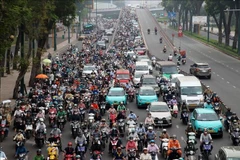
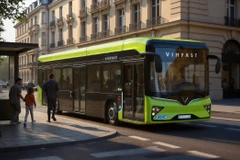
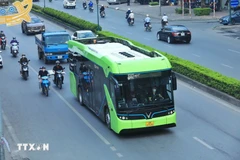
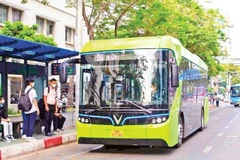
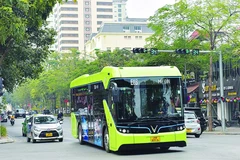
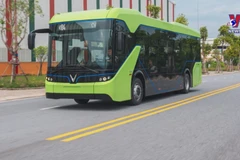
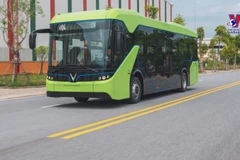
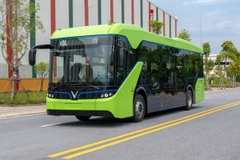
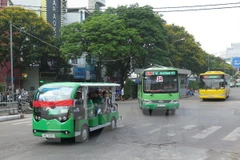
Together with metro expansion, HCM City will continue to enlarge its electric and green bus network, targeting a public transport share of 15–20% of travel demand.
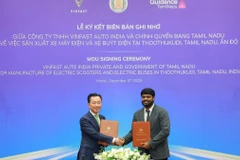
As the second phase of its existing 2 billion USD commitment, VinFast will invest 500 million USD in Thoothukudi to develop new dedicated workshops and production lines for electric buses and e-scooters, covering manufacturing, assembly, testing and other related operations.
According to the city’s roadmap, beginning in 2025, all newly launched bus routes will be required to use clean fuels such as electricity or compressed natural gas (CNG). The transition will culminate in a full conversion of the entire bus fleet by 2030.
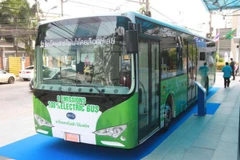
The Indonesian Ministry of Finance recently announced tax incentives of 5% and 10% for electric buses with a localisation rate of 20% and at least 40%, respectively, in a bid to spur the use of public transport using electric motors in the country.
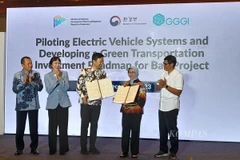
The Indonesian Ministry of National Development Planning (Bappenas) and the government of the Republic of Korea have agreed to cooperate to establish an ecosystem of electric buses to support public transport in Bali.
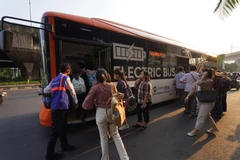
The Bangkok Mass Transit Authority (BMTA) may procure 3,200 electric buses to phase out fossil-fueled buses from its fleet in three years, said Deputy Permanent Secretary for Transport Sorapong Paitoonphong.
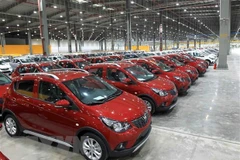
The VinFast company of the Vingroup has said it plans to roll out various luxury and high efficiency models this year in an attempt to help deal with noise and air pollution in major urban centres.