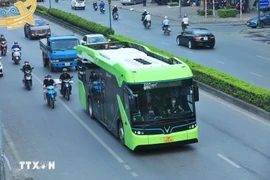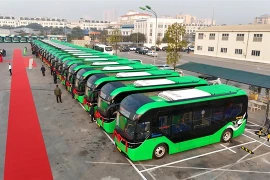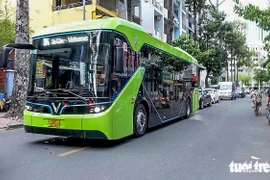
Hanoi (VNA) – Hanoi and Ho Chi Minh City are gradually transforming their public transport networks, replacing aging buses with environmentally friendly electric vehicles in a bid to phase out diesel vehicles by 2035.
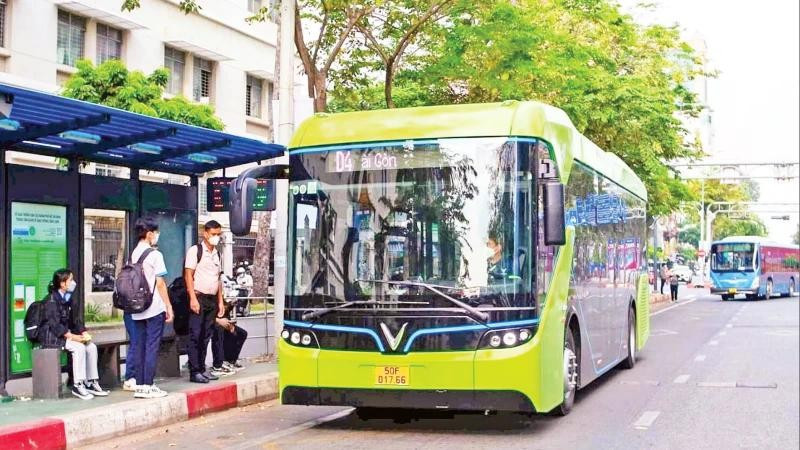
Since launching its first electric route in late 2021, Hanoi has electrified 15 major corridors with 236 zero-emission vehicles. Five routes have been converted to electric operation from the outset of this year alone.
In HCM City, 163 electric buses are now winding through neighbourhoods. The city has encouraged transport firms to convert existing gasoline and diesel bus routes to electric, striving to transition the entire fleet to green energy by 2030. From 2025 onward, all new routes must be operated with electric or green energy vehicles.
Residents have been enthusiastic about electric buses, given improvements in service quality and a convenient payment system. Le Thi Ngoc Diep, a local in Hanoi’s Long Bien district, said she has returned to public transport after electric buses rolled onto her route. She has been pleased with onboard services and hopes that more electric bus routes will be available so people can use them instead of personal vehicles.
Behind the smooth electric rides lies a complex financial puzzle that the two cities are racing to solve. The complete transition carries a price tag of nearly 48.63 trillion VND (1.88 billion USD) for Hanoi alone, with nearly 36 trillion VND from the city’s budget and the remainder from businesses. The funding will be used to cover vehicle purchases, partial interest payments, and charging station infrastructure.
Head of the planning – finance bureau under the municipal Department of Construction Phan Truong Thanh proposed the city pen policies mobilising domestic and international resources, both public and private, for non-emission vehicles and related infrastructure.
HCM City estimated funding needs of over 3.52 trillion VND for the transport conversion initiative for 2025-2030, including 2 trillion VND to subsidise loans for vehicle conversion and about 1.3 trillion VND for charging station construction. The city's current infrastructure for green buses, particularly electricity and CNG supply stations, remains insufficient.
The municipal Department of Transport calculated that by 2030, to handle 3,300 electric buses, the southern metropolis will need at least 25 electric charging stations with 269 charging posts.
Director of the Bus Transport Enterprise (Saigon Passenger Transport JSC) Nguyen Duy Khanh said the conversion policy aligns with the Government’s net-zero commitment. However, businesses are not ready due to substantial investment costs and the scarcity of bus charging stations across the city.
To ensure the effective operation of electric bus routes, Vice Chairman of the Hanoi city People’s Committee Nguyen Manh Quyen directed departments to complete mechanisms and policies supporting businesses during vehicle investment and conversion, while accelerating investment in technical infrastructure and charging stations for clean energy vehicles.
Beyond transitioning to green energy, the Department of Construction should study and develop criteria for evaluating transport units, moving toward a 'star' rating system for green bus companies to improve service quality for Hanoi residents, he stressed./.