EVFTA – A strategic lever in global value chain

Amid intensifying geo-economic competition and complex supply chain shifts, the EVFTA has emerged as a pillar of Vietnam’s open-door policy and sustainable development strategy.

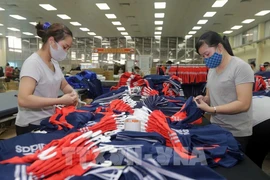
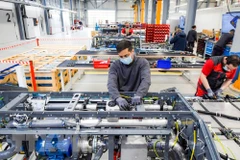
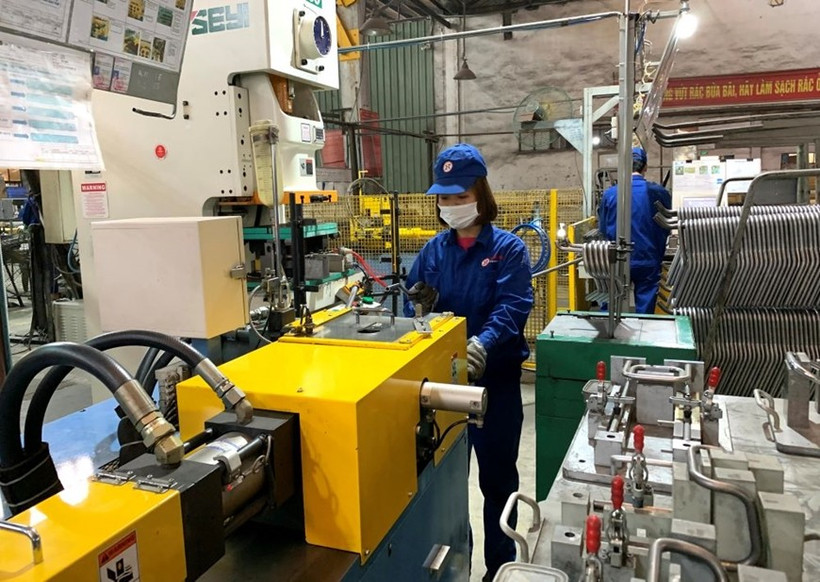
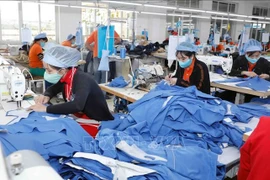
Production activities at Xuan Hoa Vietnam JSC, Phu Tho province. (Photo: qdnd.vn)

Hanoi (VNA) - After five years of implementation, the EU–Vietnam Free Trade Agreement (EVFTA) has not only generated substantial economic value but also demonstrated its strategic significance in deepening Vietnam’s integration process, helping elevate the country’s standing on the international stage.

Amid intensifying geo-economic competition and complex supply chain shifts, the EVFTA has emerged as a pillar of Vietnam’s open-door policy and sustainable development strategy.

Vietnam becomes the EU’s leading partner in ASEAN

Entering into force on August 1, 2020, the EVFTA eliminated over 70% of tariffs immediately, with nearly 99% of remaining tariffs to be phased out over time. Beyond tariff cuts, the deal expands market access, protects intellectual property rights, enhances regulatory transparency, and creates favourable conditions for businesses on both sides to fully capitalise on trade opportunities.Bilateral trade between Vietnam and the EU reached 298 billion USD from August 2020 to May 2025, accounting for nearly 40% of their accumulated turnover over the past three decades. This underscores the EVFTA’s catalytic role in market expansion and strengthening economic ties. Today, Vietnam is the EU’s largest goods trading partner in ASEAN and its 16th globally.

According to Nguyen Anh Son, Director of the Import–Export Department at the Ministry of Industry and Trade, the agreement has delivered positive outcomes, opening up new markets for Vietnam’s footwear, farm produce, and fruit, while enabling businesses to access advanced technologies and modern equipment. It also facilitates Vietnam’s institutional, policy, and legal reforms towards greater transparency and alignment with international practices.

The EU is now Vietnam’s third-largest export market and fourth-largest import source, supplying strategic products including high-tech machinery, transport equipment, pharmaceuticals, and green technologies. With a population of over 100 million and a workforce exceeding 55 million, Vietnam has become a “strategic ecosystem” for European businesses seeking deeper integration into new supply chains.

A survey by EuroCham Vietnam reveals that not only large corporations but also SMEs are taking advantage of EVFTA preferences, with the proportion of firms citing tariff reductions as a key advantage increasing from 29% in Q2 2024 to 61% in Q2 2025.
detmay74741043pm.jpg
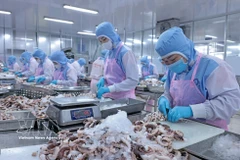
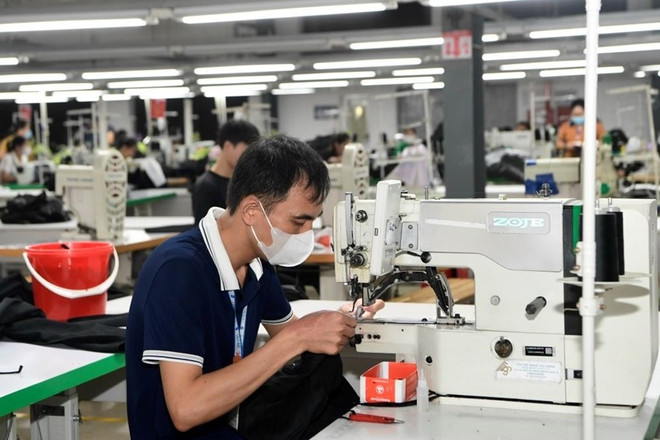
Production activities at Tien Son Thanh Hoa Group JSC. (Photo: qdnd.vn)

Rules of origin – a challenge to overcome

With a GDP of 29 trillion USD (purchasing power parity - PPP) and more than 450 million consumers, the EU is the world’s largest single economic bloc. Its per capita GDP surpassed 43,000 USD in 2024 (World Bank), reflecting strong purchasing power and diverse demand – an ideal market for Vietnam’s high-quality goods, ranging from agricultural and processed food to textiles, furniture, and technology.

However, opportunities come with challenges. Rules of origin remain the biggest barrier, as most input materials for Vietnam’s key export sectors are imported from outside the bloc, complicating proof of origin requirements. The EVFTA permits cumulation with certain partners; however, the procedures can be complex, and domestic supply chains are still poorly interconnected.

Ngo Chung Khanh, Deputy Director General of the Multilateral Trade Policy Department at the Ministry of Industry and Trade, warned that without improvements in meeting technical standards and rules of origin, Vietnamese products risk losing their competitiveness, especially as the EU accelerates FTA negotiations with other countries.

In 2024 alone, Vietnam issued over 1.8 million preferential Certificates of Origin (C/O) with an export value exceeding 100 billion USD. Notably, 56% of EU firms in Vietnam file C/Os monthly, underscoring their critical role in securing tariff benefits and maintaining credibility with partners.

Many businesses have called for full digitalisation of the C/O process, adoption of a single electronic declaration system, shorter processing times, enhanced transparency, and stronger supply chain data connectivity. They also stressed the need for targeted technical support programmes to help firms master documentation, validate origin, and stay updated on evolving EU standards.

The EVFTA has opened a “big door,” but how far and fast Vietnam can move through it depends first and foremost on its internal capacity, proactiveness, and adaptability. To maximise opportunities, Vietnamese enterprises must not only innovate technologically and improve governance but also persistently build stronger domestic supply chains, increase localisation, and pursue sustainable development./.
VNA

See more

Prime Minister Pham Minh Chinh addresses the 21st meeting of the State steering committee for national key projects in the transport sector. (Photo: VNA)

Entire Cao Bang - Ca Mau expressway must be inaugurated on December 19: PM

PM Chinh, who is head of the steering committee, asked all parties involved to strive hard to achieve the goal of putting 3,000 kilometres of expressways and approximately 1,700 kilometres of coastal roads into operation in 2025, thus creating momentum to welcome the 14th National Party Congress and meeting the travel needs of the people during New Year 2026 and the Lunar New Year Festival.

Prime Minister Pham Minh Chinh (C) presides over the 21st meeting of the State steering committee for national key projects in the transport sector. (Photo: VNA)

Government leader presides over meeting on national key transport projects

Noting that there are less than two months left until December 19 - the date set for the simultaneous ground-breaking and inauguration ceremonies of major projects, the PM emphasised that this is a crucial period to accelerate progress and make breakthroughs in the implementation of key projects and works.

Harvesting cage-farmed tilapia (Photo: VNA)

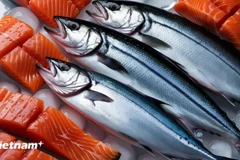
Vietnam exports first shipment of tilapia to Brazil

This shipment is one of 32 containers, totalling 700 tonnes of tilapia, ordered and imported by JBS Group from Vietnam. The products will first be distributed through HORECA supermarket and distribution network, and showcased in JBS's product display centre in Brazil.

Road leading to VSIP Can Tho at the intersection with National Highway 80 (Photo: VNA)

Green industry lures more FDI to Mekong Delta

The Mekong Delta region, having earned the monikers of the rice bowl, fruit and seafood basket of the country, and following the restructuring of administrative units, is now standing at the threshold of becoming a modern, sustainable industrial centre.

The codification of Resolution 42 into the law, effective from mid this month, is an important step, marking a key milestone in completing Vietnam’s NPL resolution process. (Photo: thoibaonganhang.vn)

Bad debt settlement fully benefits from new policy from H2 2026

Resolution 42, enacted in 2017 to pilot bad debt settlement for credit institutions, was introduced in response to a sharp rise in non-performing loans (NPLs). It empowered credit institutions to seize and liquidate collateral assets, expediting debt recovery. After more than six years of implementation, the resolution delivered certain results but expired last year.

The total retail sales of goods and consumer service revenue were estimated at 5.7 quadrillion VND for the first 10 months of the year. (Photo: VNA)

Retail sales growth remains stable over 10 months

With the current recovery momentum, the trade and services sector is expected to continue being a bright spot in Q4, driving GDP growth and ensuring a balance between domestic consumption and exports amid ongoing global economic fluctuations.

Delegates at the event (Photo: Ministry of Finance)

ASEAN meeting to drive regional cooperation, growth by removing barriers

Running from November 5–11, CCS 111 focuses on advancing service liberalisation and facilitation in ASEAN by removing barriers, enhancing transparency, reducing policy risks, and simplifying administrative procedures to enable businesses and service providers to operate more efficiently.

Goods at Hai Phong Port in northern port city of Hai Phong. (Photo: VNA)

Vietnam determined to build transparent global trade system

The Government of Vietnam on November 6 updated the World Trade Organisation (WTO)’s Committee on Rules of Origin (CRO) on adjustments to the agencies and organisations authorised to issue certificates of origin (C/O), as well as on the application of QR codes in the C/O issuance process.

SemiExpo Vietnam 2025, themed “Powering Vietnam’s Semiconductor Ambition,” brings together around 5,000 delegates and feature 200 booths from major global technology corporations (Photo: VNA)

Vietnam opens largest int’l semiconductor exhibition

SemiExpo Vietnam 2025, themed “Powering Vietnam’s Semiconductor Ambition,” brings together around 5,000 delegates and feature 200 booths from major global technology corporations such as Lam Research, Coherent, Qorvo, Amkor, GlobalFoundries, Micron, Tokyo Electron, KLA, STMicroelectronics, Soitec, and Siemens.

Consumers learn about Hanoi's OCOP products. (Photo: VNA)

Hanoi launches digital booths to promote e-commerce

Hanoi will open an online store showcasing Hanoi's products on the e-commerce platform Shopee. It will introduce digital tools such as electronic signatures, e-contracts, e-invoices, and product traceability systems for local producers and businesses participating in the booth.