Farmers, businesses struggle as pepper, cashew prices drop

The price of pepper and cashew in southern Vietnam is falling as demand has dropped due to the COVID-19 crisis, affecting farmers and businesses.
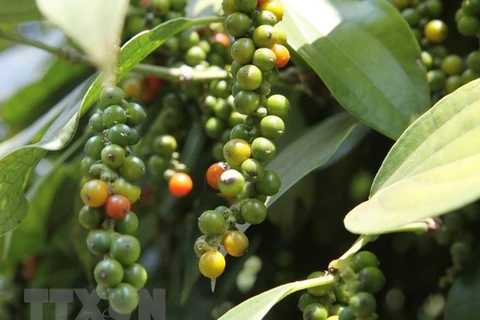
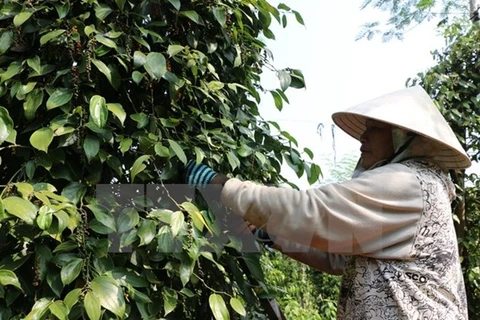
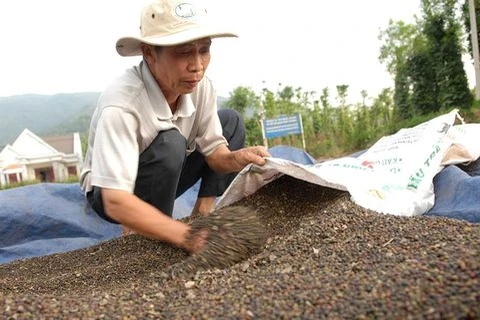
Farmers, businesses struggle as pepper, cashew prices drop ảnh 1The price of cashew and pepper in the Central Highlands and southern provinces has been dropping due to lower global demand (Photo: VNA)

HCM City (VNS/VNA) - The price of pepper and cashew in southern Vietnam is falling as demand has dropped due to the COVID-19 crisis, affecting farmers and businesses. 

Currently, the price of pepper in the Central Highlands and southern Vietnam is 34,500–37,500 VND (1.46–1.58 USD) per kilo, the lowest in the past few years.

Ba Ria – Vung Tau province’s pepper is among the highest priced in the region, but its price dropped by 2,000 VND per kilo compared to last week.

The end of February also saw a 5 percent drop of pepper price in Vietnam compared to the end of January.

Hoang Phuoc Binh, deputy chairman of the Chu Se District Pepper Association in Gia Lai province, said that while the farming areas and output of pepper in Vietnam and other countries have risen greatly over the years, demand for pepper has only increased by 2–2.5 percent each year.

The current supply of pepper is large since farmers in large farming areas have been wrapping up their harvest. But the COVID-19 pandemic is causing global market demand lower, so prices are dropping.

Farmers are losing 15,000 VND per kilo as they have had to sell at a low price to have enough money for workers' salaries and equipment. 

Pepper export turnover in the first three months of the year was 156 million USD, 18 percent lower year-on-year.

Meanwhile, the price of cashew in southern provinces is 18,000–19,000 VND per kilo, which is about 10,000 VND lower than the beginning of the year.

Unfavourable weather has also dragged down the quality of cashews. 

Some farmers are chopping down their cashew crop to switch to growing something else, while cashew processing businesses are also struggling with limited global demand. 

Pham Van Cong, chairman of the Vietnam Cashew Association, said that exports and the price of cashew will drop greatly within the year, and that the industry’s 2020 goal of 4 billion USD in export turnover will have to be reevaluated.

Cashew factories have been urged to slow down their transactions, keep up to date with the market, and pay more attention to product quality.

The association, however, noted that demand would not be dramatically low since cashews are considered a nutritious food, and that businesses should not be too pessimistic./.
VNA
See more

Vinachem affirms its position as a leading chemical enterprise at the Autumn Fair 2025 (Photo: VNA)

Vietnamese enterprises renew growth model to move up global value chains

The resolution identifies enterprises as the centre of the renewal process, urging them to shift from cost-based competition to productivity, technology, quality and market responsiveness; from operating independently to joining industrial ecosystems; and from participating in value chains to mastering and eventually leading them.

Key export sectors such as textiles – garments, footwear and furniture, along with many signature products of Da Nang, have strong potential to expand their markets through online export channels. (Photo: VNA)

Da Nang seeks to boost online exports

To help businesses go global, Da Nang is shifting from supporting individual online activities to developing an integrated ecosystem covering products, branding, platforms, payments, logistics, legal issues and market information. This is also part of the city’s e-commerce development orientation for 2026-2030, which identifies e-commerce as an important component of the digital economy.

Deputy Minister of Foreign Affairs Le Thi Thu Hang receives Rolf Mutzenich, a member of the Foreign Affairs Committee of the German Bundestag, in Hanoi on August 18. (Photo: baoquocte.vn)

Vietnam welcomes German firms’ expansion

Vietnam welcomes and stands ready to create favourable conditions for German businesses to expand their investment and operations in the country, particularly in infrastructure, smart seaports, renewable energy, high-speed railways, science and technology, and high-quality human resource training.

Khanh Hoa province has the largest sheep population in Vietnam, with around 100,000 individuals. (Photo: VNA)

Khanh Hoa province explores Halal ecosystem development

Khanh Hoa aims to estabish itself as a Halal-friendly destination while supporting businesses in expanding export markets, attracting strategic partners and investors, and drawing projects from countries with strong Halal logistics, tourism, manufacturing, processing and agriculture sectors.

The proportion of Vietnamese goods remains high at supermarkets. (Photo: VNA)

Vietnamese brands win over domestic consumers to go global

Amid increasingly fierce global competition, the goal is no longer simply to increase domestic consumption of Vietnamese goods, but to develop strong Vietnamese brands capable of winning consumers through quality, innovation and added value, thereby creating a stepping stone for expansion into international markets.

Illustrative image (Photo: VNA)

Automated VAT refunds to be rolled out from December

As of August 11, VAT refunds rose 32% from a year earlier, reaching 64.4% of the full-year estimate. Tax authorities issued 11,627 refund decisions totaling 111.726 trillion VND (4.26 billion USD), up 9% by volume. The payouts improved cash flow for companies and supported production, trade and exports.

ST25 rice is the centrepiece of the Vietnam Goods Week at Selgros. (Photo: VNA)

ST25 rice officially enters Selgros wholesale supermarket chain in Germany

The placement of ST25 rice on Selgros shelves not only creates an additional opportunity for German consumers to access Vietnamese rice products, but also contributes to efforts to increase the added value of Vietnamese agricultural products by shifting the focus from volume to quality, branding and value.

Trains on the elevated section of the Cau Giay – Nhon route in Hanoi provide convenient transportation for local residents. (Photo: VNA)

Multimodal connectivity to drive Vietnam’s transport infrastructure

Under the proposed approach, roads would serve mainly as connectors and for first- and last-mile transport; railways would handle large volumes over long distances; maritime transport would serve import and export cargo; inland waterways would carry large volumes at low cost; and air transport would focus on fast delivery and high-value goods.