Financing model boosts healthcare service quality

The performance-based financing (PBF) model in the health sector helped improve providers' health services during a trial run, experts said at a conference which ended on October 23 in Hanoi.
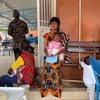
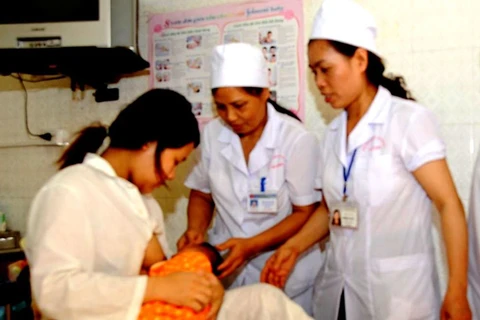
Financing model boosts healthcare service quality ảnh 1Illustrative image (Source:VNA)

The performance-based financing (PBF) model in the health sector helped improve providers' health services during a trial run, experts said at a conference which ended on October 23 in Hanoi.

The two-day conference, titled "Performance-based financing in health: sharing regional experiences in Southeast Asia," was held under a project that supports health care for low-income families in the northern mountainous provinces of Cao Bang and Bac Kan. It's often called project VIE/ 027, financed with official development assistance from the Government of the Grand Duchy of Luxembourg.

Conference attendees shared their experience in implementing the PBF model in Vietnam and neighbouring Southeast Asian countries.

Performance-based financing is a mechanism by which health providers are funded according to how well they perform, says the WHO's website. As health facilities are remunerated in line with their output, they have strong incentives to satisfy users. Granted more autonomy in exchange for greater accountability, health facilities can tailor initiatives to the populations they serve, according to the WHO.

In the last two to three years, two PBF pilot initiatives have been conducted in Vietnam. Result-based financing (RBF) has been used in the central province of Nghe An with support from the World Bank since May 2013. And PBF model has been implemented in Cao Bang and Bac Kan provinces with support from the Luxembourg Agency for Development Co-operation (LuxDev) since April 2014.

During the conference, international and domestic representatives shared their experience and lessons learned from PBF implementation, data verification, monitoring progress and impact evaluation, and held round tables on the future sustainability of the PBF mechanism.

Be Thi Bach, deputy director of the project management board in Cao Bang province, said the PBF model helped improve the effectiveness of preventive medicine and management of non-infectious diseases at communes' medical stations.

Hoang Van Hao, deputy director of the Nghe An Department of Health, said that thanks to the RBF model, health checks and treatment improved incredibly.

Medicines were kept in good condition, waste treatment improved and medical documents were managed more effectively, he said. But the RBF model still lacked supervision.

Hao said that next time more medical workers from the provincial Department of Health would be assigned to supervise the model implementation to uphold its results.-VNA

VNA

See more

An ambulance from the pre-hospital emergency care service in Phu Quoc special zone in An Giang province. (Photo: VNA)

Pre-hospital emergency care system to be launched nationwide

From 2027, the national pre-hospital emergency management platform will be put into operation, connecting data with the 113, 114 and 115 emergency call systems to facilitate rapid emergency dispatch and improve public access to emergency services.

Foreign patients travel to Vietnam for robotic cancer surgery at one-tenth of US costs

Foreign patients travel to Vietnam for robotic cancer surgery at one-tenth of US costs

With robot-assisted surgery costing tens of thousands of dollars in the US and Singapore, a growing number of international patients are traveling to Vietnam for robotic cancer surgery, including procedures for prostate, gynecological and gastrointestinal cancers, using the US made da Vinci Xi system at costs starting from just 3,000 USD.

Under a phased rollout beginning in 2026, every resident in Ho Chi Minh City will receive at least one annual health check-up or health screening. (Photo: VNA)

Ho Chi Minh City develops integrated multi-tier healthcare system

Under the new model, healthcare is organised into interconnected levels based on people's needs rather than administrative boundaries. Patients can move seamlessly between levels while their electronic health records and treatment information remain connected through digital platforms, referral systems, telemedicine, electronic medical records, and integrated health databases.

Doctors conduct heart and lung examinations for workers. (Photo: VNA)

Draft policy encourages people to prepare for old age from middle age

A draft circular guiding the implementation of the National Target Programme on Health Care, Population and Development (2026-2035) marks a shift from focusing solely on elderly care to encouraging healthy and independent ageing through early preparation. It covers healthy lifestyles, regular health check-ups, financial planning, suitable employment and home-based elderly care skills.

The meeting between the Vietnam Military Medical University delegation and leaders of the Lao Ministry of National Defence in Vientiane (Photo: VNA)

Vietnam, Laos deepen military medical cooperation

Since 1954, Vietnam Military Medical University has trained 687 Lao military medical personnel, including 322 doctors, 67 master's degree holders, 10 doctorate holders, and dozens of specialist physicians, alongside hundreds of pharmacists and medical technicians.

Vietnam's first penis transplant from a brain-dead donor is successfully performed at Viet Duc University Hospital. (Photo published by VNA)

Vietnam reaches new milestone in reconstructive transplant surgery

As the first operation of its kind in Vietnam, the hospital spent months developing treatment protocols, studying international experience and assembling a multidisciplinary team that included experts in transplantation, andrology, microsurgery, anaesthesia, immunology and pathology.

Dr. Nguyen Thanh Xuan is performing brain surgery on a patient (Photo published by VNA)

National strategy aims to build advanced medical ecosystem

Vietnam's adjusted healthcare network master plan for 2021–2030, with a vision to 2050, also outlines a regional structure covering the country's six socio-economic regions. It envisages 17 provincial general hospitals serving regional functions, at least one highly specialised hospital in each region, and at least one advanced medical facility in every province and city.