Free trade, investment deals to boost Vietnam-Germany trade ties

Vietnam-Germany trade relations will thrive on the back of the freshly inked free trade and investment deals, including the EU-Vietnam Free Trade Agreement (EVFTA) and the EU-Vietnam Investment Protection Agreement (EVIPA), according to insiders.
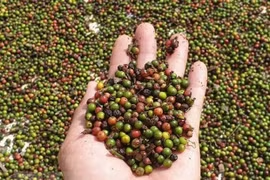
Free trade, investment deals to boost Vietnam-Germany trade ties ảnh 1Germany has high demand for pepper. (Photo: VNA)

Hanoi (VNA) – Vietnam-Germanytrade relations will thrive on the back of the freshly inked free trade andinvestment deals, including the EU-Vietnam Free Trade Agreement (EVFTA) and theEU-Vietnam Investment Protection Agreement (EVIPA), according to insiders.

Nguyen Son Tra, deputy headof the WTO and Trade Negotiation Division under the Ministry of Industry andTrade’s Multilateral Trade Policy Department, said the EVFTA will bringdistinct advantages to Vietnamese goods as right after the deal takes effect,85.6 percent of the tax lines imposed on Vietnamese goods, or 70.3 percent ofthe country’s exports to the EU will be reduced in the first year.

Meanwhile, the lifted tariffswill be 99.2 percent, or 99.7 percent of the country’s total export turnover tothe bloc, in the next seven years, she said.

Particularly, Germany,together with the UK and the Netherlands, has been Vietnam’s leading importerin the EU since 2017. According to statistics from the General Department ofVietnam Customs, two-way trade reached 9.5 billion USD in 2017, with Vietnamshipping some 6.3 billion USD worth of commodities to Germany. Exports to theEuropean country continued to increase to 6.68 billion USD the following year.

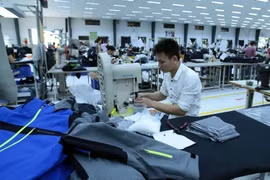
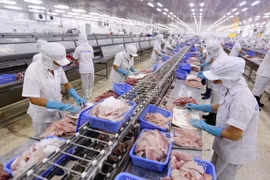
In the first half of 2019,Vietnam earned over 3.3 billion USD from selling products in the German market.Key earners comprised footwear, garment and textiles, coffee, seafood, cashewnuts and pepper, among others.

There is huge room forVietnamese commodities to enter Germany, where consumers have increasingdemands for imports. Last year, Germany became the world’s second largestpurchaser of furniture with import revenue making up 8.1 percent of the world’stotal amount.

Although local furniture firmshave tried to penetrate the German market, their market share remains modest. Inthe first quarter of 2019, Vietnam’s furniture exports to the country onlystood at 80.8 million USD, much lower than the market’s demand.

Vietnam’s Trade Office inGermany said the European country is the world’s second biggest importer ofpepper, accounting for 10.1 percent of the total import revenue in 2017.

As the second largest supplier of pepper for Germany, just behind Brazil, Vietnamships average 5,000 tonnes of pepper to the market each year. In 2018, Vietnampocketed 35.11 million USD from exporting 8,510 tonnes of pepper to Germany, up5.61 percent in volume but down 34.45 percent in value due to low prices.

Meanwhile, Marko Walde,Chief Representative of the German Chamber of Industry and Commerce in Vietnam,said the EVFTA and EVIPA will open export opportunities and boost investmentactivities for enterprises of both nations.

There are some 300 Germanfirms operating their business in Vietnam, 55 percent of which have plans toexpand investment in the Southeast Asian nation.

Unlike 20 years ago whenGerman firms invested heavily in China, they are now seeking to move theirproduction bases to another country, and Vietnam and Thailand are considered asthe most promising destinations, he said.

Walde suggested theVietnamese Government complete legal frameworks soon so as to build confidenceamong foreign investors.-VNA
VNA
See more

 Khanh Binh International Land Border Gate in An Giang province.( Photo: VNA)

Vietnam-Cambodia trade gathers pace towards 20 billion USD target

After setting a record of more than 11.3 billion USD in 2025, bilateral trade reached about 8.7 billion USD in the first eight months of 2026, up 8.3% year on year. Vietnam is currently Cambodia’s third-largest trading partner, its second-largest source of imports and second-largest export market.

Vietnamese Ambassador to India Trinh Minh Manh discusses potential areas and strengths for cooperation between Vietnam and India’s Gujarat state. (Photo: VNA)

Vietnam, India’s Gujarat state seek to unlock cooperation potential

Vietnam attaches importance to strengthening cooperation with Indian states boasting strong economic potential, including Gujarat, to further advance the two countries’ Enhanced Comprehensive Strategic Partnership, particularly in the economy, trade and investment, said Ambassador Trinh Minh Manh.

At Nestlé Vietnam factory in Hung Yen province (Photo: VNA)

Vietnam seeks to build stronger ecosystem for FDI

The World Bank has stressed the need to connect global companies with domestic suppliers, improve the business climate and develop supply-chain finance solutions. Those steps will let domestic firms gradually meet requirements on quality, technology, costs and delivery times, and position them to become suppliers to multinational corporations.

Construction of technical infrastructure facilities serving APEC 2027 in Phu Quoc Special Zone, An Giang province. (Illustrative photo: VNA)

Vietnam enters investment grade credit rating category for first time

Vietnam has maintained robust growth, outperforming other Southeast Asian economies. Its ongoing government reforms aimed at streamlining the state apparatus, promoting the private sector, improving the institutional framework and developing capital markets will strengthen the country’s growth potential and economic resilience.

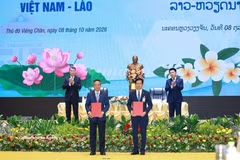
Vietnamese Prime Minister Le Minh Hung and Lao Prime Minister Saleumxay Kommasith witness the presentation of investment certificates and investment cooperation agreements between businesses of the two countries. (Photo: VNA)

Vietnam, Laos strengthen “strategic cohesion” in economic sector

The great friendship, special solidarity, comprehensive cooperation and strategic cohesion between Vietnam and Laos, and between Laos and Vietnam, are an invaluable asset of the Vietnamese and Lao Parties, States and people. It is the responsibility of today's generation to transform this invaluable political asset into new resources for the development of the two countries’ people.

West Food Hau Giang JSC’s factory at the Nam Song Hau Industrial Park – Phase 1, Can Tho city (Photo: VNA)

Southern industrial property market enters new phase of competition

Industrial site selection was previously driven largely by land prices, location and access to markets. However, as supply chains become more complex and manufacturing projects face higher technical requirements, businesses are increasingly assessing sites based on their long-term operational capabilities.

Members of the RoK delegation visit booths showcasing signature agricultural products of Da Lat – Lam Dong. (Photo: VNA)

Lam Dong seeks stronger economic, tourism links with RoK

Lam Dong is particularly interested in sectors in which Korean businesses have strengths, including agriculture, green energy, the circular economy, high-quality tourism, healthcare, education, human resources training and digital transformation, an official said.

Illustrative image (Photo: EVNNPT)

EVNNPT seeks over 224 mln USD in bank loans for grid expansion

Three projects account for part of the financing need, including 13.3 million EUR for the 220kV Ung Hoa substation and connection lines, 18.6 million EUR for the 220kV Tan Viet substation and the 220kV Tan Viet–Gia Loc–Pho Noi line, and 35.3 million EUR for the 220kV substation connecting the Dong Anh–Van Tri transmission line.

At a farm produce supermarket in Hue city (Photo: VNA)

Inflation control key to maintaining growth momentum

Average consumer price index (CPI) rose 4.52% in the first nine months, roughly in line with the National Assembly (NA)'s full-year target, while core inflation climbed 4.26%, the National Statistics Office (NSO) reported. CPI in some localities ran above the national average, including economic hubs Hanoi and Ho Chi Minh City.

According to experts, Vietnam’s relatively attractive valuation could help draw active investors. (Photo: VNA)

Capital-market channels widened after FTSE upgrade: expert

Vietnam officially entered FTSE Russell’s Secondary Emerging Market category on September 21 after reforms to trading, settlement and foreign-investor access. The reclassification gives Vietnamese equities access to a much larger pool of international capital, but also puts them in direct competition with other emerging markets.