Enterprises advised to focus on deep processing to enter Asian, African markets

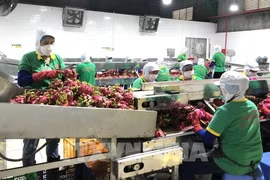
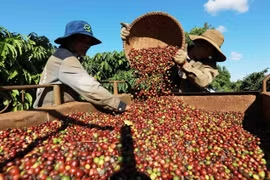
Vietnamese businesses should continue to invest in deep processing to effectively penetrate Asian and African markets amid the rising trend to use deeply processed products in these outlets, the Asia-Africa Market Department under the Ministry of Industry and Trade (MoIT) has said.

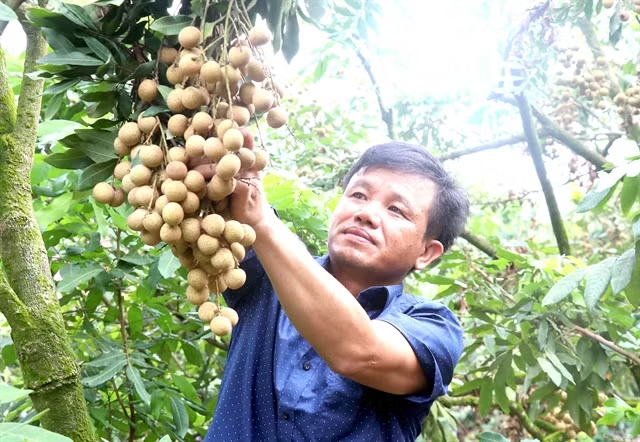
A farmer at his longan farm in Hung Yen Province. Vietnamese longan is favoured by customers in Asian markets. (Photo: VNA)

Hanoi (VNS/VNA) - Vietnamese businesses should continue to invest in deep processing to effectively penetrate Asian and African markets amid the rising trend to use deeply processed products in these outlets, the Asia-Africa Market Department under the Ministry of Industry and Trade (MoIT) has said.

Deep processing could also help domestic firms improve their export turnovers and keep up with market trends, the department said.

The department has also suggested localities continue to build brand names for their products, while developing a list of enterprises producing and trading agricultural products and fruits that are capable of exporting to Asian and African markets.

It said that these lists should be sent to the MoIT so that the ministry could facilitate the connection between local firms and foreign importers.

For the traditional Chinese market, localities should consider coordinating with relevant ministries, departments, associations and reputable firms to organise annual trade promotions with a special focus on potential provinces and cities in China such as Beijing, Hebei, Hunan, Shandong and Sichuan.

The department also advised local enterprises to cooperate with foreign businesses such as those in China, Japan, the Republic of Korea, Australia and ASEAN in product packaging, as product design is among the top concerns of consumers in these markets, in addition to product quality.

Over the past years, Vietnam's trade activities with Asian and African countries have shown a significant diversification. Besides traditional markets such as ASEAN, the Republic of Korea, Japan and China, Vietnamese exporters have concentrated on seeking new and niche outlets.

The department said Asian and African markets have high demands for products that Vietnam is strong in, such as farming produce, fruits and vegetables and seafood like shrimp, tra fish and crab.

In the past four months, Vietnam's rice exports to Asian and African nations hit 1.8 billion USD, marking a sharp increase of 34% year-on-year.

Notably, the Philippines was Vietnam's largest rice importer in the period, accounting for 46.4% of the total volume and 45.5% of the country's total rice export turnover.

Over the four months, the Asian and African outlets imported 1.5 billion USD worth of seafood from Vietnam, with China and Japan being the two largest import markets.

Many countries in Asia and Africa are the major importers of key products such as computer components, phones and parts, textiles and garments and wood and wood products, according to the department.

Last year, Vietnam’s merchandise trade with Asian and African nations reached 458 billion USD, down 6.7% year-on-year. Of this figure Vietnamese exports topped 183 billion USD, accounting for over 51% of the country's total export value.

Among items that posted a positive turnover were transport vehicles and spare parts with 6.5 billion USD, up 23%, electronic products and components (28.3 billion USD, up 6.4%), footwear (5.1 billion USD, up 3%), rice (3.8 billion USD, up 38%), fruits and vegetables (4.4 billion USD, up 86%), cashew nuts (1.7 billion USD, up 26%) and coffee (1.2 billion USD, up 19%)./.

VNA

See more

Laos accelerates 47 power projects for export to Vietnam

Laos accelerates 47 power projects for export to Vietnam

A notable project is the 600 MW Monsoon Wind Power Plant, located in Dakcheung district of Xekong province and Xanxay district of Attapeu province. Featuring 133 turbines, the project began commercial operations on August 22, 2025, and supplies electricity to Vietnam Electricity (EVN) under a 25-year power purchase agreement.

Minister of Industry and Trade Le Manh Hung holds working sessions with leaders of major Japanese corporations on November 10 to discuss investment cooperation opportunities in Vietnam’s mineral industry (Photo: Ministry of Industry and Trade)

Vietnam steps up cooperation with leading Japanese corporations

Minister of Industry and Trade Le Manh Hung spoke highly of economic, trade and investment ties between the two countries, highlighting the important role of Japanese businesses in developing production, transferring technology and strengthening supply chain linkages in Vietnam.

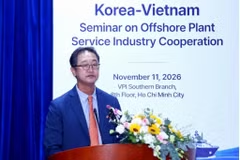
The MOU signing ceremony between Vietnam National University-Ho Chi Minh City and the Korea Institute for Robot Industry Advancement (KIRIA) on November 11, 2026 (Photo: tuoitre.vn)

Vietnam, RoK cooperate in robot industry

Vietnam National University-Ho Chi Minh City (VNU-HCM) and the Korea Institute for Robot Industry Advancement (KIRIA) will establish a cooperation framework based on their respective capabilities, strengths and networks in industry, academia, research and development (R&D).

The opening ceremony of the Vietnam International Food Industry Exhibition 2026 (Vietnam Foodexpo 2026) on November 11 (Photo: VNA)

Vietnam Foodexpo 2026 opens in Ho Chi Minh City

Vietnam Foodexpo 2026 brings together more than 500 leading enterprises from over 20 provinces and cities nationwide, alongside large national pavilions representing more than 20 countries and territories. Exhibitors are showcasing over 700 booths, creating a platform for leading technologies, products and solutions from the global food industry.

Vietnamese Finance Minister Ngo Van Tuan (right) meets with his Japanese counterpart Katayama Katsuki on November 10. (Photo: The Vietnamese Ministry of Finance)

Vietnam, Japan discuss cooperation in finance and strategic sectors

The two ministers exchanged views on the socio-economic development of their respective countries, as well as cooperation within the ASEAN-Japan framework and multilateral initiatives. They highlighted the importance of closer coordination to enhance their countries’ roles and voices at regional and international forums.

Processing frozen mangos for export in An Giang province (Photo: VNA)

Vegetable, fruit export boom hinges on technology

Pham Quoc Liem, General Director of U&I Agricultural JSC (Unifarm), said Vietnam needs chain-linked models for each key product, with clear roles for lead enterprises and clear responsibilities and benefits for stakeholders. The State should issue coordination policies and preferential credit support to build standardised raw material zones with stable productivity and quality. Research, development and commercialisation of competitive varieties will add further momentum.

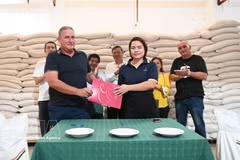
At the rice handover record signing ceremony. (Photo: VNA)

Vietnamese company hands over 1,500 tonnes of rice to Cuban partner

Vietnamese rice producer AgriVMA has expanded its cultivation area from 1,000ha to more than 2,500ha across the provinces of Pinar del Rio, Granma, Sancti Spiritus and Villa Clara. Its CT16 hybrid rice variety has achieved yields of more than 7 tonnes of fresh paddy per hectare.

A ballpoint pen production line at Thien Long Group in Ho Chi Minh City. (Photo: VNA)

Ho Chi Minh City steps up efforts to unlock growth drivers

The municipal People's Committee has identified the year-end period as crucial to mobilising more than 1.2 quadrillion VND (46.7 billion USD) for development investment, boosting traditional and new growth drivers, and removing bottlenecks related to land, planning, site clearance, construction materials and investment procedures.