Hallmarks of 13th Party Congress term: Capacity, mettle, steadfastness and resilience

The most prominent hallmarks of the 13th National Party Congress term have been the clear demonstration of leadership capacity, political mettle, steadfast commitment to goals and ideals, and resilience in steering national development and safeguarding the Fatherland.

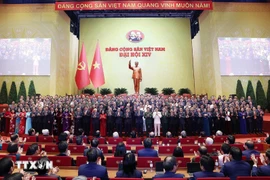
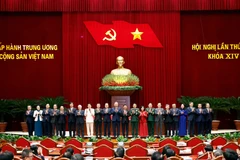
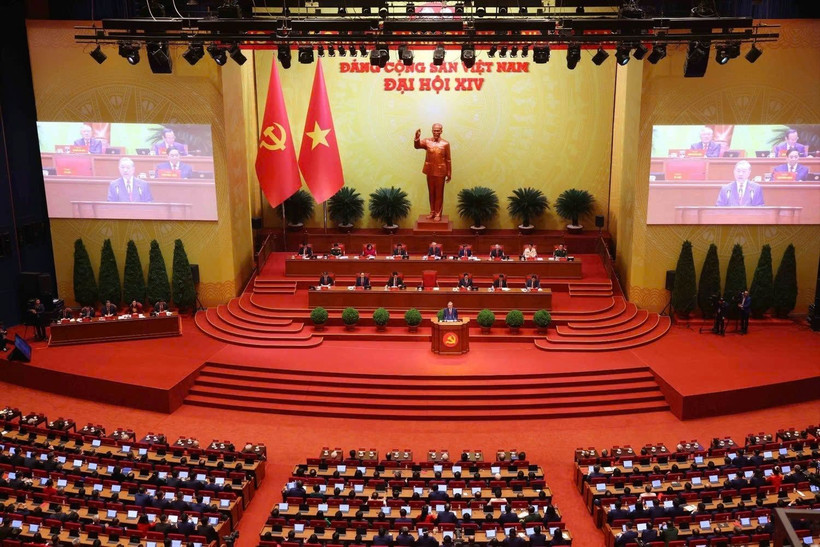
The opening session of the 14th National Party Congress. (Photo: VNA)

Hanoi (VNA) - The term of the 13th National Party Congress unfolded amid profound and unpredictable international and domestic changes, marked by the severe impacts of the COVID-19 pandemic, intensifying strategic competition, disruptions to global supply chains, risks of economic slowdown, and the intertwining of traditional and non-traditional security challenges.

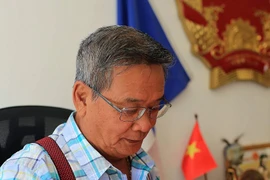
Against this backdrop, the most prominent hallmarks of the 13th Congress term have been the clear demonstration of leadership capacity, political mettle, steadfast commitment to goals and ideals, and resilience in steering national development and safeguarding the Fatherland, according to an article by Major General, Associate Professor, Dr Nguyen Van Sau, Deputy Director of the Vietnam Institute of Military Strategy and History.

This was not an ordinary development phase, but a special term which took place in the context of compounded and multi-dimensional shocks. External disruptions were swift and intense, non-traditional risks increased, while digital transformation and green transition demanded a fundamental shift of the growth model. Domestically, long-standing challenges persisted, including growth quality, labour productivity, administrative discipline and an institutional framework that has yet to fully meet development demands.

In such circumstances, the “hallmark of the term” was, above all, reflected in governance capacity and the ability to organise and implement Party guidelines. Capacity refers to the ability to formulate and execute sound policies; mettle is the strength to uphold objectives under pressure; steadfastness lies in firmly maintaining ideological foundations and strategic orientation; and resilience is the state of stability and proactivity amid turbulence. Together, these qualities formed a leadership profile suited to the exceptional historical context of the 13th Congress term.

Leadership capacity during this period was characterised by the close alignment between strategic vision and implementation mechanisms. The 13th Congress set development goals towards 2030 with a vision to 2045, emphasising growth driven by science and technology, innovation, digital transformation, green and circular economy models, and enhanced economic autonomy. From a national governance perspective, leadership capacity was demonstrated through an accurate assessment of the global and domestic environment, effective institutionalisation of policies to remove bottlenecks and mobilise resources, and strengthened discipline and accountability in implementation, with results as the primary benchmark.

Political mettle emerged as a decisive factor amid competing pressures between rapid growth and sustainability, openness and autonomy, reform and social stability. The timely shift towards safe and flexible adaptation to the pandemic, coupled with economic recovery, reflected a balanced and pragmatic approach. Maintaining political and social stability, while advancing a determined campaign against corruption and misconduct with no forbidden zones or exceptions, further reinforced public trust and institutional integrity.

Steadfastness was evident in upholding the Party’s ideological foundations, the socialist-oriented development path, and the principle of placing the people at the centre of development. This steadfastness ensured unity of will and action across the political system, while allowing flexibility and creativity in policy execution. Consistent attention to social security and people’s livelihoods, especially during periods of hardship, underscored the enduring principle that the people are the foundation of national strength.

Resilience was reflected in macroeconomic stability, social welfare protection, national defence, security and foreign affairs. Despite multiple shocks, Vietnam maintained growth momentum, controlled inflation and safeguarded major economic balances. The diplomacy of independence, self-reliance and diversification and multilateralisation helped preserve a peaceful and stable environment for development, while reforms to streamline the political system enhanced governance effectiveness.

Overall, the 13th Party Congress term represented a period of adaptive governance amid volatility, while laying solid long-term foundations for development. Its hallmarks provide not only a meaningful review of the term, but also set forth the imperative to further strengthen leadership capacity, build a socialist rule-of-law state, mobilise national unity and unlock all resources to realise Vietnam’s aspiration for a prosperous and happy future in the new era./.

VNA
See more

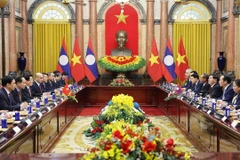
An overview of the meeting between Vietnamese State President Luong Cuong and General Secretary of the Lao People’s Revolutionary Party (LPRP) Central Committee and President of Laos Thongloun Sisoulith in Hanoi on January 26. (Photo: VNA)

Vietnamese State President meets with top Lao leader in Hanoi

President Cuong welcomed the positive outcomes of Vietnam–Laos cooperation in recent years, stressing that amid complex developments of the regional and global situation, closer solidarity, regular information-sharing and coordinated positions between the two countries are more necessary than ever to support each other’s development goals.

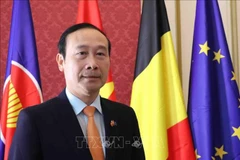
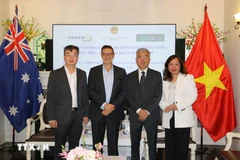
Vietnamese Ambassador to Belgium Nguyen Van Thao. (Photo: VNA)

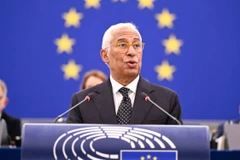
EC President’s visit marks key moment for Vietnam–EU relations

The upcoming official visit to Vietnam by President of the European Council (EC) António Costa reflects the EU’s recognition and appreciation of Vietnam’s foreign policy of independence, self-reliance, multilateralisation and diversification of international relations, while affirming the country’s growing stature and credibility in the international arena, particularly as a key partner of EU in the Asia–Pacific region.

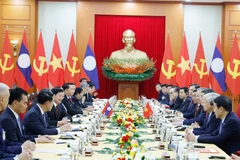
At the talks between General Secretary of the Communist Party of Vietnam Central Committee To Lam and General Secretary of the Lao People’s Revolutionary Party Central Committee and President of Laos Thongloun Sisoulith. (Photo: VNA)

Top Vietnamese, Lao leaders hold talks in Hanoi

The two leaders held in-depth exchanges on major guidelines and policies set out in the resolutions of the congresses, as well as the regional and international situation, and orientations for further promoting the great friendship, special solidarity, comprehensive cooperation and strategic cohesion between Vietnam and Laos in the new period.

Dr. Kin Phea, Director of the International Relations Institute under the Royal Academy of Cambodia (RAC). (Photo: VNA)

14th National Party Congress: Party building as core of CPV’s leadership capacity

While describing the 14th National Congress of the Communist Party of Vietnam, held from January 19-23, as a historical milestone that carries not only domestic significance but also profound implications for stability in ASEAN, Dr. Kin Phea, Director of the International Relations Institute under the Royal Academy of Cambodia (RAC), stressed that Party building is the core of leadership capacity.

Party General Secretary To Lam and members of the Politburo and the Secretariat of the 14th Party Central Committee make their debut at the first session of the 14th Party Central Committee. (Photo: VNA)

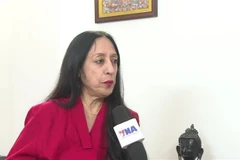
Indian official commends 14th National Party Congress’s vision, consensus

President of the India–Vietnam Solidarity Committee Kusum Jain spoke highly of the development goals and orientations adopted by the Congress, particularly the target of achieving an average economic growth rate of around 10% during the 2026–2030 period, in association with a green growth model, innovation and digital transformation.

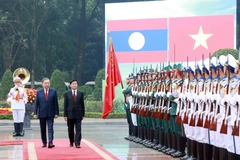
General Secretary of the Communist Party of Vietnam Central Committee To Lam (L) and General Secretary of the Lao People’s Revolutionary Party (LPRP) Central Committee and President of Laos Thongloun Sisoulith review the guard of honour. (Photo: VNA)

Party General Secretary chairs official welcome ceremony for top Lao leader

This trip reflects the highest level of political trust, the special bond and close coordination between the two Parties and the two countries. It contributes to elevating the bilateral relations and providing strategic direction for comprehensive, effective and substantive cooperation in the new stage of development of the bilateral relationship.

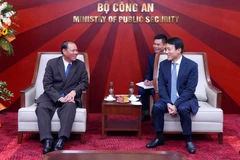
Minister of Public Security General Luong Tam Quang (right) and General Vilay Lakhamphong, a Politburo member and permanent member of the Secretariat of the Central Committee of the Lao People’s Revolutionary Party (LPRP) at their meeting on January 25. (Photo: VNA)

Vietnam, Laos continue to foster friendship

Vietnam’s Ministry of Public Security will continue to work closely with its Lao counterpart across all areas, striving to fulfil all tasks entrusted by the Parties, States and people of the two countries, thereby contributing to further deepening the great friendship, special solidarity, comprehensive cooperation and strategic cohesion between Vietnam and Laos in general, and between the two public security ministries in particular, Minister of Public Security Luong Tam Quang said.

General Secretary of the Central Committee of the Lao People’s Revolutionary Party and President of Laos Thongloun Sisoulith and his spouse Naly Sisoulith are welcomed at the Noi Bai International Airport on January 26 morning. (Photo: VNA)

Top Lao leader arrives in Hanoi, beginning state visit to Vietnam

Vietnamese Ambassador to Laos Nguyen Minh Tam highlighted that Party General Secretary and President Thongloun Sisoulith’s selection of Vietnam as the first country to visit following the successful National Congresses of both Lao People’s Revolutionary Party and Communist Party of Vietnam carries profound political and diplomatic significance.

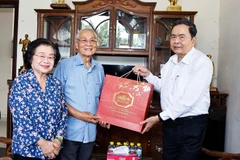
Chairman of the National Assembly Tran Thanh Man (R) visits and extends New Year greetings to the family of Truong My Hoa, former Vice President and former Vice Chairwoman of the National Assembly, in Ho Chi Minh City on January 25. (Photo: VNA)

Top legislator pays tribute to former party, state leaders

During a visit to former Vice President and former Vice Chairwoman of the NA Truong My Hoa, Chairman Man spoke highly of her thoughtful and constructive contributions to the Party, State and parliament. He also commended her active engagement in meaningful social welfare activities in her current roles as the head of the Vu A Dinh Scholarship Fund and the “For Beloved Hoang Sa–Truong Sa” club.