After three years of expansion, Hanoi capital city has overcomemany difficulties and challenges, and obtained major achievements inmany fields.
In implementing Resolution 15/2008/NQ-QH12 of the 12th National Assembly, the administrative boundary area of Hanoicapital city was officially enlarged on August 1, 2008 to a total areaof more than 3,300sq.km. The milestone created a premise for the capitalcity to strengthen its position in the region and the world.
Overthe past three years, Hanoi has made every effort to develop thecity in the direction of civilisation and modernisation on the basis ofcreating breakthroughs in socio-technological infrastructureconstruction.
Based on the socio-economic master plan and thePrime Minister’s recently approved master plan project, the city willstep-by-step carry out tasks and achieve targets set in the municipalParty committee’s Resolution 15.
On economics, the city continuedto move restructuring in the direction of service-industry-agriculture,targeting to become the country’s financial-banking hub and leadingretail and wholesale and import-export location, while setting the trendin industrialising and modernising agriculture.
Additionally,the city constantly improved the people’s material and spiritual liveswith a focus on improving the quality of education and health services,and developed the knowledge-based economy with a view to becoming ahigh-quality human resources training centre.
The city registereda per capita GDP of 1,964 USD in 2010 and a rise of 10.4 percent in thegross domestic product for 2006-2010, 1.5 times higher the country’saverage level, providing evidence that the city was moving in the rightdirection for its development.
Mover than 100,000 businessesregistered their activities and production, contributing to 89 percentof the city’s GDP, attesting Hanoi’s method in development of productionforce with attention paid to all economic sectors.
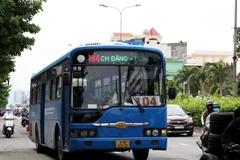
Becoming acivilised and modern capital city in the future requires construction ofurban infrastructure in a careful, planned manner. Projects to buildnew urban areas should be combined with the construction of socialinfrastructure, contributing to both raising the per capita urbanhousing area and improving the people’s living conditions.
Besides,the urban city has been beautified with the construction and upgrade ofparks, gardens and public entertainment sites, becoming a specialfeature receiving the people’s support.
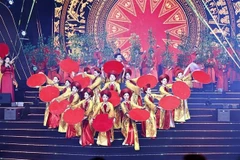
Culture is always considered a top priority, especially preserving and honouring traditional cultural values.
Thepath ahead will face many difficulties and challenges. Hanoi will havemore resources to boost its self confidence and firmly step on a newroad – building a capital city for peace, a rich cultural city and astrong economic, modernised and civilised city, thanks to due attentionand close instructions of the Party Central Committee, the NationalAssembly and the Government, with support of ministries, centralagencies and organisations, along with the contributions of 6.5 millionHanoians, as well as millions of compatriots nationwide and many foreignfriends./.
In implementing Resolution 15/2008/NQ-QH12 of the 12th National Assembly, the administrative boundary area of Hanoicapital city was officially enlarged on August 1, 2008 to a total areaof more than 3,300sq.km. The milestone created a premise for the capitalcity to strengthen its position in the region and the world.
Overthe past three years, Hanoi has made every effort to develop thecity in the direction of civilisation and modernisation on the basis ofcreating breakthroughs in socio-technological infrastructureconstruction.
Based on the socio-economic master plan and thePrime Minister’s recently approved master plan project, the city willstep-by-step carry out tasks and achieve targets set in the municipalParty committee’s Resolution 15.
On economics, the city continuedto move restructuring in the direction of service-industry-agriculture,targeting to become the country’s financial-banking hub and leadingretail and wholesale and import-export location, while setting the trendin industrialising and modernising agriculture.
Additionally,the city constantly improved the people’s material and spiritual liveswith a focus on improving the quality of education and health services,and developed the knowledge-based economy with a view to becoming ahigh-quality human resources training centre.
The city registereda per capita GDP of 1,964 USD in 2010 and a rise of 10.4 percent in thegross domestic product for 2006-2010, 1.5 times higher the country’saverage level, providing evidence that the city was moving in the rightdirection for its development.
Mover than 100,000 businessesregistered their activities and production, contributing to 89 percentof the city’s GDP, attesting Hanoi’s method in development of productionforce with attention paid to all economic sectors.
Becoming acivilised and modern capital city in the future requires construction ofurban infrastructure in a careful, planned manner. Projects to buildnew urban areas should be combined with the construction of socialinfrastructure, contributing to both raising the per capita urbanhousing area and improving the people’s living conditions.
Besides,the urban city has been beautified with the construction and upgrade ofparks, gardens and public entertainment sites, becoming a specialfeature receiving the people’s support.
Culture is always considered a top priority, especially preserving and honouring traditional cultural values.
Thepath ahead will face many difficulties and challenges. Hanoi will havemore resources to boost its self confidence and firmly step on a newroad – building a capital city for peace, a rich cultural city and astrong economic, modernised and civilised city, thanks to due attentionand close instructions of the Party Central Committee, the NationalAssembly and the Government, with support of ministries, centralagencies and organisations, along with the contributions of 6.5 millionHanoians, as well as millions of compatriots nationwide and many foreignfriends./.