Hanoi proposes developing intelligent transport system

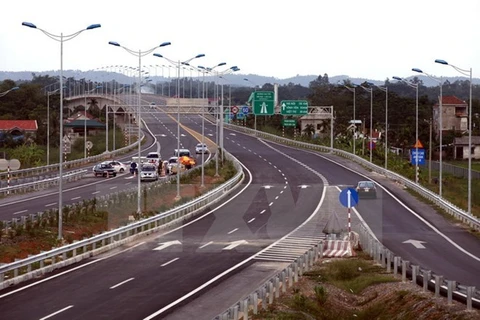
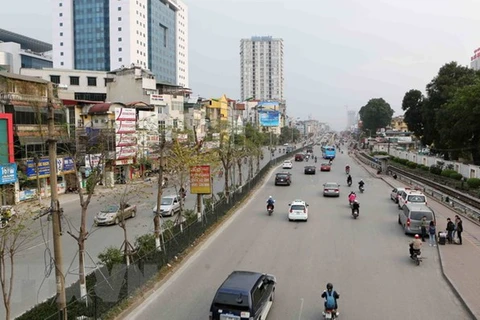
The Hanoi Department of Transport has asked for the municipal authorities’ approval to develop an intelligent transport system (ITS) through leasing information technology services, with a cost of over 392 billion VND (more than 15.9 million USD) sourced from the city's budget for the first phase in 2025 – 2027.

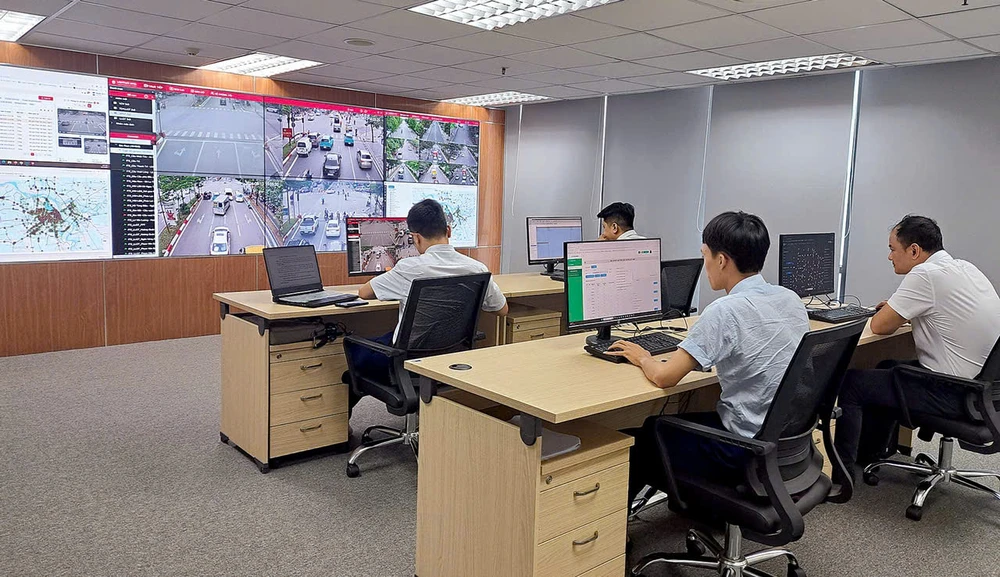
Hanoi's intelligent traffic operation centre proves effective (Photo: hanoimoi.vn)

Hanoi (VNA) – The Hanoi Department of Transport has asked for the municipal authorities’ approval to develop an intelligent transport system (ITS) through leasing information technology services, with a cost of over 392 billion VND (more than 15.9 million USD) sourced from the city's budget for the first phase in 2025 – 2027.

The department has just submitted a proposal to the city People's Committee for in-principle approval to the project.

The ITS is a system which applies technical and technological solutions to efficiently organise, manage, and operate the transportation system, ensuring traffic safety, reducing travel time and costs, and protecting the environment.

In the first phase, a traffic management and operation centre will be established to complete the organisational structure and operate the nine initial functions of the system.

The department will focus on upgrading the centre’s infrastructure, including renovating and repairing the headquarters, installing server and screen systems, a shared core software system, and a software system associated with the nine initial functions.

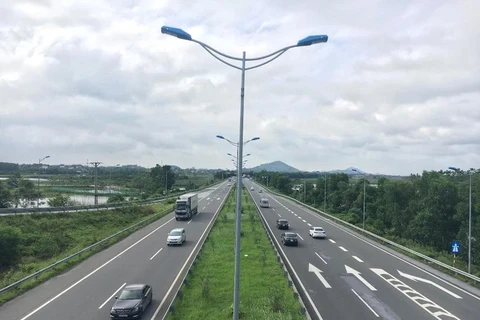
In addition, peripheral equipment, including cameras, electronic traffic signs, and adaptive traffic signal control cabinets, will be installed at 55 intersections on Ring Roads 1, 2, 3, and radial routes.

The ITS will monitor the traffic system, provide traffic information, help manage traffic order and safety violations, as well as control public transport, incidents, infrastructure, parking, and payment for electronic public transport tickets,

The project is essential to achieve the goal of making Hanoi a fundamentally smart and modern city by 2030, gradually connecting with the smart urban network in the region and the world. It will be also an important tool for state management agencies in traffic management and operation./.
VNA

See more

The copyright crackdown is broadly viewed as an inevitable step in Vietnam’s cultural industry development. (Illustrative photo: VNA)

Healthy digital content market in the making

The sharper crackdown is rapidly redrawing how online entertainment is distributed and consumed, while gradually reshaping public awareness and responsibility toward copyright protection.

A view of Place Ho Chi Minh in Persan, France. (Photo: VNA)

Place preserving memories of President Ho Chi Minh in France

Although there is little publicly available documentation confirming exactly when Place Ho Chi Minh was established, French urban historians suggest that most streets and public spaces named after the Vietnamese leader in France emerged between the 1960s and 1980s, during the height of anti-war movements and solidarity campaigns supporting Vietnam across working-class towns and left-leaning suburbs around Paris.

Vietnamese Ambassador to Bangladesh Nguyen Manh Cuong speaks at the seminar. (Photo: VNA)

President Ho Chi Minh’s thought on national unity remains relevant today

President Ho Chi Minh's ideology of national unity continues to carry profound significance amid growing global challenges, including conflicts, social divisions and economic instability. His message of solidarity, consensus and placing national interests above sectional differences remains a valuable lesson for many developing nations.

Assoc. Prof. Dr. Nguyen Duc Son presents the decision establishing the Vietnamese Language Proficiency Test Council in Japan to a representative of the Vietnam Studies Centre in Japan. (Photo: VNA)

Japan hosts first standardised Vietnamese language proficiency test

As bilateral ties between Vietnam and Japan continue to expand, demand for Vietnamese language learning in Japan has also grown rapidly among OVs, educational institutions, businesses and Japanese people interested in Vietnam. Against this backdrop, the introduction of a standardised proficiency test is expected to provide an official and widely recognised benchmark for Vietnamese language skills.

The “I Love My Fatherland" Journey 2026 kicks off in Nghe An province on May 16. (Photo: VNA)

"I Love My Fatherland” journey features diverse activities

The “I Love My Fatherland” journey will span seven stages across historical and cultural sites and “red addresses” nationwide. There will be a combination of education on traditions, field-based programmes, and digital communications.