HCM City to offer free annual health check-ups for elderly residents

Ho Chi Minh City’s health sector plans to offer free annual health check-ups for elderly residents aged 60 and above in an effort to reduce medical costs for them and improve their quality of life.
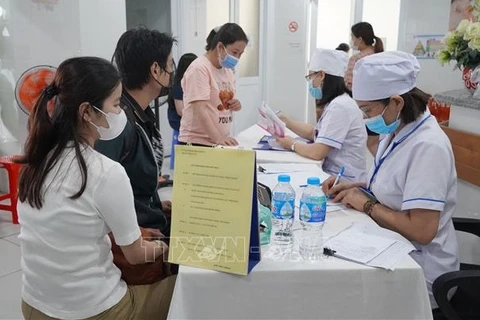
HCM City to offer free annual health check-ups for elderly residents ảnh 1Illustrative photo (Source: VNA)

HCM City (VNA) — Ho Chi Minh City’s health sector plans to offer free annual health check-ups for elderly residents aged 60 and above in an effort to reduce medical costs for them and improve their quality of life.

The initiative, led by the Department of Health, also aims to effectively manage and detect non-communicable diseases (NCDs) among this population.

The plan, set to begin in 2024, has been submitted to the People’s Committee for approval and budget allocation.

As part of a pilot programme, each district will be assigned a specific ward responsible for conducting health check-ups for over one million elderly residents by August 31.

The health check-up package will include clinical examinations, abdominal ultrasounds, and various tests to determine glucose, creatinine, LDL-C, and triglyceride levels.

These screenings are crucial in identifying potential health issues and preventing the onset of chronic diseases, according to the Department of Health.

The cost for this package is over 140,000 VND (5.92 USD) per person, but under this programme, all expenses will be covered by the city’s budget.

Designated facilities, such as health stations, health centres, district hospitals, or regional general hospitals, will be utilised to carry out these health check-ups. These facilities must have adequate staff, necessary equipment, and coordination with local authorities to establish convenient check-up locations.

Each team conducting the check-ups will consist of a general practitioner, a specialist in general or family medicine, and a doctor skilled in abdominal ultrasound examinations, to be able to provide medical check-ups for up to 50 individuals per day.

During the check-ups, doctors will make appropriate examination and testing recommendations. Test results will be available within 24-48 hours, allowing for timely diagnoses and immediate treatment if necessary.

Elderly patients diagnosed with non-communicable diseases during these check-ups will be enrolled in an integrated programme closely linked to local health stations.

Their test results will be recorded in electronic health records, enabling individuals to better manage their personal health information and for healthcare facilities to have comprehensive data for subsequent visits, ensuring continuity of care.

For those who decline treatment at the health stations, their information will still be updated for management purposes, and they will be referred to other healthcare facilities if necessary.

The city has over four million individuals aged 60 and above. Most of them suffer from high blood pressure, diabetes, and cardiovascular diseases, according to the department./.


VNA

See more

Assoc. Prof. Dr. Duong Duc Hung, Director of Viet Duc University Hospital, presents a token of appreciation in recognition of the noble gesture of the organ donor’s family. (Photo: baochinhphu.vn)

British teen’s organ donation saves three Vietnamese lives

A 19-year-old British tourist who died during a trip to Vietnam has saved the lives of three Vietnamese patients with end-stage organ failure, in a deeply moving act of compassion. The young woman is the first foreign national to donate organs in Vietnam.

A workshop at the One Health Summit, held in Lyon, France, from April 5 to 7, 2026. (Photo: VNA)

Vietnam backs global One Health commitments at Lyon summit

The MAE welcomed the French Government’s organisation of the One Health Summit, describing it as an important forum to advance global political commitments and strengthen international cooperation in preventing zoonotic diseases.

Ilustrative image (Photo: pngtree.com)

Vietnamese scientists unlock genetic insights into rare diseases

Prof. Dr. Nguyen Huy Hoang, Deputy Director of the Institute of Biology under the Vietnam Academy of Science and Technology, and his research team conducted a project titled “Genetic mutation analysis in Vietnamese patients with selected rare diseases using whole-exome sequencing technology.” The project, implemented from 2022 to 2024, aims to clarify the genetic causes of these diseases within the Vietnamese population.

Health workers and residents perform mass wellness exercises, promoting healthy lifestyles in the community. (Photo: VNA)

Ho Chi Minh City targets modern, inclusive healthcare system

On April 5 alone, 58 hospitals and health centres conducted screening programmes across 64 wards and communes, with a focus on outlying areas. Beyond early detection, residents receive consultations, long-term health monitoring guidance, and access to specialised services locally.

Vice Chairwoman of the National Assembly Nguyen Thi Thanh, Minister of Health Dao Hong Lan, and delegates attend the programme. (Photo: nhandan.vn)

Healthy lifestyles, disease prevention highlighted on national health day

Vice Chairwoman of the National Assembly Nguyen Thi Thanh emphasised the need for consistent and effective implementation of the resolution across the political system, with priorities including refining healthcare policies and institutions, strengthening preventive and grassroots healthcare networks, expanding population health management, promoting early detection, and improving school-based physical education and nutrition.

Politburo member, Secretary of the Party Central Committee and Chairman of the Commission for Information, Education and Mass Mobilisation Trinh Van Quyet (front row, fifth from left), together with delegates, participate in a walk after the launch of All People’s Health Day in Hanoi on April 5. (Photo: VNA)

All People’s Health Day promotes early disease prevention

The launch marked the first year the activity has been implemented in a coordinated manner nationwide. Members of the public were able to visit free screening areas, receive nutritional advice, participate in mass exercise performances, enjoy artistic programmes, and join a walk in response following the ceremony.

Volunteer young doctors are expected to provide free health screenings for around 10,000 residents (Photo: VNA)

Free cancer screening, health checks to benefit 10,000 people in Hanoi

Participants will receive comprehensive health checks through a streamlined one-stop process, including blood pressure measurement, height and weight assessment, BMI and cardiovascular risk evaluation, blood tests, general examinations and specialist consultations in internal medicine, paediatrics, obstetrics, ophthalmology, ENT, dentistry and oncology. Rapid blood glucose testing and biochemical screening will also be conducted to detect diabetes and metabolic disorders.

Dr Du Tuan Quy from the Children’s Hospital 1 in Ho Chi Minh City examines a patient with hand, foot and mouth disease. (Photo: VNA)

Over 25,000 hand, foot and mouth disease cases posted in 3 months

In the first three months, more than 25,000 cases of hand, foot and mouth disease have been recorded nationwide. Of the total cases, around 18,000, or nearly 72%, were concentrated in southern provinces. The disease has primarily affected children aged between one and five.

Early cancer screening at Da Nang Hospital. (Photo: VNA)

AI boosts early detection of non-communicable diseases

Deputy Minister of Health Nguyen Thi Lien Huong said NCDs pose a growing global challenge, accounting for over 70% of deaths worldwide, mainly from cardiovascular diseases, cancer, diabetes and chronic respiratory diseases. In Vietnam, the burden is rising rapidly, requiring urgent and sustained preventive strategies.

Most infections were reported among children under 10 years old, making up 99.3%, with those aged 1–5 accounting for the highest proportion (92.7%). (Illustrative photo: VNA)

Hand, foot and mouth cases increase five-fold in Q1

Most infections were reported among children under 10 years old, making up 99.3%, with those aged 1–5 accounting for the highest proportion (92.7%) due to close contact in kindergartens and limited hygiene practices.